
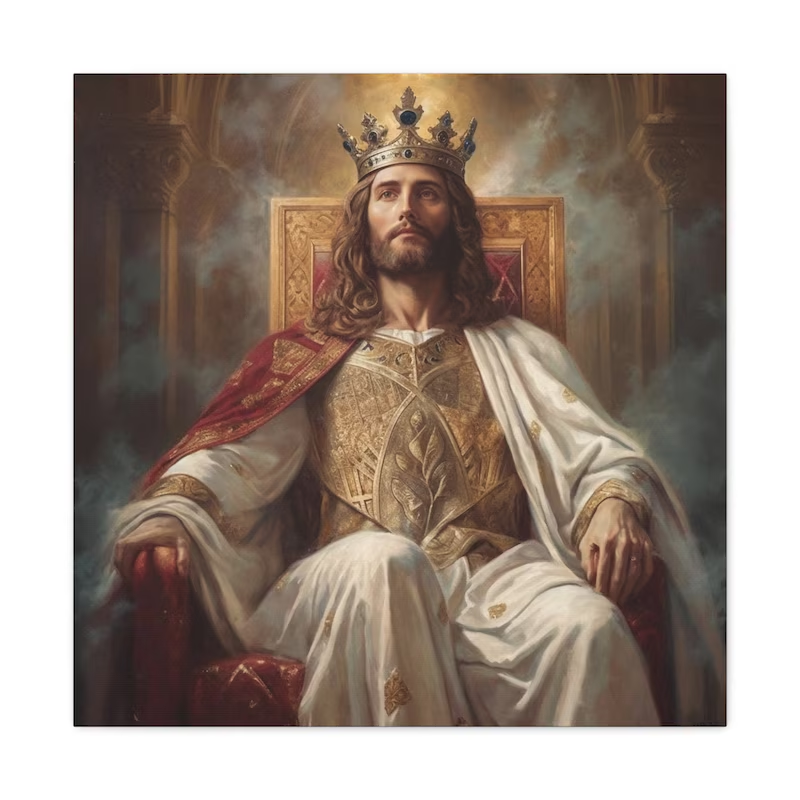
The Feast of Christ the King is the conclusion of each Church year. To me it is special because it’s my feast day, a day when we Sister celebrate our patron, usually a saint. When I entered the Sisters of Notre Dame, the Chardon Province was named Christ the King, and this feast was celebrated in a grand way. A high point was singing the hymn “Christus Vincit” (Christ Conquers). At the end of this blog is a video of young people in Indonesia singing it with the harmony the way we used to do.
Named for Christ
Originally the feast of Christ the King was in October, when the autumn trees were aflame with color, and our property was a sight to behold. Then it was moved to November. And back then my name was Kirene, chosen for Christ the King. The chi-rho symbol for Christ is formed from the first Greek letters of Christ. At first, I asked for Kiro but was told that was too masculine, so I added a feminine ending.
When we reverted to our baptismal names, one of my sisters was disappointed because she said “Kirene” was such a conversation piece! I chose to be Sister Kathleen because my other sister named her firstborn daughter Kathleen Ann for me.
Christ the King
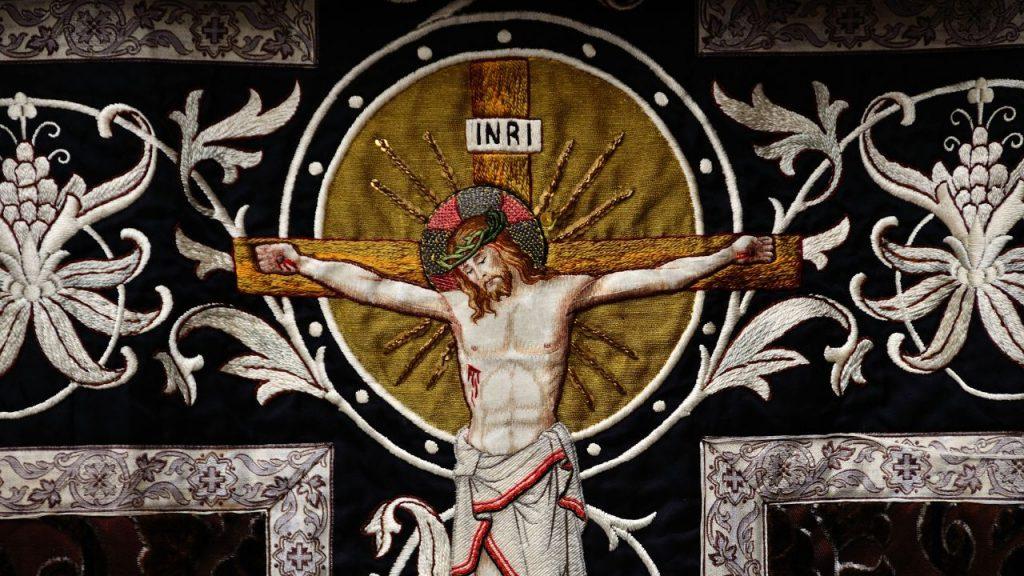
The “crime” of Jesus that led to his crucifixion was being king of the Jews. As customary, Romans wrote this crime on his cross in three languages. Consequently, some crucifixes have INRI at the top, which stands for the Latin Iesus Nazarenus Rex Iudaeorum, which means Jesus of Nazareth, King of the Jews. Jesus did not come to overthrow the Romans and become King of Israel. His role was something greater. Ironically, the statement on the cross is true. Pilate refused to change it to “He said he was king of the Jews.” (INRI too was one of my name choices. In fact, I had a list of forty possible names related to Christ as king.)
Kingdom of God
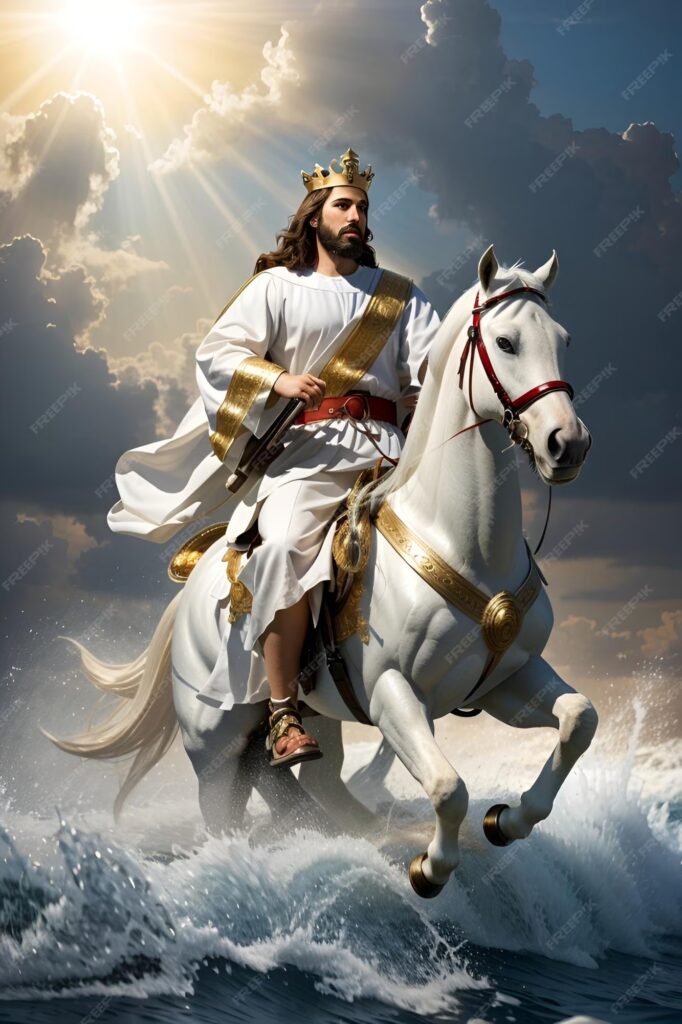
Jesus spoke about his kingdom. His ministry was proclaiming the Kingdom of God. He told Pilate it was not of this world. He said it was “at hand” and told people it was in their midst. In the Book of Revelation Jesus appears riding a white horse and with the words “King of kings and Lord of lords” on his robe and thigh. So the Kingdom of God is here but not yet, which is very mysterious.
Gerald Darring (St. Louis University, Center for Liturgy) gave this explanation of the Kingdom of God:
“The Kingdom of God is a space. It exists in every home where parents and children love each other. It exists in every region and country that cares for its weak and vulnerable. It exists in every parish that reaches out to the needy.
“The Kingdom of God is a time. It happens whenever someone feeds a hungry person, or shelters a homeless person, or shows care to a neglected person. It happens whenever we overturn an unjust law, or correct an injustice, or avert a war. It happens whenever people join in the struggle to overcome poverty, to erase ignorance, to pass on the Faith.
“The Kingdom of God is in the past (in the life and work of Jesus of Nazareth);
it is in the present (in the work of the Church and in the efforts of many others to create a world of goodness and justice); it is in the future (reaching its completion in the age to come).
“The Kingdom of God is a condition. Its symptoms are love, justice, and peace.”
Gospel Reflections
The above passage was on an email from a reflection Fr. Patrick van der Horst in London provided. Every day he links a piece of artwork with the Gospel. I recommend this program. You can subscribe to it at https://christian.art/
We pray a pray that begins Jesus, King and Center of all hearts … What does it mean to say that Jesus is king of your heart?
The title “king” for Jesus might not appeal to you as much as another one. What do you prefer to call him?




6 Responses
Thanks for sharing ❤️
You’re very welcome Rita!
So nice to hear that stirring song performed so well. Glory to Christ the King!
Amen!
Hi Sister Kathleen,
I run a Religois Education Program in Long Island, New York. I have the Saint kit but I am missing 4 cards. St. Dominic-104, Therese of the Child Jesus-137, St. Francis of Assisi-138, and St. Bruno-139. Is there anyway I can purchase these 4 cards. Or get copies of them somehow. We have out 8th graders making their Confirmation soon and 2 of the missing cards are needed. If you can point me in a good direction I would greatly appreciate it. My email is: [email protected] OR [email protected]. Thank you very much
Kristen Fay
Kirsten, I just emailed you copies that you could run off on tagboard. Let me know if any of them didn’t come through OK. Sr. Kathleen