Did Jesus Enjoy Being a Human?
 According to the Gospels, Jesus was aware of the horrible way his life would end on earth. This might have put a pall on his thirty-three years. He could have spent each day dreading his future. Maybe that is why there is no record of Jesus laughing or even smiling. But when you think about it, Jesus had wonderful experiences that he wouldn’t have had being God alone. He knew the tender love of a mother and the care of a hardworking father. As a lad, he had the joy of racing the other boys in Nazareth and wrestling with them. He had the opportunity to share meals with others and to experience the fellowship of good friends. Because he had five senses, he felt the wind blowing through his hair and the warm sun on his back. He smelled his mother’s freshly baked bread and tasted it. He had the satisfaction of creating things out of wood, singing psalms, and teaching others face to face.
Living in the world, Jesus knew the beauty of creation up close and personal. The Sea of Galilee he beheld, sailed on, and walked over was called the most beautiful sea in the world. He walked ove r the green hills of Israel and through its fields of golden wheat. I think Jesus was happy being one of us. In fact, Proverbs 8:31 says of Wisdom, “I played over the world and had delight in the children of men.” That is true for Jesus.
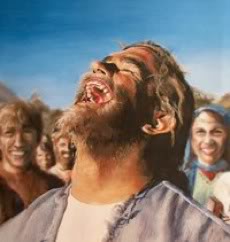
As a true human being, Jesus surely had a sense of humor. I was going to write about this, but realized that in my book The Catholic Companion to Jesus I already did. Here is an excerpt:
“How could he [Jesus] not help but smile at seeing the height-challenged dignitary, Zacchaeus, perched in a tree, peering through the leaves to get a glimpse of him? It’s also easy to imagine that Jesus laughed heartily at the looks on the faces of the seasoned fishermen when at a “carpenter’s son’s” direction they lowered their nets and pulled them up loaded with fish, or when Peter tried to walk on the water but began to sink like a stone.
“No doubt some of Jesus’ illustrations in teaching were delivered with a grin and made people laugh. For example, there is his depiction of a camel trying to squeeze through the eye of a needle as the image of a rich person entering the kingdom of God. Then there is the image he used of the overly zealous Pharisees straining out gnats from their food but then swallowing camels. Even a few miracles have an element of fun, such as Peter finding tax money in a fish or devils being sent into pigs [symbols of the Roman oppressors] and running off a cliff. Also it’s a playful person who gives his friends nicknames. Jesus dubbed James and John “the Sons of Thunder” and Simon “the Rock.” Perhaps the ability to play is what Jesus meant when he said that “unless you change and become like children, you will never enter the kingdom of God” (Matthew 18:3).”
I imagine that Jesus chuckles today when he sees us doing dumb things, being caught in funny situations, or surprised by unexpected happy turns of events.
What else do you think Jesus enjoyed as he lived on our planet?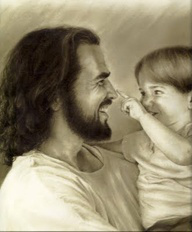
When else do you detect his sense of humor in the Gospel stories?
Squeezing through the Narrow Gate
 Most people assume that they will spend eternity in heaven. Some of them might be like the Pharisee who prayed, “God, I thank you that I am not like other people—robbers, evildoers, adulterers. . . . I fast twice a week and give a tenth of all I get.” This man thought he was right with God, but Jesus said he wasn’t. We ourselves might say, “I never killed anyone. I go to Mass. I donate to charitable organizations.” But is this enough to get us through the narrow gate that Jesus mentioned in Sunday’s Gospel? It’s a bit disconcerting to hear him say that many people will not be able to get through it! In other words, they will not be “saved.”
Jesus urges us to strive to enter through the narrow gate. A key word here is strive. The original Greek for this word is used for athletes (like the Olympians) who pour all their energy into excelling in their sport. We strive to gain access to heaven when we do all in our power to live the Gospel: to go the extra mile and attend a funeral, to love our enemies and forgive the driver on the cellphone who almost crashes into our car, to get up when the world is asleep and celebrate a weekday Eucharist.
In Jesus’ image, the gate is narrow. This suggests that people who are puffed up with pride (like the Pharisee) and who have big heads will not fit through. Jesus taught that people who are like children will enter the kingdom. Children are little people, humble, depen dent, trusting.
Likewise, people who carry a lot of baggage won’t be able to squeeze through heaven’s gate. On earth we need to travel lightly. Accumulating a lot of possessions is useless. In the end we take nothing with us. And as St. Basil said, “The bread you hold back belongs to the hungry; the coat you store in your cedar chest, belongs to the naked; the shoes moldering in your closet belongs to those without shoes. The silver you hide belongs to the one in need.” (I find that divesting myself of belongings is challenging, especially if an item has sentimental value. Besides, often after giving something away, a while later I need it!)
If the gate to heaven is narrow, maybe only one person can enter at a time, as in a turnstile. According to Jesus, most people will not go this way. We can choose to follow this crowd and be like the proverbial lemmings, or we can choose to follow Christ. His Way is sometimes difficult, even painful. It’s not easy to be countercultural, to be mocked for what we believe. Moses told the Hebrews, “I have set before you life and death, blessing and cursing: therefore choose life.” The same decision is ours to make.
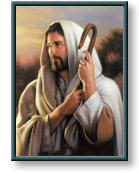
At the Last Supper, the evening before he died to make it possible for us to go to heaven, Jesus said, “I am the gate. Whoever enters by me will be saved.” For Christians, a solid, loving relationship with Jesus Christ, not just head knowledge of him, is necessary for entrance into heaven. Nurturing our friendship with Jesus will make all the difference in this world and the next. My new book Praying with Scripture: The Bible, You’ve Got Mail! can help you do this. You can get it by sending me a check for $10.00 or by ordering it from me and Amazon.
What do you do to strengthen your relationship with Jesus?
Conquering Spelling Demons
 This post is quite a departure from my other ones, but I have good reason for putting it up. During this Year of Mercy, it’s my attempt to practice the spiritual work of mercy “instruct the ignorant”! For most of my teaching ministry, I taught English. To help my students spell commonly misspelled words, I came up with some devices. These tricks helped me spell, and I thought I’d share them with you. The list here contains my own concoctions as well as traditional ones.
All right: All right is better than all wrong.
Bulletin: Who put the bullet in the gun?
Calendar: It contains days.
Cemetery: We go to the cemetery with ease.
Committee: It’s a group, so letters are doubled: 2 m’s, two t’s two e’s.
Dessert: We like two helpings of dessert.
Develop: A final e is “lopped” off.
Exaggerate: It means to add on, so add a g.
February: In February we say, “Brrr.”
Friend: A friend is a friend to the end.
Grammar: Gramma knows her grammar.
Hear: I hear with my ear.
Judgment: A judge dismissed the e.
License: c precedes s in the alphabet.
Lose: It lost an o (not spelled loose).
Magnificent: There is a penny at the end.
Murmur: It’s rum-rum backwards.
Mystery: My mystery is spelling.
Necessary: We wear one cap and two shoes.
Nickel: Nickel is an element.
Niece: A niece is nice.
Parallel: All parallel lines never meet.
Pleasant: Picnics are pleasant for an ant.
Principal: The principal is your pal.
Privilege: A privileged person (VIP) is well guarded: two I’s guard the v; two e’s guard the g.
Questionnaire: Think “question” N (and) “air”
Repetition: The e’s and then the i’s repeat.
Stationery goes in an envelope.
Thorough: To do a thorough job is rough.
Accommodation has 2 m’s as in “modern motel.”
In some cases, spotting smaller words in longer words helps:
Apologize: polo
Attendance: dance
Believe: lie
Conscience: science
Environment: iron
Familiar: liar
Forty: fort
Misspell: miss
Peculiar: liar
Potatoes: toes
Repetition: pet
Sacrament: ram
Shepherd: herd
Separate: a rat
Stretch: etc.
Surprise: rise
Tomatoes: toes
Villain: lain
Weird: we
These are some confusing couples:
Lightning/lightening: In lightning the e is struck out, as by a bolt.
Truly, sincerely: The longer letter closing keeps the e.
Which, witch: Question words usually begin with wh.
Altogether/all together: Altogether is wholly; all together is all in a place.
Affect/effect: Affect is for action (verb); effect is a noun.
You might mentally exaggerate the pronunciation in these sticklers:
Accidentally
Convenience
Desperate
Extraordinary
Fatigue
Genuine
Interesting
Laboratory
Particular
Probably
Sophomore
Temperature
In these words, mentally pronounce every marked letter:
Often
Cupboard
Government
Salmon
Subtle
Library
February
Wednesday
TIDBIT: In Hebrew, the original language of the Old Testament, there were no vowels. Moreover there were no spaces between words. Can you imagine how difficult it was to translate it? “No where” could just as easily be “How here.”
Do you know of other memory devices for English words that are often misspelled?
Proverbs, Adages, and Pithy Sayings
 We enjoy proverbs and sayings. Witty ones bring a smile to our face. We post them on Facebook and buy t-shirts and mugs that display them. They capture the wisdom of the people. We admire Benjamin Franklin’s Poor Richard’s Almanac, the source of adages such as “birds of a feather flock together,” “a stitch in time saves nine,” and “necessity is the mother of invention.” The Book of Proverbs in the Bible contains hundreds of them. However, we are not as familiar with it as we are with the Psalms. Let’s take a closer look at this first of the Wisdom books.
As you might guess, the Wisdom movement began in King Solomon’s court where 3,000 proverbs were preserved. The book of Proverbs, though, wasn’t compiled until the early 5th century B.C., five hundred years after Solomon. Because it is a collection of collections, there is some repetition.
The purpose of the book appears in verses 2 and 3: That men may appreciate wisdom and discipline, understand words of intelligence; receive training in wise conduct, in what is right, just and honest. The advice given is meant especially for young people (3:28: Say not to your neighbor, “Go, and come again, tomorrow I will give, “ when you can give at once.”) and to train people in royal courts. (25:15: By patience is a ruler persuaded, and a soft tongue will break a bone).
The book has two main parts: Chapters 1–9 instruct youth how to be wise and live a good life. Chapters 10–31 are collections of short sayings like these:
15:1 A mild answer calms wrath but a hard word stirs up anger.
16:8 Better a little with virtue, than a large income with injustice.
Proverbs 31:10–31 is an acrostic that describes the ideal woman. You may have heard it read in funerals for women.
Many proverbs are purely secular, practical suggestions on how to get along in life, to won friends and influence people to accept frustration with grace. Some proverbs were “borrowed” from neighbors. Thirty sayings in chapters 22–24 are the Thirty Sayings of Amenemope, Egyptian wisdom literature! The Hebrew book is different because it is based on the belief that full wisdom belongs to God, but “The beginning of wisdom is the fear of the Lord” (9:19).
In Proverbs, Wisdom is personified as a heavenly Being who accompanied God in all he did. She “cries aloud in the street.” (1:20) and “invites us to her banquet” (9:1). She is a beautiful woman who leads people to a full life; a spouse associated with the Spirit of God.
The main message of Proverbs is unless you love God and do his will, your life will be without meaning or happiness. Many proverbs contrast the wise and the foolish.
Characteristics of Poetry
Some proverbs have the characteristics of Hebrew poetry. Some of these traits, like the puns, are only evident in the original language. The following ones, though, are obvious.
First line is repeated in second line or expanded or an opposite:
Repeat:
Pride goes before disaster /and a haughty spirit before a fall. 16:18
Opposite:
The memory of the just will be blessed,/ but the name of the wicked will rot. (10:7)
Expand:
Entrust your works to the Lord,
and your plans will success (16:3) (results of first action)
“Better than” comparisons:
Better a dish of herbs where love is/ than a fatted ox and hatred with it (15:17)
Comparisons: metaphors and similes
Like golden apples in silver settings/are words spoken at the proper time (25:11)
Lips of adulteress drip with honey,/but in the end she is as bitter as wormwood. 5:3-4)
Like a golden ring in the swine’s snout/ is a beautiful woman with a rebellious disposition. (11:22)
The start of strife is like the opening of a dam;/therefore check a quarrel before it begins 17:14
The words of a talebearer are like dainty morsels/that sink into one’s inmost being. 18:8
A joyful heart is the health of the body,/but a depressed spirit dries up the bones. 17:22 17:12
He who makes a fortune by a lying tongue/is chasing a bubble over deadly snares. 21:6

Here are three proverbs that I found interesting:
Look not on the wine when it is red, when it sparkles in the glass.
It goes down smoothly; but in the end it bites like a serpent. 23:31
Let another praise you—not your own mouth 27:2
Go to the ant, O sluggard, study her ways and learn of wisdom. She procures her food in the summer. 6:6
• What is one (or more) of your favorite proverbs, either biblical or secular?
If you like quotations, you might like my author’s website at www.facebook.com/St.PetersSpouse. On it I post good sayings in addition to reports on my writing ministry.
Infusing Faith in Little Children
 Providentially, I received my newest book, The Heartbeat of Faith: 59 Poems, Fingerplays, and Prayers, on my birthday. I wrote this book because a teacher at a workshop I gave commented how useful she found my poem about etiquette in church. Strangely I didn’t even remember writing it! If this poem was a help to her, I reasoned that a book full of such poems would be welcomed by other teachers, parents, and grandparents. The faith is caught at an early age. Psychologists tell us that basic attitudes are formed in the first five years of life. My book is for children from ages 3 to 7. I like to tell the story of the father whose son was very quiet in his room. The dad cracked open the door and peered inside just in time to see his little boy get up from his train set, run to the statue of the Sacred Heart and kiss it. “Why did you do that?” the father asked. “Because he’s a good guy,” the tot replied. He already knew about Jesus.
My earliest memory is being at a high Mass in St. Vitus Church with my grandmother. The incense made me cry, and Grandma and her friends were trying to quiet me! I also recall the hours my mother spent drilling me on the Baltimore Catechism answers so I could recite them in the Wednesday catechism classes. How important it is that parents pass on their faith in Jesus to their children. They are responsible for the physical life of their offspring: seeing that they eat, sleep, and exercise. Parents and grandparents help children to walk, talk, and introduce them to the world. They need to be equally concerned about their children’s spiritual growth and their understanding of the supernatural world. The Church tells us that parents, not PSR teachers or priests, are the primary religion teachers of their children.
So how do parents go about sharing their faith? Here are a few ideas:
• Take the children to Mass. So what if they cry and you need to carry them out during Father’s homily? At Mass provide them with religious books and prayer books instead of books about mermaids, trucks, and princesses.
• Along with reading fairy tales as bedtime stories, read Bible stories.
• On road trips play some Christian songs. As lullabies sing gentle Christian hymns.
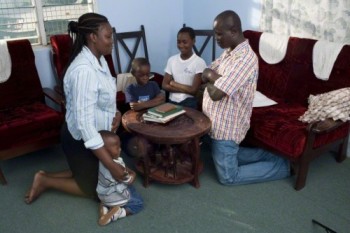 • Pray with your children: at meals and before they go to bed. Bless them.
• Display Christian images in your home such as a crucifix, palm, statues of Jesus and Mary.
• For Christmas give Jesus and Mary equal time with Santa and his elves, and for Easter give the Risen Lord equal time with the Easter bunny.
• Teach your children the Sign of the Cross, the Our Father, Hail Mary, and Glory Be before they learn them in school or PSR.
• Take your children along with you when you do works of mercy such as visiting the sick and serving in a soup kitchen.
Here is the poem the teacher liked and which is one of the 59 in my book:
In Church
In God’s holy house
I’m as quiet as can be.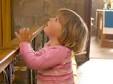
There I talk to Jesus,
And Jesus talks to me.
Church, God’s holy house,
Is not the place for fun.
I do not laugh or giggle,
Wiggle, scream, or run.
Deep within my heart
When I’m very, very still
I hear God say, “I love you,
And I always will.”
- What are your memories of “catching the faith” at home with your parents?
- What do you do with your children to introduce them to God, Jesus, Mary, and the saints?
PS: My book, published by ACTA Publications, is $12.95 and should be on Amazon.com any day now. If you would like an autographed copy that has additional art, send me a check for that amount (4237 Bluestone Rd.; South Euclid, OH 44121).