Spotlight on the Family 3: Blessings
 When someone sneezes, we automatically respond, “God bless you.” (Supposedly this practice was begun by Pope Gregory the Great during the plague.) My answering machine message ends with “Have a blessed day!” Just what is a blessing? It is a prayer to call down God’s goodness and protection on someone or something. When Jacob was dying, he gave a special blessing to each of the twelve tribes of Israel. People brought their children to Jesus so that he might bless them. A papal blessing is the gift of the pope’s apostolic blessing on the occasion of a special anniversary or celebration and certified by a beautiful document from Rome. Priests bless us at the end of Mass, and they bless rosaries, pets, and houses. But popes, priests, and deacons are not the only ones who can bless. The catechism states, “Every baptized person is called to be a blessing and to bless.” (2669) We can bestow blessings because our baptism made us a priestly people. It makes sense that family members would want to bless one another. (more…)
Spotlight on the Family 2: Prayer
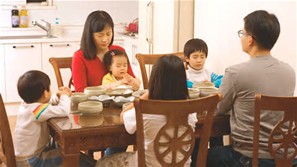 As a child, French author Anatole France heard about St. Simeon Stylites who lived on a pillar for 37 years in Syria so he could pray in solitude. In imitation of St. Simeon, little Anatole placed a chair on kitchen table and sat on it. But then at dinnertime his mother had him take it down. Anatole commented, “I perceive that it is a very difficult thing to be a saint while living with your family.” Yet, this is the goal of families: to raise saints. A saint is someone who has a wonderful relationship with God, a relationship that is fostered by prayer. (more…)
Spotlight on the Family: The Domestic Church 1
 Where did you learn the Hail Mary? the story of Christmas? to go to Mass? that you should share your toys with others? that hitting someone is wrong? Undoubtedly, in your family. In view of the focus on the family this month in the World Meeting of Families in Philadelphia and in the upcoming Synod on Families in Rome next month, for the next few blogs, I plan to write about families, in particular, about nurturing the faith in families. The posts will include some wise advice from Pope Francis. (more…)
Mindful of the Invisible Ones Who Serve
 A few weeks ago, some 400 of us Sisters met at a hotel to plan our future. On the last day, one of the hotel workers commented, “We liked having you because to you we weren’t invisible.” How often we take those who serve us for granted and even overlook them. (Maybe you are one of the “invisible” ones.) So, I’m thinking, what if we put on glasses that enable us to see these special people and acknowledge their presence by saying a word or two, especially a thank you. Yes, we leave a tip for the person who cleans our hotel room, but how much more meaningful if we personally delivered our thanks, looking the person straight in the eye. Who are some of the other people who make our lives smooth and help us in ways that we are scarcely aware of? (more…)
Where’s God When You Can’t Pray?
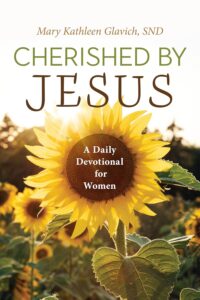
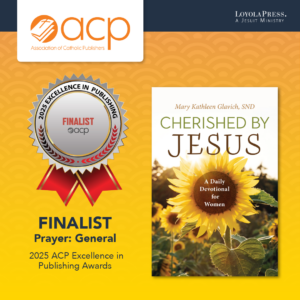
 Lately I’ve been writing books on prayer, in particular about praying on empty. Maybe you can identify with this: During your prayer you keep checking the time and the minute hand seems barely to have moved. You understand why St. Teresa of Avila shook her hourglass as she prayed, attempting to speed up the time. Instead of enjoying time with your Lord, you are restless and your mind is full of distractions. You don’t sense God’s presence, and he certainly isn’t speaking to you. It’s as though you are talking to yourself. Periods of dryness in prayer are frustrating and confusing. You might think that God no longer loves you or maybe you did something to displease God or, worse yet, maybe God doesn’t exist! (more…)