Watch and Wait in Advent
 On Black Friday I ventured out to find a new watch and immediately located the right one. However, it needed two links removed in order to fit. “Just a minute,” the clerk said as she tinkered with the links. She continued to say that for over an hour. At one point I volunteered to try to replace the first screw that was only slightly larger than a filament, while she took care of other customers. I removed my glasses to better aim the screw into the teeny hole where it belonged. Bent over the glass-covered counter, I squinted to focus on the near-invisible slit on the screw that the little screwdriver was to go into. I also tried not to lose the tiny screw, which sadly happened for a time. After about a half hour, success! Now my clerk was taking care of a man and woman. The computer seemed to be causing her trouble. There was still another link to remove. As I paced in the aisle, the man strolled over and commented, “You have the patience of Job. What is the difference between an in-law and an outlaw?” After I asked, “What?” he said, “One can be locked up.” Then he proceeded to say, “Two men offered to deliver a pizza to the pope. The man chosen promised to split the tip with the other man. When he returned, he did—He made a vertical line with his hand.” That fellow customer did not know me from Adam, yet he took the time to brighten my frustrating morning. (more…)
Is Christ Your King?
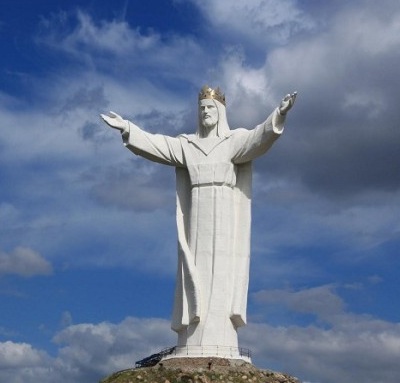 We’ve just celebrated the Feast of Christ the King, the climax of the church year. My religious province in Chardon, Ohio, was named Christ the King and used to celebrate this day in grand style, complete with the majestic song “Christus Vincit” in four-part harmony. In those days the feast occurred in October when the surrounding countryside was ablaze with autumn leaves. In my religious community, when the time came to receive a religious name, it was the custom to submit three name choices, usually those of saints. The general superior in Rome would then select your name, and you would celebrate your name day on the saint’s feast day. Because I had my heart set on having the Feast of Christ the King as my name day, I came up with thirty-two names that stood for him. Some were unique, such as Inri (for the sign on the crucifix, the acronym for Jesus of Nazareth, King of the Jews). Rana, which is “king” in modern Indian, made my list, until I discovered it meant “frog” in Latin! (more…)
Give a Fig and Care
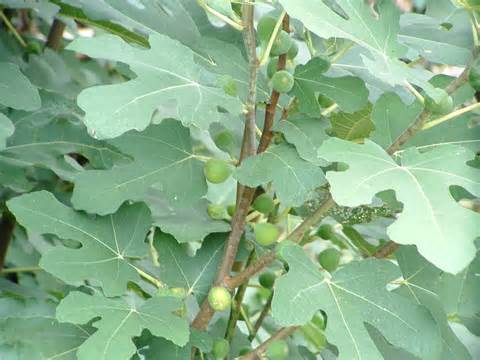 This week I heard two homilies in a row in which a priest mentioned a fig tree. That was the inspiration for this blog. I like Fig Newtons but never ate an “undried” fig until Sister Regina Alfonso brought some home from Tennessee. In Scripture fig trees are a sign of peace and prosperity. Our expression “I don’t give a fig” stems from the fact that fig trees were abundant. It means “I don’t care.” Caring is important, something that human beings do. When one of my nephews had the habit of saying, “Who cares?” my sister fined him a quarter each time he said it. These days people all over the world are caring about those who were affected by the horrendous events in Paris. We sympathize with their suffering and sorrow. The three colors of the French flag are cropping up all over, an attempt at “comforting the sorrowful.” (more…)
Questions Jesus Asks YOU

 I saw that Time Magazine is publishing a book in which famous people answer questions that Jesus posed. They beat me to it! At one time I considered writing a book about Our Lord’s questions. We believe that the Bible is living and active and that God speaks directly to us through his Word. Therefore we can take his words personally, including the questions of Jesus. As a unique prayer, you might ponder these questions as though Jesus were standing before you and asking them. Then answer them. You might even write out your answers as in a letter. You don’t have to be famous.
“What are you looking for?” (John 1:38)
“Do you want to be made well?” (John 5:6)
“Why are you weeping?” (John 20:15)
“Do you love me?” (John 21:16)
“Why are you afraid? Have you still no faith?” (Mark 4:40)
“Do you not remember?” (Mark 8:18)
“Who do you say that I am?” (Mark 8:29)
“For what will it profit them to gain the whole world and forfeit their life?” (Mark 8:36)
“What do you want me to do for you?” (Mark 10:51)
“Could you not keep awake one hour? Keep awake and pray that you may not come into the time of trial; the spirit indeed is willing, but the flesh is weak.” (Mark 14:37–38)
“If you lend to those from whom you hope to receive, what credit is that to you?” (Luke 6:34)
“Why do you see the speck in your neighbor’s eye, but do not notice the log in your own eye?” (Luke 6:41)
“Why do you call me ‘Lord,Lord,’ and do not do what I tell you?” (Luke 6:46)
“Where is your faith?” (Luke 8:25)
“Who do the crowds say that I am?” (Luke 9:18)
“Can any of you by worrying add a single hour to your span of life?” (Luke 12:25)
“Do you believe that I am able to do this?” (Matthew 9:28)
“You of little faith, why did you doubt?” (Matthew 14:31)
“Do you think that I cannot appeal to my Father, and he will at once send me more than twelve legions of angels?” (Matthew 26:53)
Another prayer activity: What questions would you ask Jesus if he stood before you? Listen in your heart for his answers.
When has Scripture been “living and active” in your life?
Daily Bible reading is recommended. Recently I came across the saying, “Dust on the Bible, draught in the heart”!
Saints Alive! Pick a Patron
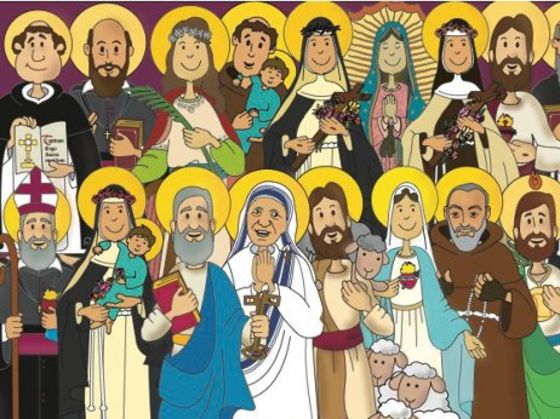 Artists and musicians formerly had patrons who supported their work both financially and psychologically by encouraging them. As we strive to make our lives “something beautiful for God,” as Mother Teresa said, we have the option of choosing a patron: a heavenly one. If you have been christened with a saint’s name, then your patron is automatic. You have a powerful ally praying for you and ready to help you, albeit an invisible one. Nowadays babies are given names like Apple, LaRhonda, and Phoenix (like my grandnephew). If your name is not a saint’s name, you can pick a saint. In the Creed we say we believe in the Communion of Saints. That means we are bonded with all church members living and dead. So network with someone in heaven. Learn about him or her and then ask them to pray for you for whatever you need. (more…)