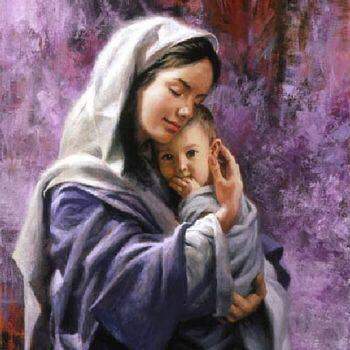
Hands of Blessed Mother Mary
Pope Leo XIV
Our God is a God of surprises. He certainly blew us away by giving us an American pope—a Christlike man. Let’s praise and thank God for this gift that renews the hope of the whole world. Did you see the two seagulls walking around the chimney awaiting the white smoke? To me they were a sign of the Holy Spirit overseeing the voting. And then a fluffy grey baby bird joined them, a symbol of new things to come.
Mary’s Youthful Hands
We are in the month of May, the month traditionally devoted to honoring Mary, the Mother of God and our mother. Here is an overview of her life, focused on her hands…
The hands of Mary were not the soft, pampered hands of a queen, but the strong, capable hands of a working woman. As a young girl, surely she helped her mother Anne around the house with daily tasks. What was Mary doing when the Angel Gabriel appeared to her? People conjecture that she was fetching water from the well or spinning wool. Maybe she had her hands folded in prayer.
When Mary went to help pregnant Elizabeth, at their meeting her hands probably embraced her relative and caressed her wrinkled face. Then for three months, Mary’s hands were kept busy serving Elizabeth and mute Zachary with love. Perhaps the two women sewed baby clothes during this time of waiting. I can picture Mary massaging Elizabeth’s back and feet.
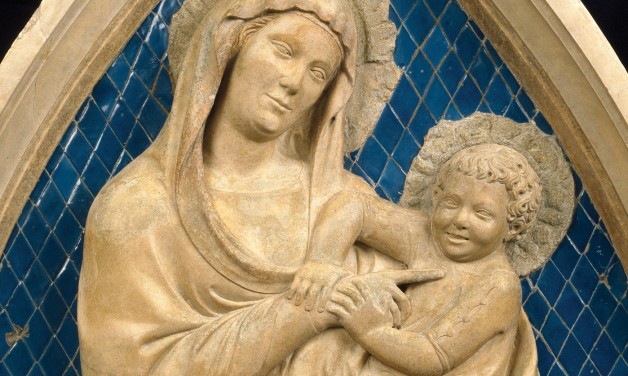
In Bethlehem, Mary’s hands were the first ones to hold God-made-man except for the person (Joseph?) who delivered him. Scripture says that she wrapped her newborn in cloths and laid him in a manger. From that moment—and for the next thirty or so years—her hands were at work caring for her Son. She burped Jesus, tickled him, and held his hands as he took his first steps.
She washed him when he was dirty and sweaty, and when he was hurt in the carpenter shop or playing rough with the other boys, she dried his tears and soothed him.
When Jesus as a preteen was lost for three days, I envision Mary wringing her hands with worry and then on finding him, taking him by the shoulders and giving him a little shake.
In charge of Joseph’s household, Mary kneaded dough, made clothes for her men, swept the floor, and stirred countless stews. No doubt, when Joseph died, it was her hands that lovingly prepared his body for burial.
As an Older Woman
When Jesus returned to Nazareth as a successful teacher and enraged his neighbors by his words in the synagogue, Mary was a witness. As she saw her friends and relatives ready to cast Jesus off a cliff, her hands probably flew to her mouth in horror. (On a precipice in Nazareth is a chapel in ruins called Our Lady of the Fright.)
When Jesus visited Nazareth did he stay at the parental home? Did Mary prepare meals for him and his twelve apostles? Could be.
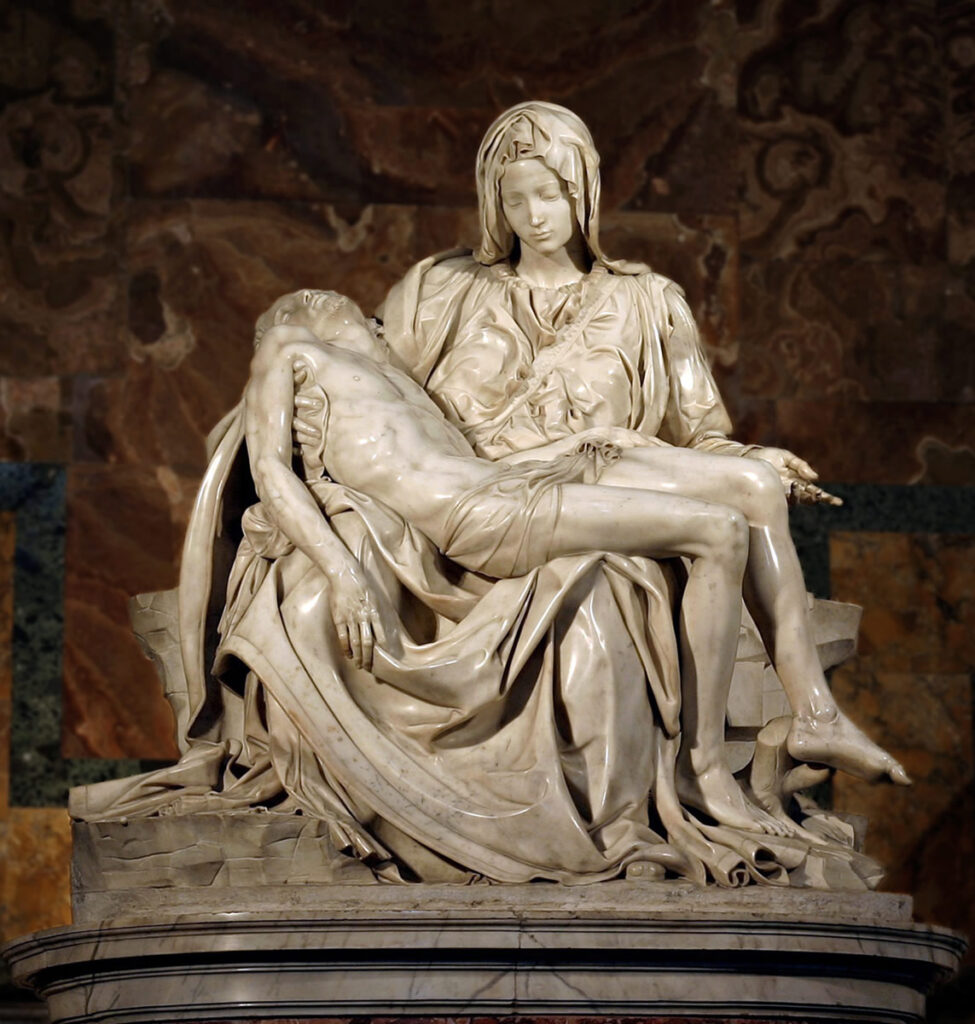
Michelangelo’s poignant “Pieta” reminds us of the dreadful day when Mary held her Son’s body for the last time, now a mutilated, bloody body. It’s been proposed that Jesus’s garment that the soldiers gambled for had been made by his mother.
Before Jesus died, he entrusted himself into the Father’s hands, but he entrusted the apostle John into Mary’s hands. Then Mary had another “son” to care for, actually many sons and daughters.

Safe in Mary’s Hands
Mary also became Mother to all of us. In the Morning Offering we pray, “O Jesus, through the Immaculate Heart of Mary, I offer you….” Mary is not eternally resting in Heaven. No. She is busy working for us as an intercessor. We ask our heavenly mother to “pray for us sinners now and at the hour of our death.”
St. Catherine Labouré had a vision of Mary, which is reproduced on Miraculous Medals. In this vision rays of light streamed from gems on Our Lady’s hands. The Blessed Virgin explained: “The rays are graces which I give to those who ask for them. But there are no rays from some of the stones, for many people do not receive graces because they do not ask for them
.”
The oldest Marian prayer is: We fly to thy patronage, O holy Mother of God; despise not our petitions in our necessities, but deliver us always from all dangers, O glorious and blessed Virgin. Amen.
For your listening pleasure, here is Bing Crosby singing “O Sanctissima” :
Note
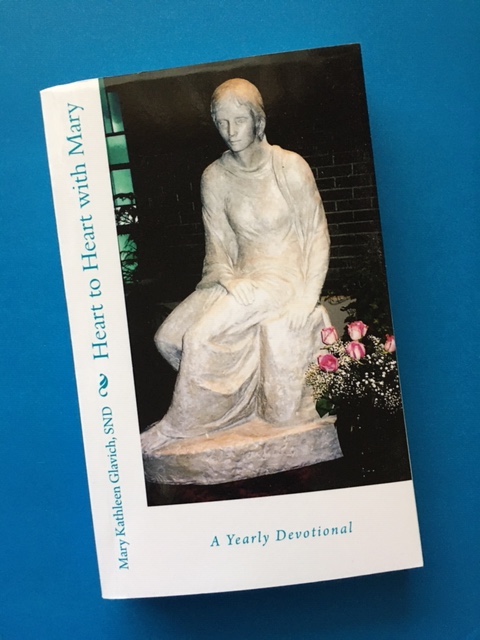
My book Heart to Heart with Mary with daily reflections remains my most popular book. On each page Mary speaks to you personally as her child. It is uncanny how her message for the day is in sync with your life.
The book is $15.00 and available on Amazon.
• What is your favorite prayer to Our Lady? Which of her titles is your favorite?
A Mantra as a Last Resort
My Experiences with a Mantra
I’m Introduced to a Mantra
I spent one Christmas Day in the convent, creating a calendar as a gift for my father. That night my sister called. She said, “Dad had a heart attack. He’s in the hospital. He’s been anointed. You better come.” No one in my family had ever been seriously ill before.
At the hospital, my dad was hooked up to machines and unconscious. I can still hear the hiss of the machine keeping him alive. At home in bed that night I couldn’t sleep. I was petrified wondering what would happen to Dad. What would my mother do? Then gently into my heart came the words, “The Lord is my shepherd.” These words became a mantra. Repeating them over and over comforted me. They made me realize that God was with me and I fell asleep.
The next morning when I returned to the hospital, two men were with my father. One was his doctor who introduced me to the male nurse who had worked overtime caring for my dad Christmas night. His name was Bob Shepherd.
A few years later a retreat director told me he was going to explain a way of praying that he called the prayer of the heart. It was praying mantras. I told him that the Holy Spirit had already taught me to pray that way.
A Mantra to the Rescue Again
In an operating room awaiting surgery for a herniated disk in my neck, I found myself praying, “Even though I walk through the valley of death, you are with me!” After I came to, I kept repeating, “The Lord is my shepherd” all night. In the morning I remarked to a nurse that the machine next to my bed that sounded like a stream flowing over rocks had been very soothing. She said, “There’s no machine next to you.”
When you are sick, tired, plagued with a problem, or stressed out, you may not be able to muster enough energy to pray a Hail Mary or pick up our Bible. At such times you can fall back on the simplest prayer: a mantra. It is a restful and comforting form of prayer. Praying a mantra makes us God-conscious. Of course, God is always present. A mantra gently leads us to become aware of him and his love for us.
Praying a mantra follows St. Paul’s advice to pray without ceasing (1 Thessalonians 5:17). If we make a habit of praying it, soon this prayer is sounding in our hearts without our intending to pray it.
The Jesus Prayer
The shortest mantra is simply “Jesus.” In the Bible we read that the name of Jesus is above every name. At this name every knee should bend (Philippians 2:9–10). Jesus told us that whatever we ask the Father for in his name we will receive.
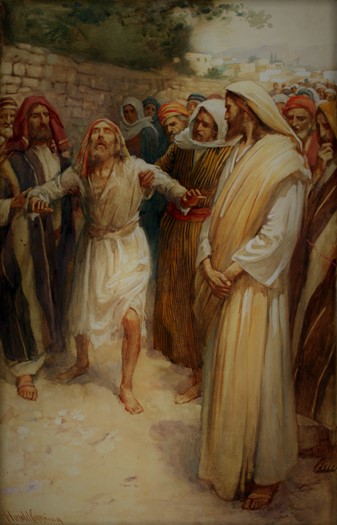
The oldest and most popular mantra is the Jesus Prayer: Lord Jesus Christ, Son of God, have mercy on me, a sinner. Supposedly it originated with the Desert Fathers in the fifth century. The words are Scripture based. They echo the repeated pleas of Bartimaeus: “Jesus, Son of David, have mercy on me” (Mark 10:47) and the prayer of the publican in Jesus’s parable: “Have mercy on me, a sinner” (Luke 18:13). Some people like to pray the first part as they inhale and the second part as they exhale.
In the Jesus Prayer, we call on Jesus by his essential identity, the Son of God, thereby professing faith in his divinity. Then we ask for mercy, as so many hurting people did when Jesus walked the earth. We look to his mercy not only to forgive our sins but to heal us, to open our eyes and ears. At the end we humbly identify ourselves to the all-holy one as not-so-holy sinners.
Someone suggested gradually reducing the prayer as you pray. Begin by repeating the entire prayer. Then repeat it leaving off “a sinner.” Then omit “on me,” and so forth until you are repeating only “Jesus.”
If you are alone, you might make up a melody for the Jesus Prayer and sing it!
How to Pray a Mantra
Once I found myself praying the Jesus Prayer as I crocheted a baby blanket. The words fell in sync with my stitches: “Jesus, Son of God, have mercy on me, a sinner.” You don’t have to crochet to pray a mantra. You can pray it while walking or mopping a floor. Some people like to sit quietly with hands open. Mantras can be sung. Taize prayer are sung mantras.
A priest told me that he spent an eight-day retreat doing nothing but singing, “Jesus, Jesus, let everything that is you flow into me,” to the refrain of Roc O’Connor’s hymn “Jesus Is Lord.” He came out a changed man.
I’ve noticed that sometimes one of the words that I’m saying has become another word, giving new meaning to my prayer.
We can praying mantras while we stand in line in a store, wait for something to download, or sit through a long red light. We can pray mantras when we’re put “on hold” on the phone or when we’re trying to fall asleep.
Sources of Mantras
What can you use for a mantra? You can choose a psalm verse or a line from a prayer, words from the Mass, or make up your own.
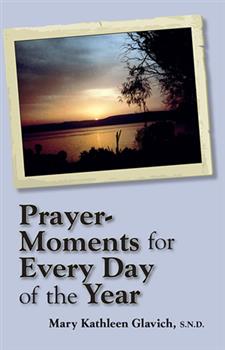
My book Prayer-Moments for Every Day of the Year is a collection of possibilities. Originally it was published by Twenty-Third Publications with a different, lovely cover. Then Paulist Press picked it up and allowed me to use my photo of sunrise over the Sea of Galilee on the cover. You can find this book in the bookstore here, buy it from me or from Paulist Press.
Here is a sample of Taize prayer:
• What has been your experience with mantras? If you’ve never prayed this way, you might try it. You may be surprised.
Jesus’s Wounds Prove Love; So Do Ours
My father was not one to demonstrate affection to us kids either physically or verbally. However, while he was in the hospital dying, one day he held up his hands and said to my mom and me, “I showed my love by these hands.” Dad always worked night shift in a factory and came home at three in the morning. His hands were calloused. Sometimes a fingernail was black, damaged in the shop.
Jesus’s Wounds
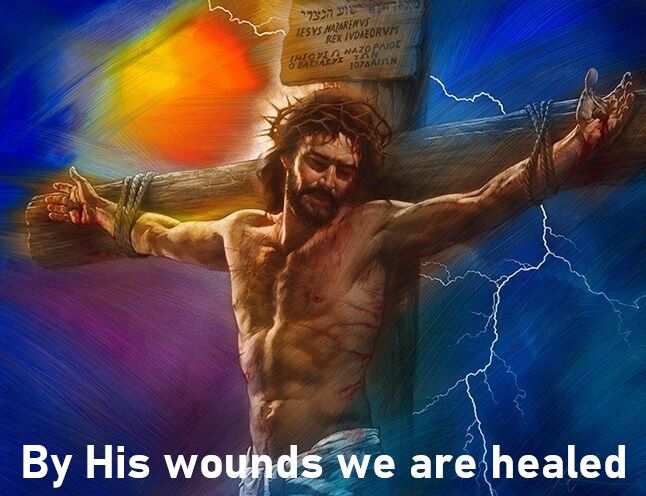
I thought of my father’s hands when I read this past Sunday’s Gospel. The risen Lord appears to his apostles and proves that it is really he by showing his hands and feet still marked with the wounds of his love. You would think that a new, glorified body would be perfect—but, no, the body of Jesus bore scars. He may be marked like that for all eternity so that we too will see his scars.

“Christ is risen!”
His body was a mess of wounds from the whippings on his back to the crown of thorns that pierced his head. We focus though on the wounds endured on the wooden cross: the two nails in his hands, the two in his feet, and the one caused by a lance thrust into his side.
Jesus proved that he wasn’t a ghost by inviting the apostles to touch him, by explaining the Scripture passages that referred to his death and resurrection, and by eating. (Ghosts don’t eat.) But the most convincing sign of Jesus’s identity was those five wounds. He used them to convince Thomas that he was risen from the dead, inviting him to touch those wounds. The Gospels don’t say if Thomas did.
The wounds of Jesus were five red badges of his love for us. He will bear those scars for all eternity.
Chaplet of the Five Wounds
A chaplet is a string of beads for praying, for example, the rosary. People pray various chaplets prayed in honor of the five wounds of Jesus. Click here for one along with an explanation of the devotion.
The Stigmata
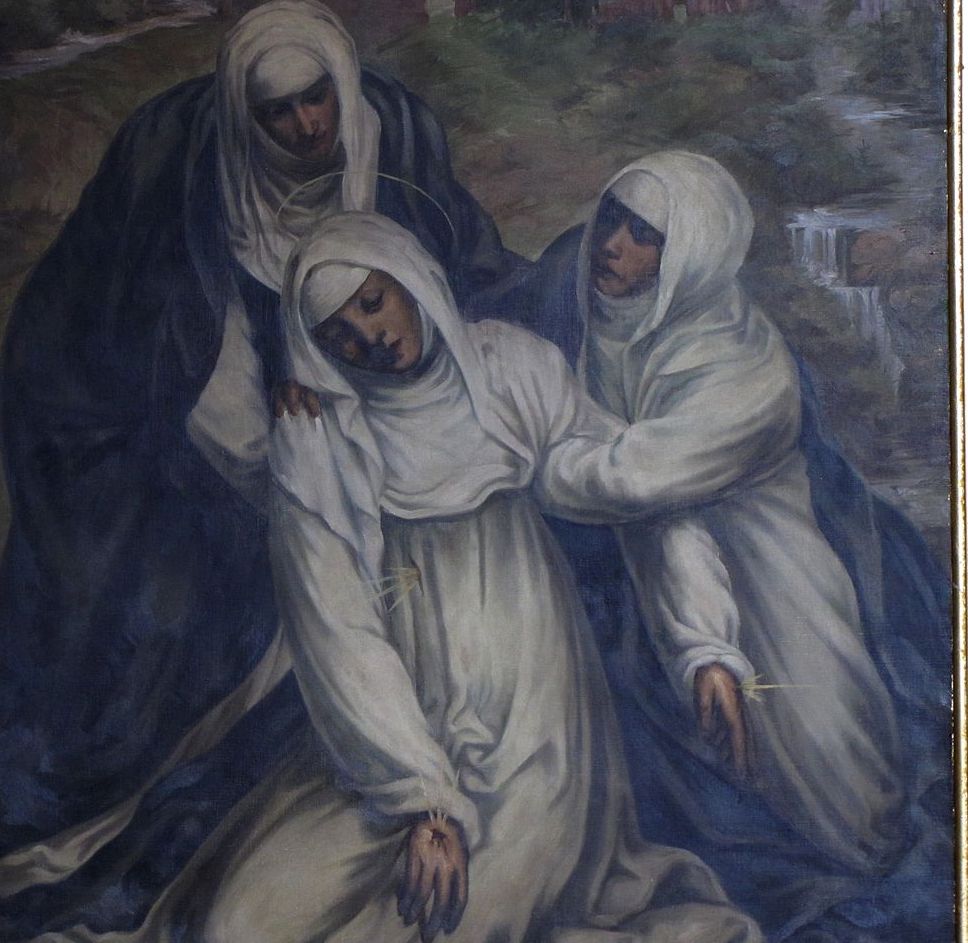
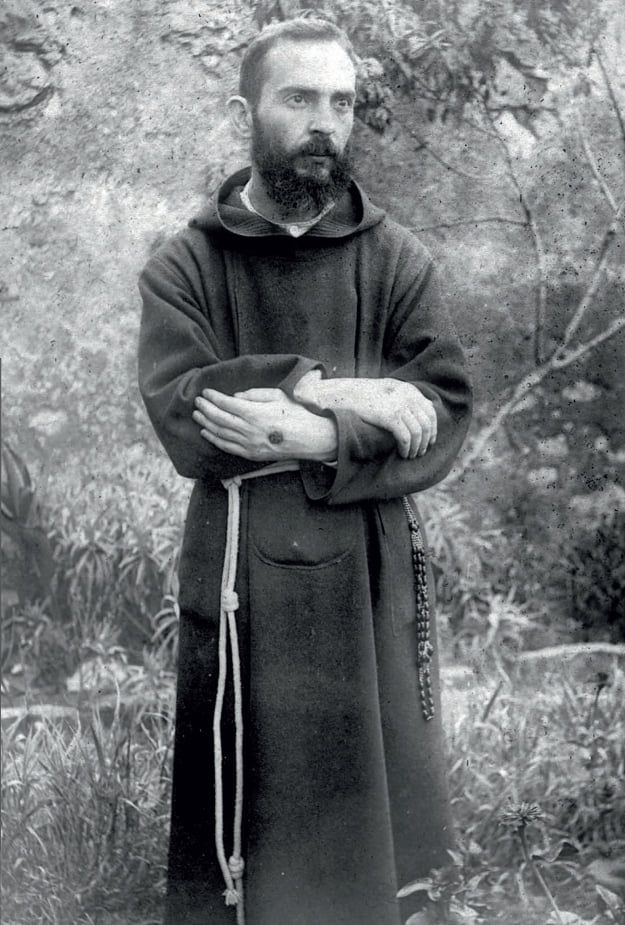
Several saints received the physical phenomenon of the wounds of Jesus appearing in their body. St. Francis of Assisi was the first known stigmatist. St. Catherine of Siena, my patron saint, is another. St. Padre Pio of Pietrelcino is a modern one.
Our Wounds
Loving service takes a toll on us too. Parents bear scars of burns from cooking meals for their families and ironing clothes. Teachers and nurses often develop varicose veins from standing for long hours. Members of the armed forces come home maimed. Police officers get shot or hit or dragged by cars. Some people sacrifice a kidney so that another person can live longer.
Reflecting on Our Wounds of Love
This week we might reflect on people who have been wounded in the course of loving us. We might also ask how we have followed the example of Jesus by offering ourselves for others in some form. What kind of scars do we bear? Blisters from building a Habitat for Humanity house? A knife cut on a finger from preparing a meal for someone at home or in a hunger center?
Keep in mind that some scars are not visible, for example, a bruised heart from being rebuffed after attempting to reconcile with someone.
As we celebrate the fifty days of the Easter season, let’s not forget that the triumph over sin and death was only possible because God endured Good Friday’s pain for love of us.
A Prayer
BEHOLD, O good and sweetest Jesus,
I cast myself upon my knees in Thy sight,
and with the most fervent desire of my soul
I pray and beseech Thee
to impress upon my heart
lively sentiments of faith,
hope and charity,
with true repentance for my sins
and a most firm desire of amendment:
whilst with deep affection and grief of soul
I consider within myself
and mentally contemplate Thy five most precious Wounds,
having before mine eyes that which David, the prophet,
long ago spoke in Thine Own person concerning Thee,
my Jesus: They have pierced My hands and My feet,
they have numbered all My bones [Psalm 21, 17, 18]
Jesus’s Wounds Celebrated in a Hymn
Click on this link to see and hear this hymn:
https://youtu.be/nLo3NJgqaQc?si=XvtbMuFGgYintMyR
• Who has suffered wounds for you?
Let There Be Laughter: Enjoy the Good News

Let There Be Laughter This Week
Easter is a time for joy. Because Jesus, the Son of God, died and rose from the dead, our final destination is not hell or nothingness. Instead, we can look forward to everlasting life, a new and glorious life with God. that is why Saint Augustine said a Christian should be an alleluia from head to toe. Alleluia means “Praise God.”
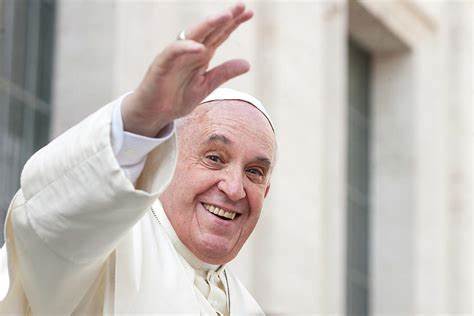
In view of the death of Pope Francis this week, at first I thought this post was inappropriate. But then I realized that this saintly man is relieved of the heavy burden of his office and enjoying eternal life now. No doubt he is smiling in the presence of Jesus and would approve of this post. Remember how he invited comedians to the Vatican in 2024?
I came across an article I wrote years ago for Religion Teacher’s Journal. It is directed to teachers, but anyone will enjoy its humor. So here it is, abridged for your reading pleasure . . .
I love to walk through a school and hear laughter cascading out into the hall. Of all subjects, religion is most naturally associated with laughter. Where good news is told there should be happiness.
God Has a Funny Bone
Ah, but some might argue, God is too awesome to be treated lightly. Religion, like all matters of life and death, is a serious subject. True, but there’s no denying that God and people laugh. Anyone who creates a giraffe, an anteater, a hippopotamus and a two-year-old human, anyone who plays jokes on an aged Sara and a fire-breathing Saul must have a sense of humor. God made us in his image, his likeness. So he bestowed on humankind the gift of laughter, which distinguishes us from all other earthly creatures.

Scripture never says that Jesus laughed (a serious oversight!) Leave it to him to teach against greed by conjuring up the image of a camel passing through the eye of a needle—especially if the camel has two humps. And a twinkle must have been in his eye when he sent Peter, the great fisherman, to fetch tax money from a fish.
Woe to that professor who quotes to fledgling teachers, “Don’t smile until Christmas.” Teachers should take their cue from good speakers who open with an amusing comment to break the ice and then sprinkle their talk with funny anecdotes to keep the audience with them. Humor creates the warm atmosphere that is conducive to learning.
Moreover, laughing is healthy, called the best medicine. It’s said to massage the liver. Scripture recommends it: “A joyful heart is the health of the body, but a depressed spirit dries the bones up” (Proverbs 17:22).
Following are suggestions for “planned laughter”:
Collect jokes.
Jokes make wonderful approaches to lessons and sometimes crystallize a concept. But, best of all, they spark student interest and add to the enjoyment of the class.
In a lesson on God, for instance, tell about the little girl who was drawing a picture of him. Her mother commented, “But no one knows what he looks like, honey.” And she countered, “They will when I get finished.”
Bible jokes abound. One of my favorites is about Adam and Eve and their two boys walking past the gates of Paradise guarded by the cherubim. Abel asked, “What that, Dad?” Adam replied, “That’s where we used to live before your mother ate us out of house and home.”
Make and encourage amusing comments.
One teacher won my heart the day I asked if she knew where I could get hay for the manger we were setting up. She answered, “Nay.” Many of us don’t think of witty comebacks until too late, if at all. If they do pop into our minds as we teach, we should take advantage of them. However, our funny remarks should be considered funny by the students too, not sarcastic.
When correcting papers add a humorous comment. This adds a personal touch and makes the students feel good. In high school I wrote an essay on Lord Jim, a novel about the sea. The teacher’s “You missed the boat” at the top of my paper took some of the sting out of the C grade.
On the other hand, we should be tolerant, and even appreciative, of the students’ witticisms. To repay a clever remark with an ice-cold stare may freeze a budding comedian, a creative writer, or a delightfully unique personality. Your hearty laughter can establish the rapport that makes other means of discipline superfluous.
At a Catholic-Lutheran workshop, humor set the tone for what otherwise could have been a stiff and uncomfortable. The session started off with a bang—three bangs echoing through the halls of the Catholic seminary. An audience member called out, “Maybe that was a Lutheran pounding something on your door!” The meeting proceeded with lightheartedness and fellowship.
Set the stage for laughter.
Activities to evoke laughter should be integrated into lessons, especially on tense or dreary days. Acting out Bible stories and role playing have potential for humor. Even a small thing like Lisa playing the tree in the garden of Eden by dangling an apple from her fingers for five minutes can case merriment.
Lively approaches can brighten dull topics.
Art can be a source of humor. Have students draw on the board, or, what might be funnier, use your own artistic talent to illustrate a point.
Look for humor.
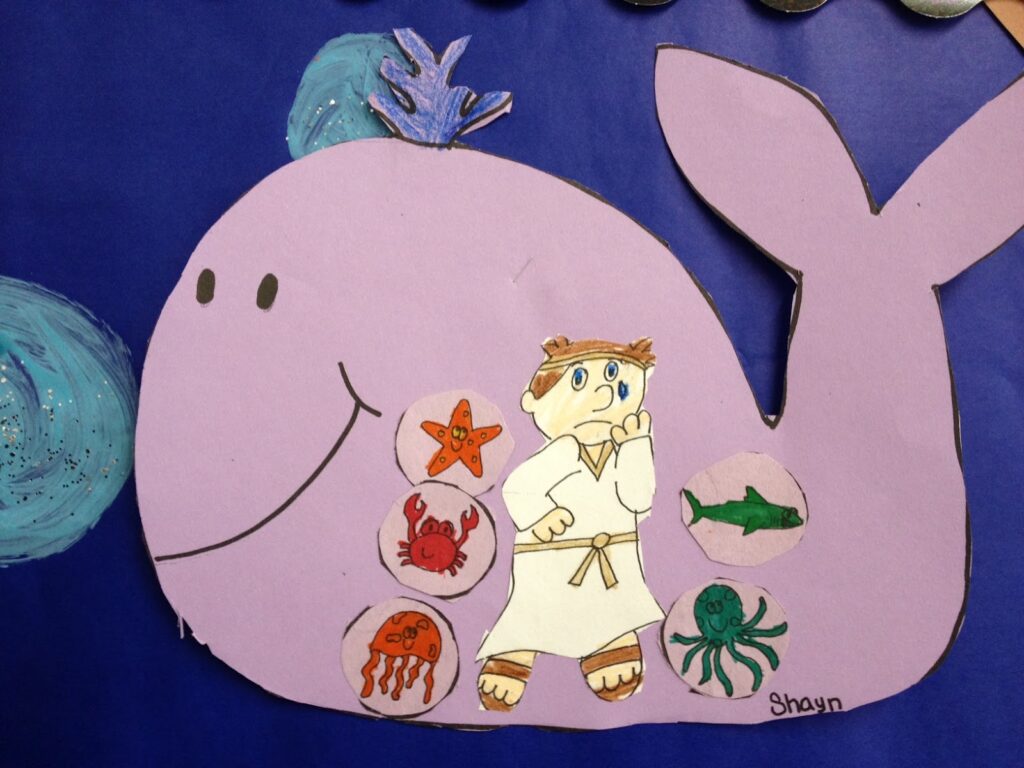
Show that our church is a laughing church. Teach the fish tale of Jonah or the proverb “Like a golden ring in a swine’s snout is a beautiful woman with a rebellious disposition” (Proverbs 11:22), or about Rhoda, who in her eagerness to tell others that St. Peter was at the door, forgot to let him in. Then there’s poor Eutychus, who slept during St. Paul’s sermon, fell out of a third-floor window, and died. Luckily Paul restored him to life.
Teach that in the strength of our faith we can “laugh at the days to come” with the ideal woman of Proverbs 31:25. In fact we can die laughing in the tradition of the martyrs. With belief in eternal life, St. Lawrence could say to executioners burning him alive, “Turn me over. I think I’m done on this side.” And as St. Thomas More went to this beheading, he moved his beard out of the way of the blade, explaining that it had never offended the king.
Laugh at yourself.
We all manage our share of dumb things: “klutzy” actions, foot-in-mouth words, and silly blunders. We are a bundle of contradictions: part spirit, part matter, part noble, part base; part heroic, part cowardly; part loving, part hating; and so forth. Isn’t this what makes for laughter?
Why pretend to be perfect when our students know we’re not? Instead of covering up our weaknesses, we can use them. Sharing not-so-perfect experiences in laughter with the class not only prepares them for life but encourages them to cope with their failings. Just as we are consoled when people we admire tell us funny things they did, students can be heartened by our “confessions.”
In a classroom where mutual openness and acceptance reign, our embarrassment is not so acute the day we get caught not knowing something or falling asleep showing a video.
Bishop Anthony Pilla spoke of the need for a diaconate of humor. As religion teachers we have ample opportunities to exercise this ministry. We must teach laughter to a world that has almost forgotten how to laugh.
The little prince in Antoine de Saint Exupery’s The Little Prince leaves his friend the gift of his laughter. What a beautiful gift for our students! And it is a natural (or supernatural?) outcome of religion class. For laughter is the sign of joy, and isn’t joy the sign of a Christian and one of the fruits of the Holy Spirit?
A Treat . . .
I collected hundreds of true, funny anecdotes from the Sisters of Notre Dame, and Our Sunday Visitor published them. The book is still available:
The title comes from one of the anecdotes: After Mass a little boy asked Sister, “Why does Father put Jesus in the microwave?” The tabernacle at the church was a silver rectangle.
To add to your Easter joy, here is Handel’s exuberant “Messiah.”
• What example of humor can you offer from your school days?
• What is your favorite joke?
The Cross of Christ Then and Now
The Cross of Christ Everywhere
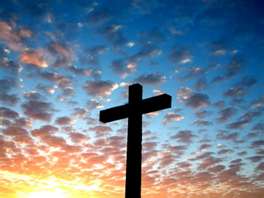
When my niece Lisa was baptized, I gave her a cross necklace. It was a lovely cloisonné cross with a pink rose in the center, but it was still a cross. How curious that an instrument of execution is now a worn as jewelry! (Can you imagine wearing a guillotine or an electric chair?)
Moreover, in many Christian homes a cross is displayed somewhere, with the body of a nearly naked man nailed to it. The cross is so common around necks, as earrings, in tattoos, atop church steeples, and in cemeteries that we have become immune to the shocking horror of it as well as the glory associated with it.
That is why Lent is so important. During Lent we have six weeks to ponder and pray over the mystery and the message of the cross. As we devour our hot cross buns, pray the fourteen stations of the cross, and venerate the cross in a procession on Good Friday, we realize once more what it symbolizes.
The Cross of Christ Transitions from Death to Life
On Calvary, Christ transformed the cross into a sign of life. Ash Wednesday’s ashes confront us with the hard truth that we will die. However, these ashes are placed on our foreheads in the form of a cross. Because of the cross, we can laugh at death and recognize, like St. Paul did, that is has no sting for us. Yes, we know we will die, but we also know that we will live forever because Jesus redeemed us on the cross. Since Christ’s death, dying and rising are inseparable. At the Easter Vigil the priest carves a cross into the paschal candle. The cross has become a symbol of victory.
The Cross of Christ, a Sign of Love
The cross is also a sign of love. Some pictures show a crucifix (a cross with the body of Christ) with the words, “I asked Jesus, ‘How much do you love me?” ‘This much,’ he answered, and he stretched out his arms and died.” Jesus loved us so much that he died for us. Read that sentence again, substituting “me” for “us.” Isn’t that incredible? Only the unfathomable depths of God’s goodness and love make the statement believable.
Every cross reminds us of God’s love revealed in Christ. This includes our physical crosses as well as the Sign of the Cross made over us in blessings. We are wrapped in God’s love from the time we are sealed with the cross at baptism the day until we are sent into eternity sealed with a cross.
We ourselves are to be living crosses: signs of life and love. The very structure of our bodies is cruciform. Lent and the cross call us to conversion: to become better signs of love than we are.
The Cross of Christ for Children
You can use the image of the cross during Lent to spur your children toward a conversion of heart. Invite them to reflect on it by discussing:
- Where cross shapes are seen (including the northern sky)
- Its shape (encompassing all directions, north, south, east, and west), its resemblance to a plus sign
- Its significance
- Its use in the liturgy and in art
- What they can do to show love for Jesus in return

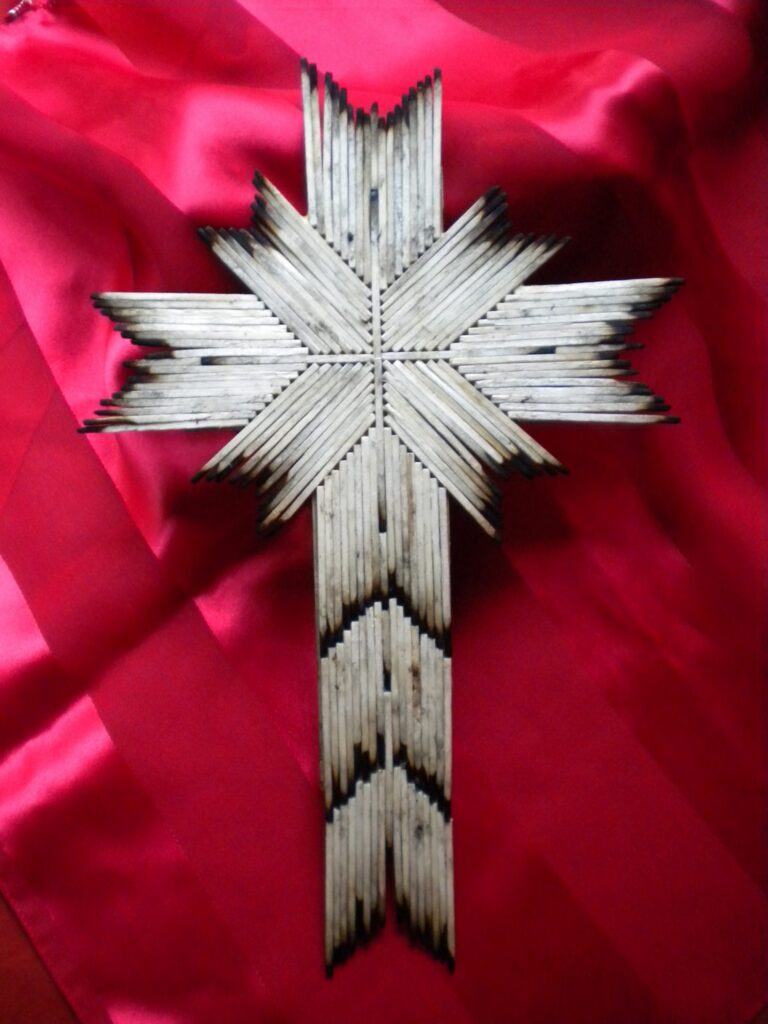
Your children might like to make simple crosses out of wire, wood, clay, or foil. Older children can make a more complicated cross by gluing burnt wooden matches to a cardboard or wood base and varnishing them. (Search “matchstick cross” in the Internet. Here is one example.) Have children become familiar with the various kinds of crosses by cutting them out of black paper and backing them on colored paper.
The Cross in Our Lives
Everyone has sufferings to bear. These range from crises to annoyances like a paper cut. We call such suffering “crosses.” Jesus said that his followers must “take up their cross” (Matthew 16:24). By accepting crosses gracefully, we become more like Christ, who freely took up his cross.
Crosses are valuable for several reasons. We can unite our suffering with the suffering of Jesus and thereby make it redemptive. We can also patiently endure our crosses as penance for our sins. Moreover, we can offer them up for individuals and intentions like world peace—something desperately needed today.
Dealing with a cross in a positive manner can be a blessing for others. It can inspire them and encourage them to carry their crosses.
Here is a song-meditation on the cross:
• Is there a cross or crucifix that has special meaning for you?
• Do you know someone who accepts a cross patiently? How do they show this?