Love Divine, All Loves Excelling

Today in honor of Valentine’s Day I’ve assembled a collection of quotations about God’s love for us. These are from my book A Love Affair with God, Twelve Traits. This February 14 is also Ash Wednesday. We are on the threshold of Lent, a season when we prepare ourselves to commemorate God’s stupendous act of love on Calvary and in the garden tomb.
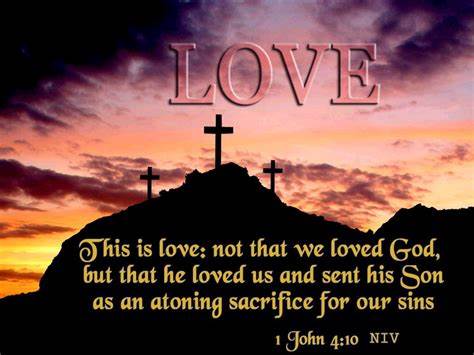
May you take time to ponder and relish the following reflections on God’s love and the love we reciprocate:
Advice from the outstanding Catholic author and philosopher G.K. Chesterton:
Let your religion be less of a theory
and more of a love affair.
Observation of the beloved former superior general of the Jesuits Pedro Arrupe:
Nothing is more practical than finding God,
i.e., falling in love in a quite absolute final way.
What you are in love with,
what seizes your imagination, will affect everything.
It will decide what will get you out of bed
in the morning;
what you will do with your evenings;
how you will spend your weekends;
what you will read; who you will know;
what breaks your heart
and amazes you with joy and gratitude.
Fall in love. Stay in love,
and it will decide everything.
St. Augustine of Hippo is the source of the saying, “Our hearts are restless until they rest in you.” He bemoaned in his book Confessions, “Too late have I loved you, O Beauty, ever ancient and ever new.” Through the unfailing prayers of his mother St. Monica, after a sinful life, he finally acknowledged:
To fall in love with God is the greatest romance;
to seek him, the greatest adventure;
to find him, the greatest human achievement.
St. Catherine of Siena, wise Doctor of the Church and my baptismal patron saint, prayed:
O unutterable love, even though you saw all the evils your creatures would commit against your infinite goodness, . . . you set your eye only on the beauty of your creature, with whom you had fallen in love like one drunk and crazy with love.
Seventeenth-century mystic and German priest Angelus Silesius said,
There is nothing here more beautiful than I am,
because God, beauty itself, has fallen in love with me.
My own words about God’s love from my book:
St. Thomas Aquinas said, “Love is nourished both by the presence of the Beloved . . . and by the proofs of love that he gives us.” God continually orchestrates “lovebursts” for you, surprises that take your breath away and prove that he loves you. Your divine Lover has a habit of romancing you through surprises and melting your heart.
You need a piece of information, and a book falls open to the exact page that bears it. You lack money to cover a certain expense, and the identical amount unexpectedly comes to you. A stranger you encounter at an airport gives you good advice. A valuable item you lost shows up in the oddest place. Walking through a forest, you “chance” upon two fawns resting in the grass. You glance out the window just in time to see a shooting star. To your delight, a special plant that you assumed was dead displays green shoots. God “winks” at you more often than you know. You might record such magical moments in your journal before they fade from your memory.

God’s Love Words in the Bible
Scripture has been called a love letter from God. Here are a few reasons why that is true:
Can a woman forget her nursing child,
or show no compassion for the child of her womb?
Even these may forget,
yet I will not forget you. (Isaiah 49:15)
I have taken you by the hand and kept you. (Isaiah 42:6)
I have called you by name, you are mine. (Isaiah 43:1)
You are precious in my eyes and honored, and I love you. (Isaiah 43:4)
I have inscribed you on the palms of my hands. (Isaiah 49:16)
The mountains may depart and the hills be removed, but my steadfast love shall not depart from you. (Isaiah 54:10)
We Attest to God’s Love
Your steadfast love, O LORD,
extends to the heavens. (Psalm 36:5)
You, O God, are my fortress,
the God who shows me steadfast love. (Psalm 59:17)
Your steadfast love is better than life. (Psalm 63:3)
When I thought, “My foot is slipping,”
your steadfast love, O LORD, held me up. (Psalm 94:18)
The earth, O LORD, is full of your steadfast love. (Psalm 119:64)
Sharing Love in Lent
St. Teresa of Kolkata said,
“When you know how much God is in love with you,
then you can only live your life radiating that love.”
Lent is the perfect time to let love flow out from us to other people, especially the homeless, the hungry, the marginalized, the sick, and the depressed. Love shown to them is love shown to Jesus. He said so.
May you have a fruitful Lent and grow two ways: realizing God’s tremendous love for you and spreading love to those around you and those you can’t see.
- When do you become most aware of God’s love for you?
- When has God’s love been channeled to you through another person?
This hymn celebrates God’s love:
Me? Perfect? Growing in Virtue


When I entered the convent, we received a chain of beads called an indicator to pin to our side. During the day we moved a bead up every time we did a good deed. This device was to motivate us to make progress in the spiritual life, to become virtuous women.
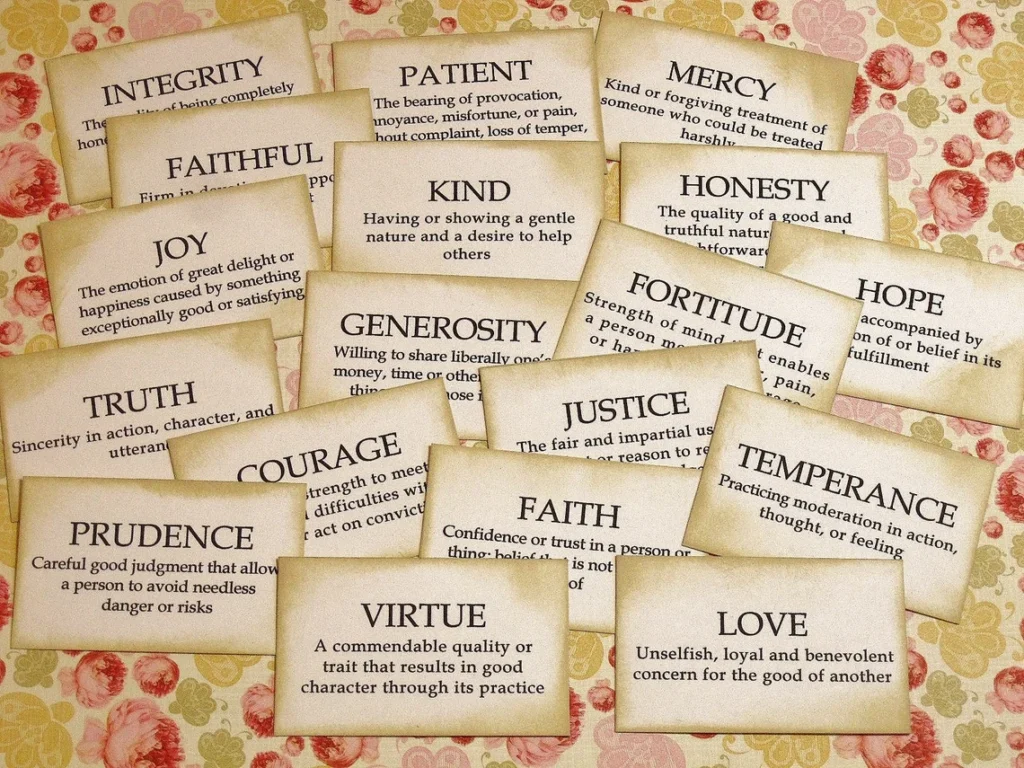
Holiness is not reserved for canonized saints. God intends all of us ordinary folk to be holy, that is, virtuous, and so make it through heaven’s gates. Jesus said, “Be perfect, therefore, as your heavenly Father is perfect” (Matthew 5:48). Face it. We will never be “perfect.” Our fallen human nature guarantees that. However, being our best selves is a reasonable goal and that means cultivating virtues.

A virtue is a good habit, which is a strength or power. In his twenties, Benjamin Franklin aimed for moral perfection. He compiled thirteen virtues and decided to focus on them one at a time. This is his list, which I found interesting…
1. TEMPERANCE. Eat not to dullness; drink not to elevation.
2. SILENCE. Speak not but what may benefit others or yourself; avoid trifling conversation.
3. ORDER. Let all your things have their places; let each part of your business have its time.
4. RESOLUTION. Resolve to perform what you ought; perform without fail what you resolve.
5. FRUGALITY. Make no expense but to do good to others or yourself; i.e., waste nothing.
6. INDUSTRY. Lose no time; be always employed in something useful; cut off all unnecessary actions.
7. SINCERITY. Use no hurtful deceit; think innocently and justly, and, if you speak, speak accordingly.
8. JUSTICE. Wrong none by doing injuries or omitting the benefits that are your duty.
9. MODERATION. Avoid extremes; forbear resenting injuries so much as you think they deserve.
10. CLEANLINESS. Tolerate no uncleanliness in body, clothes, or habitation.
11. TRANQUILLITY. Be not disturbed at trifles, or at accidents common or unavoidable.
12. CHASTITY. Rarely use venery but for health or offspring, never to dullness, weakness, or the injury of your own or another’s peace or reputation.
13. HUMILITY. Imitate Jesus and Socrates.
I just finished reading the book Saintly Habits by Andrew Whitmore. In it he explains St. Thomas Aquinas’s strategies for acquiring virtues. Here they are in a nutshell:
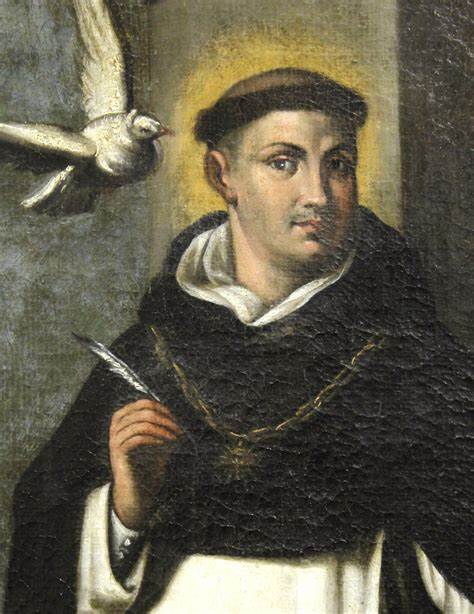
- Fake it till you make it. Repeat good acts with intensity.
- Overshoot the target. Aim beyond what you feel is virtuous.
- Break the habit. Withdraw bit by bit from a vice.
- Know thyself. Virtues grow together. Build your strong virtues and your weak ones will develop.
- Find a friend you will be accountable to and who will point out how to improve.
- Let go and let God. Pray for virtue and make use of the grace sacraments offer.
- Imitate a virtuous person, someone you know or a saint.
Of course, the more Christlike we are, the more virtuous we are. One of my favorite prayers is called “Learning Christ”:
Teach me, my Lord, to be kind and gentle in all the events of life; in disappointments, in the thoughtlessness of others, in the insincerity of those I trusted, in the unfaithfulness of those on whom I relied.
Let me put myself aside, to think of the happiness of others, to hide my pains and heartaches, so that I may be the only one to suffer from them.
Teach me to profit by the suffering that comes across my path. Let me so use it that it may mellow me, not harden or embitter me; that it may make me patient, not irritable; that it may make me broad in my forgiveness, not narrow, proud, and overbearing.
May no one be less good for having come within my influence. No one less pure, less true, less kind, less noble for having been a fellow traveler in our journey toward eternal life. Amen.
As I go my rounds from one distraction to another, let me whisper from time to time, a word of love for Thee. May my life be lived in the supernatural, full of power for good, and strong in its purpose of sanctity. Amen.
What do you consider Jesus’s three chief virtues?
Goodness is contagious, as this Jewish story illustrates:
A rabbi in a small Jewish village in Russia vanished every Friday morning for several hours. The villagers boasted that during these hours their rabbi ascended to Heaven to talk with God. A newcomer determined to discover where the rabbi really was. One Friday he hid near the rabbi’s house, watched him rise, pray, and put on the clothes of a peasant. He saw him take an ax and go into the forest, chop down a tree, and gather a large bundle of wood. Next the rabbi proceeded to a shack where an old woman and her sick son lived. He left them the wood, which was enough for the week. The newcomer became a disciple of the rabbi. Whenever he heard a villager say, “On Friday morning our rabbi ascends to Heaven,” the newcomer adds, “If not higher.”
Some people are so caught up in their busy lives that they forget they ought to be busy striving to build their character and become spiritually mature. Some can identify with St. Augustine who prayed, “Lord, give me chastity, but not yet.” Some people may be discouraged by their lack of virtue. Wilkie Au, S.J. reminds us, “Our lack of perfection will never separate us from God because the Lord’s forgiveness is always perfect and total.”
Here’s sound advice: “Aim for the stars. You might not reach them, but at least you will land on the barn roof.”
Cultivating virtues— leading a good life—is definitely worth our time and effort. The result is wholeness and joy. I doubt you have an indicator, but each evening you can review the day and pinpoint your good deeds.

According to the groundhog Punxsutawney Phil, spring is right around the corner. May you experience a new spring in your spiritual life. Yesterday I found Vivaldi’s Four Seasons on YouTube and was delighted to see captions that told me what the music was expressing. Here is his “Spring” for you to enjoy:
• If you were to focus on one virtue, what would it be?
• Which of St. Thomas’s strategies would you like to incorporate in your life?
• Who among your acquaintances has a virtue you would like to emulate?
The Bible: God’s Personal Words to You
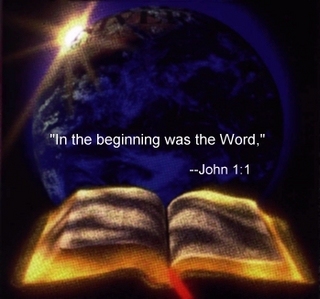
“My words will never pass away,” Jesus said. His Word is contained in Scripture. This sacred book is meant to be a personal letter. It’s not addressed “To Occupant.” It’s not a duplicated letter like you might send at Christmas. No. It is a love letter from God to you, assuring you that he is there loving you, and saving you. It’s been called “a book drenched in love.” A definition of the Bible is “The word of God in the words of human beings.”
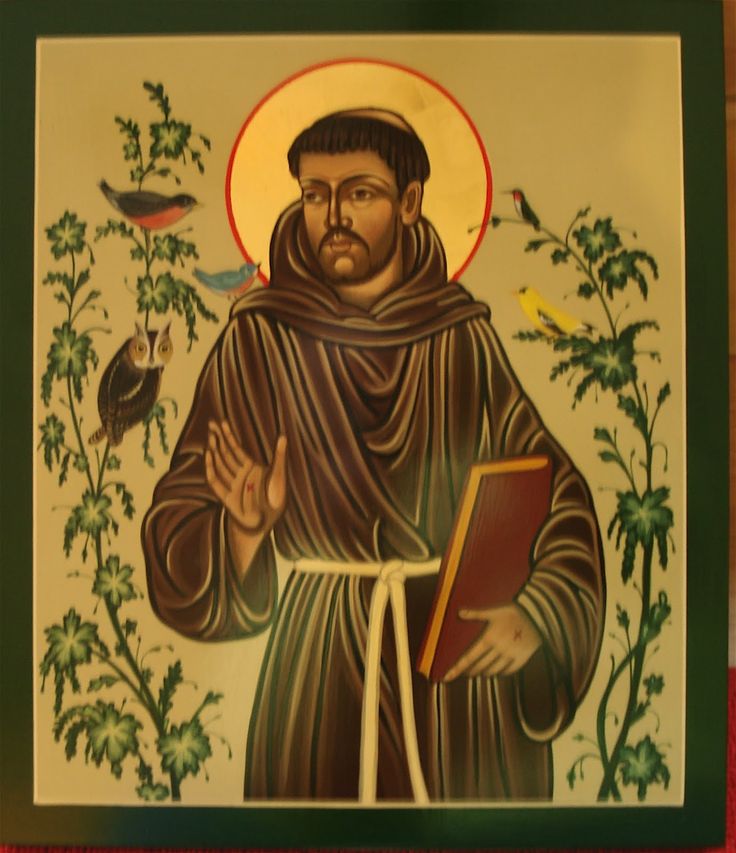
People have heard God speaking directly to them in the Bible by opening it to a random page. St. Francis found the three basic rules for his Franciscan community by opening the Bible three times. He called this practice the First Opening. (Others call it the Lucky Dip or Bible roulette!)
• When St. Augustine was an immoral unbeliever, he heard a voice order, “Take and read.” He turned to Romans 13:13-14: “Let us conduct ourselves properly as in the day, not in orgies and drunkenness, . . . “ This led him to convert and become a saint.
• When Thomas Merton was discerning whether he should be a Trappist (known for not speaking), he opened the Bible to the words, “Be silent, and know that I am God!” (Psalm 46:10).
I’ve had three experiences like this.
• As a postulant, when many Sisters were leaving the community, I wondered if I should go too. In our college chapel I prayed to know what to do. No one was around, so I walked up to the open Bible in the front. My eyes fell on Matthew 19:29 in which Jesus says, “And everyone who has left houses, brother, sisters, father, mother, children of land for the sake of my name will be repaid a hundred times over and also inherit eternal life.”
• During a retreat when I was distressed by a crisis with a publisher, I opened my Bible and saw, “When you pass through the water, I will be with you; and through the rivers, they shall not overwhelm you; when you walk through fire, you shall not be burned, and the flame shall not consume you” (Isaiah 43:2).
• Lately, when I was invited to join the choir at our province center, I was torn. There were pros and cons. I asked for a week to think about it. Then as I prayed Morning Prayer, the words weren’t registering. Suddenly I came to and read, “Sing to God, God’s chosen one. Give him the praise that is due.” Problem solved!
There are other ways to listen to God speaking to you in the Bible. Our novice director told us that the Scripture readings on the day of our birthday held a special gift for us from God. That held true for me; maybe it will for you too. The first reading was from Jeremiah: “When I found your words, I devoured them. They became my joy and the happiness of my heart.” Most of my life has been a journey working with God’s Word.
Recently I came across another idea: In each book of the Bible look for the verse whose citation is your birthday. For example, my birthday is July 29, so in each book I would see what chapter 7, verse 29 says. (I haven’t done this yet.)
Now you may be thinking that these ideas verge on the superstitious. However, when you do them prayerfully and expecting God to speak to you, he may. After all, God can contact you any way he pleases.
Louis Evely inThat Man Is You named the attitudes we should have when approaching Scripture. He refers to the time a woman in a crowd touched the fringe of his clothing:
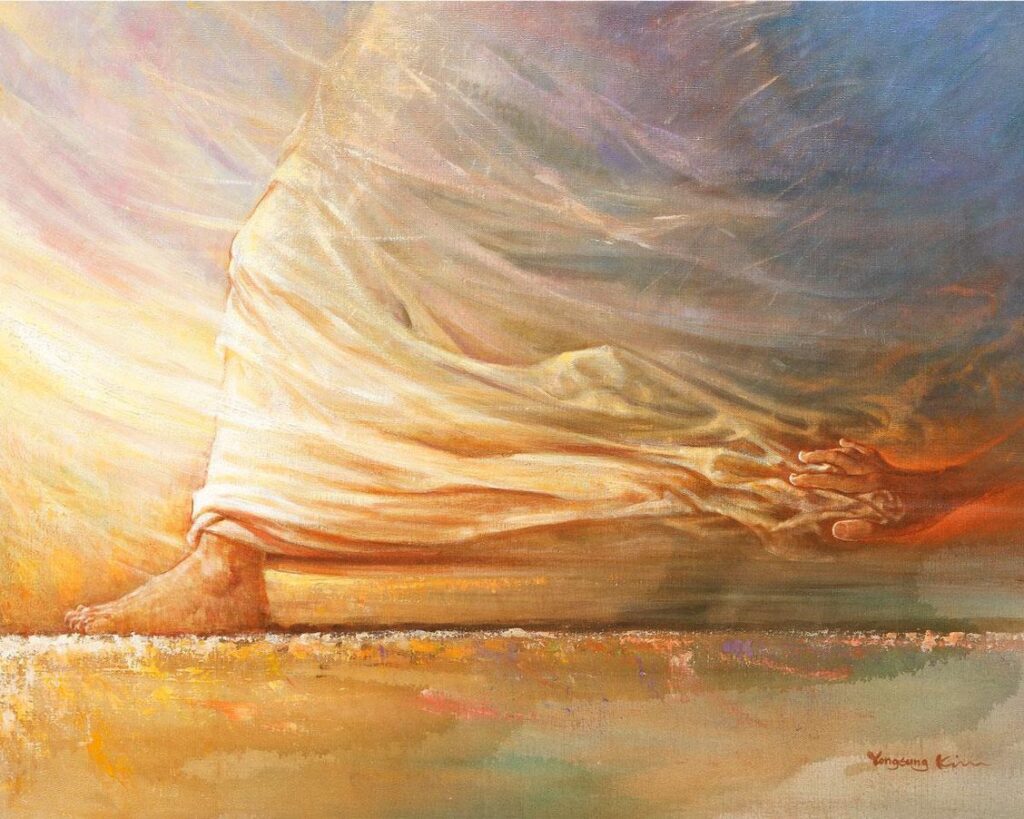
Now everybody’d touched him, everybody’d hustled him, still nobody’d been cured or transformed. Only one had touched him with faith; a profound sense of well-being coursed through her; she was cured. As for us, we all read the Gospels now and then. But if we approach them like an ordinary book, they’ll produce no extraordinary effect on us. We have to read them the way we’d have touched Christ; with the same reverence, the same faith, the same expectancy.
St. Gregory the Great said, “Scripture enables us to know the heart of God through the word of God.” In the Bible we discover the tremendous love God has for us. You might enjoy pondering God’s “love notes” to you:
• Can a mother forget her infant, be without tenderness for the child of her womb? Even should she forget, I will never forget you. (Isaiah 49:15)
• Though the mountains leave their place and the hills be shaken, my love shall never leave you. (Isaiah 54:10)
•I have grasped you by the hand. (Isaiah 42:6)
• I will espouse you to me forever . . . and you shall know the Lord. (Hosea 2:21)
• I have called you by name; you are mine. (Isaiah 43:1)
• You are precious in my eyes and glorious, and I love you. (Isaiah 43:4)
• I have carved you on the palms of my hands (Isaiah 49:16)
• With age-old love I have loved you. (Jeremiah 31:3)
• Anyone who loves me will keep my word, and my Father will love him and we shall come to him and make a home in him (John 14:23).
Here is a hymn with a catchy tune that praises God’s Word:
• When have you heard God speaking to your heart in Scripture?
• What are your favorite verses?
• As you heard God’s Word proclaimed in church, did any passage ever make you sit up and take notice?
True Blue Friends

How many friends do you have on Facebook? Thousands? Many of these are not really friends, right? I venture to say that most people have no more good friends than you can count on one hand. A friend is a person who is very close to you. One definition is “someone who knows all about you and likes you anyway!” An Arabian proverb puts it this way: “A friend is one to whom one may pour out all the contents of one’s heart, chaff and grain together, knowing that the gentlest of hands will take and sift it, keep what is worth keeping, and with a breath of kindness blow the rest away.”
We are social creatures who especially cherish the friendship of another human being. This may be a spouse, a mentor, a sister, or a coworker. Being in their presence makes us feel comfortable and safe. We can be ourselves. We can trust that our secrets are safe with a friend.
A good friend . . .
is always there for you,
supports you,
challenges you,
corrects you,
gives advice,
listens to you,
forgives you,
is totally present to you,
offers a shoulder to cry on when you need one.
In Soul Mates, Thomas Moore, writes: “Each friend is indeed a world—a spiritual sphere of certain emotions, experiences, memories, and qualities of personality . . . . We are all made up of many worlds and each friendship brings one or more of those worlds to life.”
Some friendships endure the test of time. I’m still friends with a woman I knew before kindergarten days. Some friendships end because of distance or busyness. And some end inexplicably. But then there are friends who have been separated for a long time yet whose relationship picks up as though no time has elapsed.

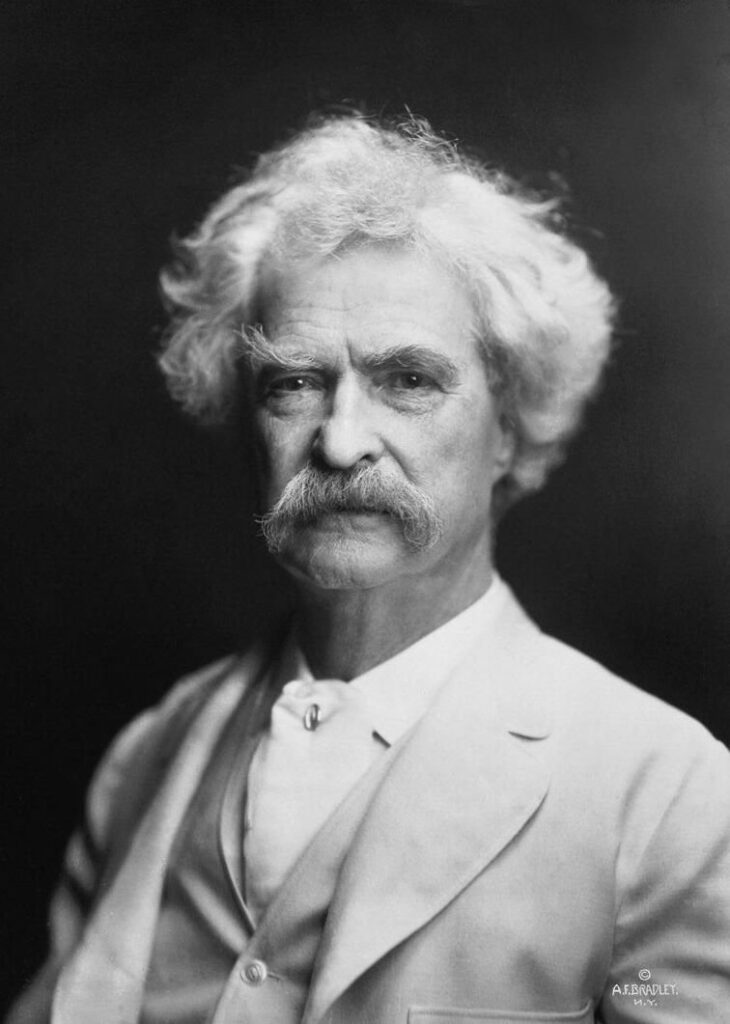
Friends are drawn together because of a common interest, for example movie stars Ben Affleck and Matt Damon and scientists Marie and Pierre Currie. Some friends are quite different. You would assume that Helen Keller and her teacher Anne Sullivan would be friends, but Helen also counted Mark Twain among her friends! Oddly, Arthur Conan Doyle and Harry Houdini were friends.
The Sisters of Notre Dame trace their origins to two sets of friends. St. Julie Billart and Francoise Blin de Bourdon in France in 1804. Our Coesfeld branch began with Hilligonde Wolbring and Lisette Kuling in Germany in 1850. St. Julie once said that she and Francoise were like two heads under one bonnet!
Certain saints were best friends, notably St. Teresa of Avila and St. John of the Cross as well as St. Francis de Sales and St. Jane de Chantal.
Unmet Friends
A friend can be a person you never met except for in a book, a movie, play, music, or art—a role model or someone who lifted your spirits and made you a better person. In this sense, I count Beethoven, Emily Dickinson, and Monet among my friends.
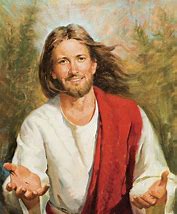
Jesus as Friend
Jesus said, “I have called you friends” (John 15:15). As teenagers would say, he and you are BFFs—best friends forever. He loved you to death…giving his life so that you could be with him for all eternity.
Jesus fits all the descriptions of a friend in the third paragraph above. In addition, like any friend, he wants to spend time with you. He likes talking with you. He gives you gifts. He has your name written on the palm of his hand (a tattoo!) Psalm 49:16.
A friend in California emailed me this video about an extraordinary friendship between an elephant and a stray dog. I think you will enjoy it:
• Who are your good friends? Do you remember to pray for them? How do you “feed” your relationship?
• Who are your unmet friends?
• How has Jesus been a good friend to you?
• How have you been a good friend to Jesus?
Art as a Springboard to Prayer
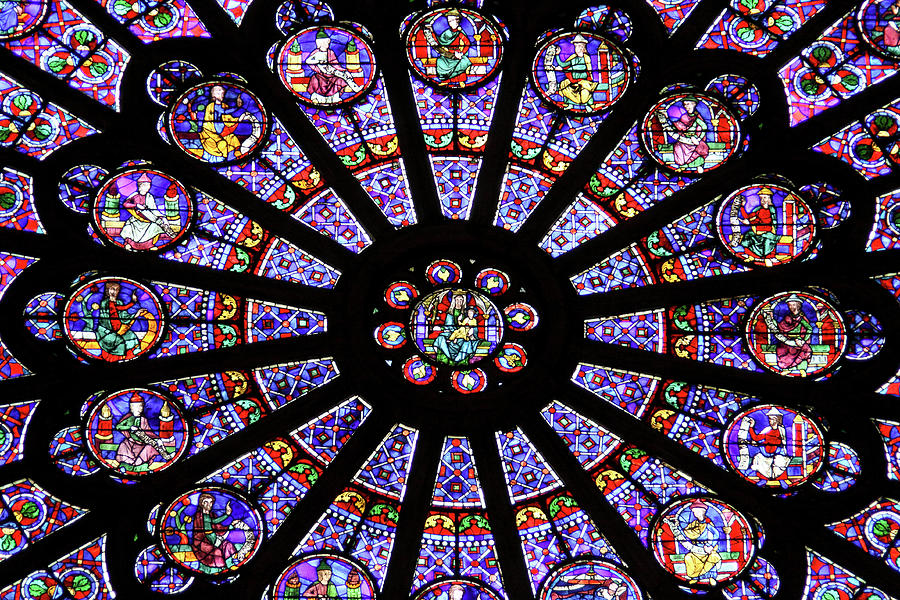
Long ago illiterate people relied on art to learn the faith. Churches were filled with sacred stained-glass windows and statues meant to convey truths and religious stories visually. Their beauty also lifted minds to God. As a child, I had a holy card collection, many of them with sacred art. Did you?
Viewing art is more than an intellectual experience. It has power to move our hearts. Think Michelangelo’s Pieta, Salvador Dali’s Christ of St. John of the Cross, or the 13th-century rose windows in Notre Dame Cathedral, which were spared in the tragic fire. They are called “rose” because they resemble this flower by their circular radiating form.
Sacred Reading and Sacred Viewing
Lectio Divina is a form of prayer in which you read Scripture or another spiritual book, be attuned to a phrase meant for you, reflect on it, and perhaps be lifted into contemplation.
A variation of this is Visio Divina, praying with an image, artwork, or a photograph. It follows the same steps:
- Read the image, slowly looking top to bottom or side to side, noticing details. Let some aspect touch your heart.
2. Meditate on the feature that has moved you. Ask yourself why it grabs your attention today. What might God be saying to you through it?
3. Speak to God about your thoughts.
4. Rest wordlessly in the presence of God.
Some people like to add a fifth stage, action. Your prayer may move you to undertake a certain action.
Icons Old and New
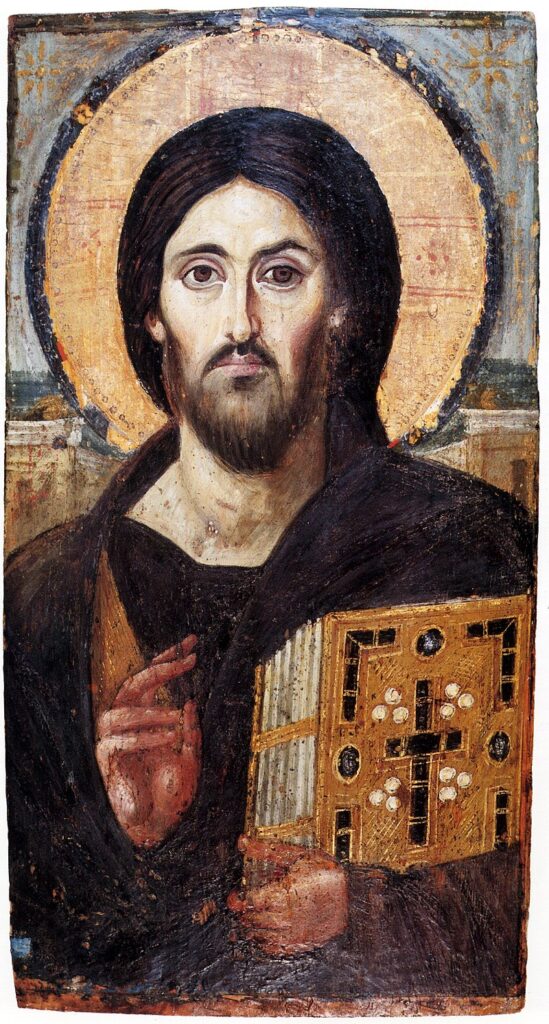
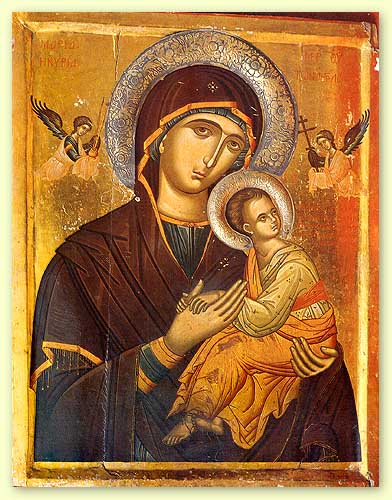
Iconography in Greek means “image writing.” Icons, the artwork mainly associated with Eastern Christianity, are meant to make you aware of God’s presence. They are known as “windows into heaven.” Rich in symbolism and rather stylized, icons are not to everyone’s taste. Shown here is the oldest known icon of Jesus titled “Pantocrator” (Ruler of the universe) and perhaps the most famous one of Mary: “Our Lady of Perpetual Help.” The traditional artist prays and fasts while painting an icon.
Today several artists provide modern icons. One prominent one is Brother Mickey McGrath, OSFS. His icon “Our Lady of Peace in Ukraine” is pictured here.

Daily Gospel-based Art
Each day among my emails is a post from Fr. Patrick van der Vorst that contains the daily Gospel reading along with a reflection on it and a piece of artwork related to it. Reading this post has become part of my spiritual exercises.
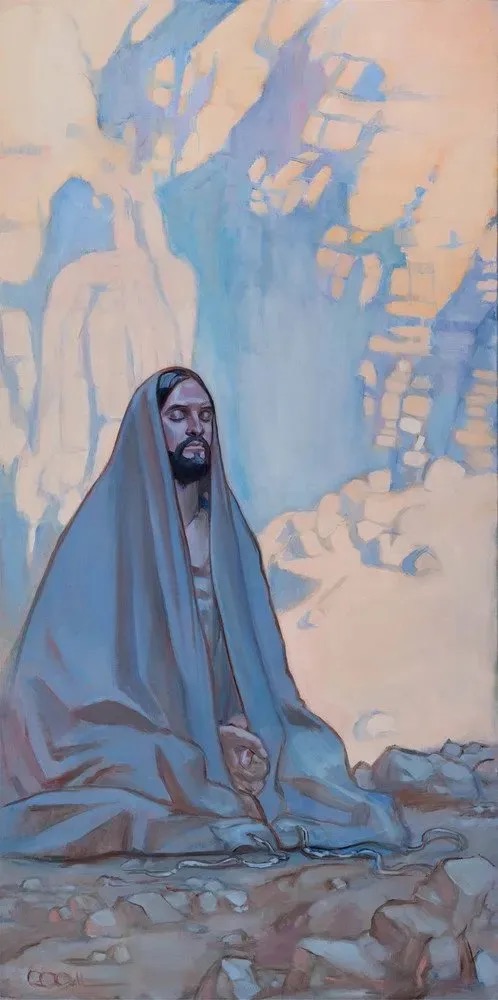
Corresponding to this week’s Gospel on fasting is the painting “Fasting in the Wilderness,” seen above. The artist, Rose Datoc Dall, did fast when she painted this one of Jesus in the desert preparing for his ministry. He is shown with his eyes closed and hands folded. He sits under a tallit, the Jewish prayer shawl. It forms a tent around him, cutting him off from distractions.
The tallit has a fringe on each corner, which is made of eight strands folded over. The four of them are a reminder to keep God’s commandments. You see them on the ground before Jesus. Some people mistakenly think these are snakes to symbolize of the temptations to come that he will repel. Around Jesus are the rocks he will refuse to turn into bread to break his fast. In the background are blurred people. What do you think they stand for? The painting’s message is that prayer and fasting are keys to spiritual power.
An Example of Visio Divina
If you were to do visio divina using Dall’s painting, look at it carefully. Then you might hone in on those fringes. They might call to mind a commandment you fail to obey. You might then ask God for forgiveness. Finally bask in knowing that the Father’s great mercy and love surround you.
You might give visio divina a try. Or create your own artwork. Or pray about God’s original artwork in the sky, forest, landscape, or garden!
I believe this link will take you to Fr. Patrick’s website: https://www.facebook.com/ChristianArt.Today/
• What are your favorite religious sculptures or paintings?