Joseph, the Silent Saint Gets His Year
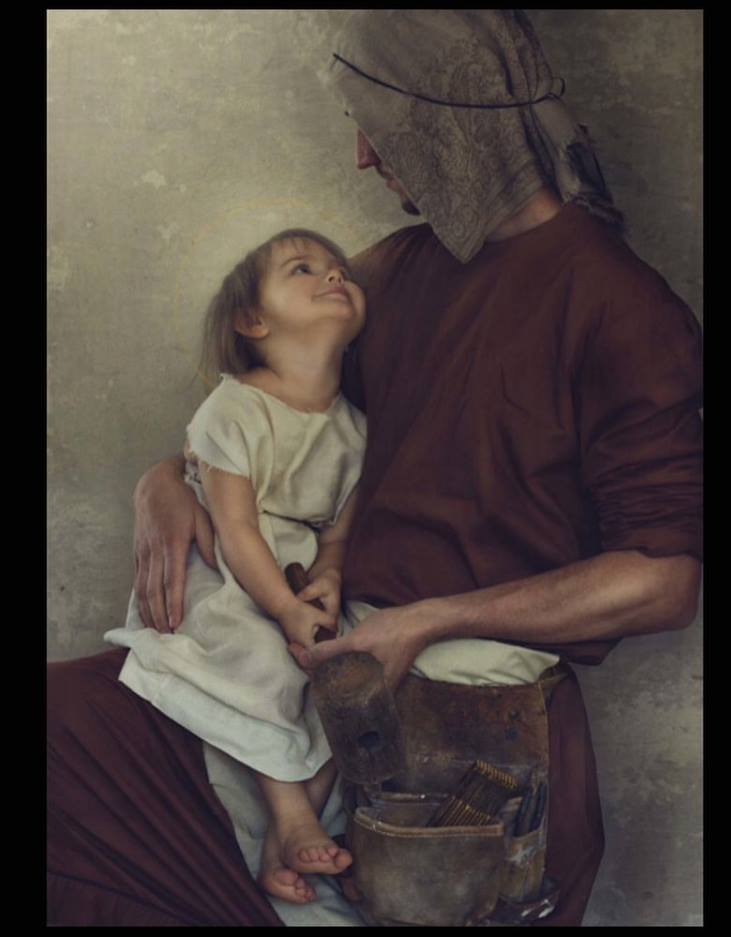
Pope Francis declared this year “the year of St. Joseph.” It’s about time! Joseph can teach us many things.
Long ago I heard a bishop recount in a homily how at Christmas his mother would set up the Nativity scene at their house. Every year she would take the stable and figurines out of the box and display them. However, there was little room for them, so each year she would return the statue of Joseph to the box, saying, “Joseph will understand.”
But often in life this foster father of Jesus did not understand. He had to exercise supreme faith. Strangely, the Gospels do not contain a single word that Joseph said. However, his life speaks volumes. Here are thoughts culled from an article I had published entitled “More Than a Carpenter.”
Some people desperate to sell their homes bury a statue of St. Joseph upside-down. These are probably the same people who turn Joseph’s statue to face the wall when they want a favor. I doubt that Joseph takes these actions as insults. He probably just smiles at the simple faith it shows. I imagine he also smiles at our portrayal of him as as old man, something artists did to underline Mary’s virginity.
Little did Joseph know when he espoused Mary that their relationship would make him the foster father of Jesus and that he would one day become patron of many important things.
The patriarch Joseph of the Old Testament helped the world as chief administrator in Egypt. During a famine the pharaoh said, “Go to Joseph.” People from all over came to Joseph for life-saving grain. Today the Church tells us, “Go to Joseph.”
• When families are in crisis, threatening the structure of our whole society, we turn to Joseph, the guardian and protector of the Holy Family.
•When the Church is grappling with divisions and scandal, we turn to Joseph, the patron of the universal Church.
•When confronted with abortion, euthanasia, and suicide, we turn to Joseph, the patron of a happy death.
• When unstable economies leave millions of people jobless, homeless, and hungry, we turn to Joseph, the patron of workers.
How did Joseph merit such weighty responsibilities? His brief appearances in the joyful mysteries offer clues.
The Annunciation: When Mary became pregnant, Joseph was dumbfounded. Heartsick, he planned to follow the Jewish law and divorce Mary, but quietly. (Breaking off a betrothal, or engagement, required a divorce.) God intervened in a dream and told Joseph to marry Mary because her child was conceived by the Holy Spirit. Joseph, called a just man in scripture, struggled to do what was right. Like the Joseph before him, he trusted divine providence and listened to the Lord.
The Visitation: Not every man would allow his espoused to leave town for three months to care for a relative. Obviously Joseph respected Mary’s wishes, supported her in her ministry, and shared her compassion for others. But he must have missed her!
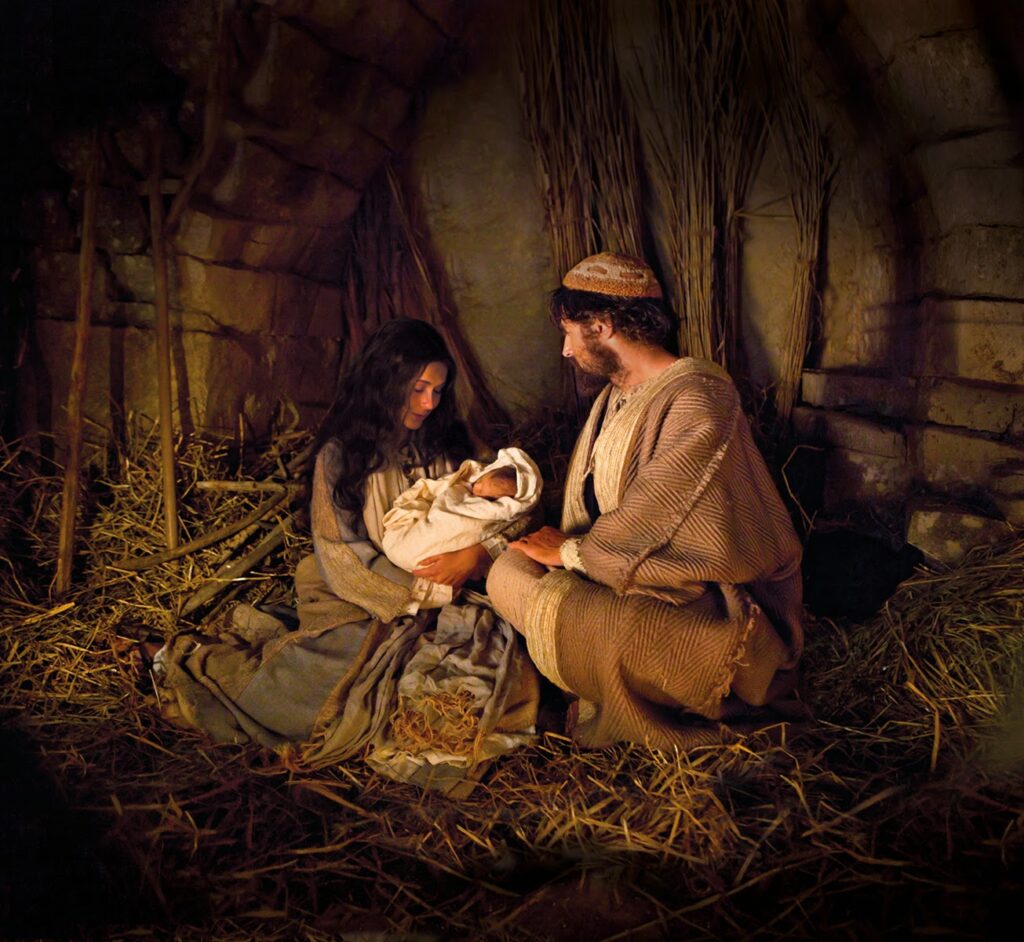
The Nativity: Joseph took Mary, in the last month of pregnancy, to Bethlehem, complying with a government decree for a census. He must have been terribly worried about her. Instead of giving birth surrounded by family and friends, she gave birth in a strange town. Joseph must have deeply regretted not having a better shelter than a stable for his wife at such a time. Then Joseph had to flee to another country in order to save the life of Jesus. Imagine the terror that filled his heart.
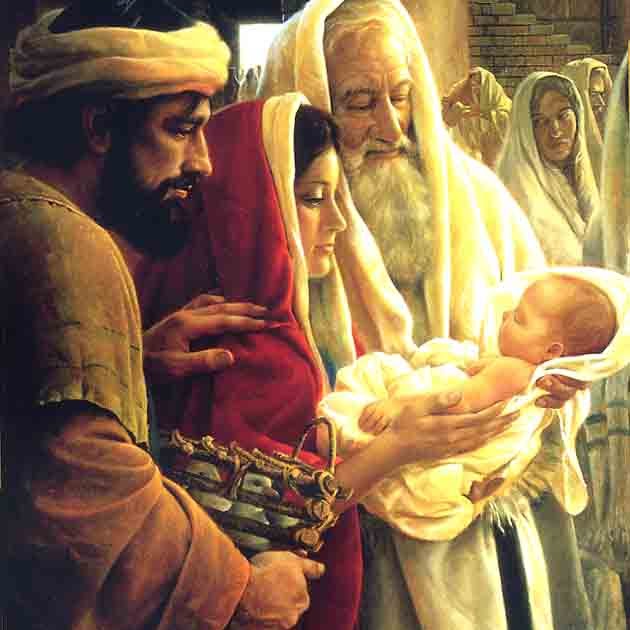
The Presentation: Following Mosaic law, Mary and Joseph took Jesus to the temple to consecrate him to the Lord. They sacrificed two turtle doves because they were too poor to afford a lamb. Joseph must have often wondered why he had been entrusted with the care of Mary and Jesus. When Simeon took the child and declared him “the salvation of the world,” Mary and Joseph were amazed. Then Simeon prophesied that Jesus would be a sign that would contradicted and that Mary would suffer. How this dire prediction must have disturbed and pained Joseph!
The Finding in the Temple: When Jesus was twelve, the family made the annual trip to Jerusalem for the Passover. On the way home, Jesus was missing. When he was found in the temple, it was Mary who reproached him. Joseph was silent. How do you think he felt when Jesus said, “Did you not know that I must be in my Father’s house?”
Although he often did not understand what was happening, Joseph admirably fulfilled his vocation. He is arguably the greatest and most powerful saint next to Mary. It was Joseph who was “abba” for the Son of God on earth. This man shared his faith with Jesus and taught him a trade. Joseph helped God learn what it meant to be a human being. St. Joseph, pray for us, who want to be faithful though we don’t always understand.

A Mentally Healthy New Year Review
The end of a year is a good time to look back and assess the 365 past days. The year 2020 is generally considered a terrible year, one that we will be glad to be rid of. Everyone has experienced disappointments if not suffering during this unprecedented time. Psychologists recommend ending each day with a review of the day’s blessings. Likewise, reviewing the blessings this year held for us will put us in a better frame of mind and give us a lighter heart as we march into 2021. I drew up the following questions to help you and me focus on the positive aspects of 2020 and thank God for them.
As a prelude, since you are reading this, you can thank God for the precious gift of life. A video highlights how incredible this is:
So settle yourself in a quiet spot, put your feet up, maybe sip a mug of hot chocolate or a glass of wine, and consider …
~ What new friend or friends did I make this past year?
~ What old friend or relative reappeared in my life?
~ Did I receive a special letter or email?
~ Who called me unexpectedly?
~ Did I acquire a new skill or reprise an old one?
~ When did I narrowly escape an accident, maybe a car crash or a fall?
~ What surprising gift did I receive?
~ What healing did I receive–physical or mental?
~ What beautiful nature scenes was I privileged to witness?
~ When did I resist a temptation or overcome a bad habit?
~ What special meals did I enjoy?
~ What good book or books did I read?
~ Who gave me some good advice?
~ What compliments did I receive?
~ How did I bring joy to someone?
~ When did I find something that was lost?
~ What did I do that I didn’t think I could do?
May such a review fill your heart with gratitude for the past year. May you look forward with anticipation for the blessings the new year will hold.
Here is a hymn to celebrate 2020:
• What question(s) can you add to my list?
Season of Love: Divine Intimacy
As promised, here is the first chapter of my book “A Love Affair with God: Twelve Traits.” Merry Christmas!
1
An Unlikely Couple
To fall in love with God is the greatest romance;
to seek him, the greatest adventure;
to find him, the greatest human achievement.
~ St. Augustine
Do you ever lie awake at night in the dark and wonder, Does God exist? Why am I alive? Does God really love me—a mere mote in the mind-boggling expanse of countless galaxies, an imperfect mote at that? Or do you sometimes ask yourself, Am I doing enough to show I love God? What more could I do? If so, you are in good company. These niggling questions also haunted saints.
God’s Love
For some people, God is a powerful force, an impersonal energy that pervades the universe. Others view the deity as an intelligent being who created the cosmos and then abandoned it like a bored child who tosses toys in the corner. But for you, God is a Someone who made everything out of nothing and guides the world and its inhabitants with tender care.
You are God’s work of art, custom designed. You belong to God. Better still, God chooses to be in a dynamic personal relationship with you. Actually, this Supreme Being—whose love is infinite—is madly in love with you! God doesn’t just love you; he likes you. St. Elizabeth of the Trinity, OCD, pinpointed your primary vocation, or calling in life, when she counseled, “Let God love you.”
Sacred Scripture attests to God’s unparalleled love. The psalmist praises it in touching, although inadequate, imagery, proclaiming, “Your steadfast love, O LORD, extends to the heavens, your faithfulness to the clouds” (Psalm 36:5). Furthermore St. Paul assured you of the permanence of divine love:“Neither death, nor life, nor angels, nor principalities, nor present things, nor future things, nor powers, nor height, nor depth, nor any other creature will be able to separate us from the love of God in Christ Jesus our Lord” (Romans 8:38–39).
This divine Lover who loves you so passionately yearns for you to return his love not with just a part of your heart but with all your heart . . . and not part time but full time. Desperate for your love, God even demands it! Paraphrasing Deuteronomy 6:5, Jesus identified the greatest commandment: “You shall love the Lord your God with all your heart, and with all your soul, and with all your mind” (Matthew 22:37).
Moreover, God does not nonchalantly wait for you to come to him but stalks you! He pursues you with dogged determination. Francis Thompson—who once was a poverty-stricken, homeless, drug addict—memorably portrays God’s persistence in his masterful poem “The Hound of Heaven.” He admits he fled . . .
From those strong Feet that followed,
followed after.
But with unhurrying chase
And unperturbed pace
Deliberate speed, majestic instancy,
They beat.
A definite challenge in cultivating an intimate relationship with God is that this Mysterious One is pure spirit and therefore invisible and intangible. He is a hidden Lover. You can never look into his eyes, hold hands, or feel his embrace. When God says, “I, the Lord your God, hold your right hand” (Isaiah 41:13), that is sheer poetry, only a metaphor.
True, some two thousand years ago God did assume a human body, but no one today really knows what this God-Man looked like. Jewish law forbade the making of images, and the Gospels and Acts of the Apostles leave the physical description of Jesus to our imagination. The figure on the Shroud of Turin was reputed to be imprinted by the body of Jesus, but scientific tests indicate that this is a false conjecture. Jesus now lives in heaven, his body glorified, but very seldom does he appear to people who dwell on earth.
Lack of physical presence, however, is not an insurmountable barrier to love. Before the poet Robert Browning ever met Elizabeth Barrett, he fell in love with her via her poetry. In his first of many letters to her, he wrote, “I do, as I say, love these books with all my heart—and I love you too.” Likewise, because you’ve read God’s books of creation and Scripture, the following words describe your personal relationship with the Author: “Although you have not seen him, you love him; and even though you do not see him now, you believe in him and rejoice with an indescribable and glorious joy” (1 Peter 1:8).
A God-Ache
Love culminates in the surrender of oneself and union with the beloved. You were created for absolute communion with God, which the English mystic Julian of Norwich termed “oneing.” In her book Revelations of Divine Love, an account of her sixteen mystical visions in 1373, she explained that we are knit to God in a tight knot that makes us oned. In this oneing we are also oned with other people who will reach heaven.
Scripture reveals and encapsulates Almighty God’s identity and essence in one preeminent attribute: “God is love” (1 John 4:8). Love, then, is your final destiny. Love is also your origin. From before time began, the three Persons in the Trinity formed a self-sustaining community, bonded by their love for one another. They could have been content forever with their three-partnered ecstatic “dance of love.” Yet, in their supreme goodness, the divine Persons were compelled to let their love overspill. Selflessly they brought human beings into existence to join in their dance.
God did not need creatures to worship or to serve him at all. Our lives are solely due to the generous outpouring of God’s love, a vast and bottomless love.
St. Catherine of Siena, OP, a fourteenth-century Doctor of the Church, thought of God as aflame with a fire of love. She prayed,
O unutterable love, even though you saw all the evils your creatures would commit against your infinite goodness, . . . you set your eye only on the beauty of your creature, with whom you had fallen in love like one drunk and crazy with love.
The explanation of our origin presented here answers the question, Why do I exist? It also gives a reason for our gnawing longing for “something more” no matter how much money, possessions, fame, or earthly happiness we enjoy. This longing is the consequence of the first human couple’s rebellion—Adam and Eve’s sin of disobedience that severed our bond with God. The Fall deprived us of our original home and status as children of God and left us drifting. Now we are bedeviled by an inner sense that we are lacking something. That something is Someone.
Only the One who fashioned your heart will satisfy your heart. St. Augustine famously wrote in his autobiographical book Confessions, “You have made us for yourself, O Lord, and our hearts are restless until they rest in you.”
Philosopher Blaise Pascal eloquently expressed our insatiable, deep down yearning as follows:
What else does this craving, and this helplessness, proclaim but that there was once in man a true happiness, of which all that now remains is the empty print and trace? This he tries in vain to fill with everything around him, seeking in things that are not there the help he cannot find in those that are, though none can help, since this infinite abyss can be filled only with an infinite and immutable object; in other words by God himself. (Pensées VII, 425)

This concept is popularly rendered, “There is a God-shaped vacuum in every heart that only God can fill.” You are like a beautiful jigsaw puzzle with a piece missing.
Acknowledging that the ache is mutual, priest and theologian Henri Nouwen proposed, “It seems as if God is crying out to us, ‘My heart is restless until it rests in you, my beloved creation.’ ” God desires you! In fact, God longs for you more than you long for him.
An Absurdity?
You might be tempted to think that the idea of your being in a love relationship with God is absurd, irrational. After all, God possesses awesome majesty and power. The spectacular universe—stars, comets, black holes, and planets, including Earth—is all God’s handiwork. Its expanse is a mind-boggling unknown. In our Milky Way galaxy alone, there are a hundred billion stars pulsating with energy like our sun. Clearly God is infinitely greater than you, an imperfect mortal subject to colds and stomachaches, who doesn’t have the ability to fly or read minds, let alone create something from nothing.
How can love exist between Someone who is the Supreme Being, Totally Other, Ancient of Days and one of his creatures? The answer it grace, God’s gift of his own life poured into you. Grace divinizes you, thereby erasing the disparity and bridging the gargantuan chasm between you and God. Here is a weak analogy courtesy of the Brothers Grimm: Prince Charming’s love transforms Cinderella into royalty.
On the other hand, according to St. John of the Cross, your love for God establishes equality: “Since there is no way that God can exalt the soul more than by making her equal to Himself, He is pleased only with her love, for it is love that makes the lover equal to the object loved” (The Spiritual Canticle, Stanza 28, 1).
The bottom line is that the love between God and you is an unfathomable mystery, a marvelous one at that!
Talk about a May-December romance: You are time-bound, born in a particular year, whereas God has existed from all eternity. Incredibly, God made the first move and initiated this extraordinary love relationship between him and you. You love God because “God first loved us” (1 John 4:19).
Moreover, at great risk God gave humans the option of rejecting his love. This led to disappointment, for the first couple proved unfaithful in the garden of Eden. The ever-merciful, ever-loving God forgave them and still forgives their descendants. At immense personal cost, namely the atoning sacrifice of his Son, God restored the possibility of our enjoying a close relationship with him.
God loves you more than you can imagine. He loves you personally, uniquely, and actively. And, like a door prize, divine love is completely gratuitous; you need not earn it by performing good works. And, yes, you will never be worthy of it. God, however, loves you just as you are and at times when you consider yourself ugly and unlovable. Even if you spurn God’s love, he will never let you go. Your sins and faults do not extinguish or even diminish his love for you. God cannot not love you; doing so would contradict his essence. He is the consummate Lover.
Certain of God’s love, you are filled with peace and deep, abiding joy. As writer Victor Hugo observed, “The supreme happiness of life is the conviction that we are loved; loved for ourselves, or rather in spite of ourselves.”
In Scripture, God brazenly employs love imagery. Regarding Israel, God says, “I will now allure her, and bring her into the wilderness, and speak tenderly to her” (Hosea 2:14). God, who by the way is genderless, also professes, “As a young man marries a young woman, so shall your builder marry you, and as the bridegroom rejoices over the bride, so shall your God rejoice over you” (Isaiah 62:5). God’s most striking love language appears in the biblical book Song of Solomon, an erotic poem about two young lovers.
A Matter of the Heart
Jesus, who is Love incarnate, loved you to death, dying on a cross with arms outspread. There his heart, the symbol of love, was pierced by a lance. The heart is a synecdoche. Saying “I love you with my whole heart” means “with all that I am.” After ascending to heaven, Jesus continued to court you. He enticed you to love him through the image of his Sacred Heart burning with love long before anyone celebrated Valentine’s Day, when we are flooded with hearts. The title King of Hearts rightly belongs to Jesus, who conquered us by his extreme love.
In the seventeenth century during one of St. Margaret Mary Alacoque’s visions, Jesus revealed his divine-human heart, testified to his great love for everyone, and lamented that he was loved so little in return. Unrequited love is sad. Unrequited divine love is tragic.
In the twentieth century, Jesus reached out to reaffirm his love for us, dispelling any doubts. He asked St. Faustina Kowalska to inaugurate the Divine Mercy devotion, which is centered on God’s merciful love. In a vision, Jesus appeared with two rays emanating from his heart, one red and one white. He explained that these rays represented the blood and water that flowed from his heart when the soldier’s lance pierced it. Jesus instructed St. Faustina to see that this vision was painted. On first viewing the finished image, which was produced under her direction, St. Faustina wept in disappointment and lamented to Jesus, “Who will paint you as beautiful as you are?”
Aware of the importance of grasping the extent of Christ’s love for us, St. Paul prayed,
That Christ may dwell in your hearts though faith, as you are being rooted and grounded in love. . . . that you may have the power to comprehend, with all the saints, what is the breadth and length and height and depth, and to know the love of Christ that surpasses knowledge, so that you may be filled with all the fullness of God. (Ephesians 3:17–19)
Peter Van Breemen, SJ, noted that when we open our hearts to be filled to the brim with God’s love, this love overflows from us to other people. We are veritable vessels of God’s love.
So how should you love God? St. Bernard of Clairvaux provided the answer: “The reason for loving God is God himself; the way to love him is beyond measure.” Falling in love with God is natural and not difficult at all. His many attractive qualities, in particular his eternal goodness, kindness, and mercy, make him the lodestone of hearts.
• Why not spend some time during this Christmas season quietly letting God love you!
For your enjoyment: Something you don’t see or hear everyday.
God’s Amazing Love at Christmas: Divine Intimacy
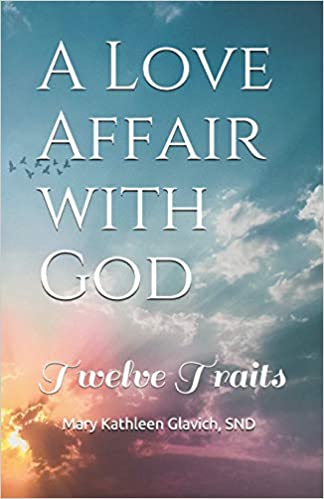
Christmas is a celebration of God’s love: “God so loved the world that he gave his only Son.” Just in time for Christmas I finished writing “A Love Affair with God: Twelve Traits.” Although one publisher considered the book “too romantic,” I was guided by St. John of the Cross and St. Teresa of Avila, who did not shy from describing God’s love for us in words of deep intimacy. Then, too, G.K. Chesterton said, “Let your religion be less of a theory and more of a love affair.” I will see my first copy of the book on January 2. But as a Christmas gift to you, here is its Introduction. I plan to present the first chapter or part of it next week.
Nothing is more practical than finding God,
i.e., falling in love in a quite absolute final way.
What you are in love with,
what seizes your imagination, will affect everything.
It will decide what will get you out of bed
in the morning;
what you will do with your evenings;
how you will spend your weekends;
what you will read; who you will know;
what breaks your heart
and amazes you with joy and gratitude.
Fall in love. Stay in love,
and it will decide everything.
~ Pedro Arrupe, SJ
The almighty Creator of the universe chose to create you instead of countless other possibilities. You were deliberately and specifically called into being, not the result of a random lottery. Furthermore, God loves you with a love that is unconditional, constant, and endless. The good God loved you before you existed, loved you when you were a mewling infant, and will love you throughout your earthly life until you draw your last breath. God will love you beyond this world—after you have slipped into the next mysterious realm. According to St. Thomas Aquinas, God loves you today on earth just as ardently as he will love you in heaven. Writer G. K. Chesterton coined the curious phrase “the furious love of God,” attempting to capture in words the strong, relentless love God feels for you. At the same time this divine love is also warm and infinitely tender.
God longs for you to reciprocate his love. Right now, this very instant, your divine Lover summons you to intimacy with him. What’s more astonishing is that every day he woos you in diverse ways designed to capture your heart, as A Love Affair with God: Twelve Traits demonstrates conclusively.
How can you know positively that God loves not only the world but you personally? As a Christian, you trust a religion that is able to claim a two-thousand-year-old tradition. Well, a cornerstone of this Christian faith is that you are made by Love (God) for love. You also accept your religion’s Sacred Scripture as divine revelation, that is, a means by which God “unveils” himself. In the Bible God professes his love for you repeatedly in black and white—unequivocally. Your Maker is not a shy lover.

Love at the Heart of It All
Acknowledging a universal truth, Bruce Springsteen sang, “Everybody’s got a hungry heart.” We human beings are designed to fall in love with each other. Far surpassing that, we were created to be involved in the greatest love affair of all: one with God. No one but your Creator will ever be your perfect soulmate. As long as you cooperate with the supernatural grace at work in you, your biography will read like a beautiful love story. After recounting your life—including its ecstatic highs and frustrating lows—it will end “and they lived happily ever after.”
According to the book of Genesis, you were made in the image and likeness of God. Because God is pure love, it follows that you too are capable of radiating love. Human love, in whatever form it takes, is an echo of divine love.
This Book
People who are in love with another human being display certain characteristics. For example, they glow with happiness. They also act in certain predictable ways. Some of these love indicators also hold true for the partners in a divine love relationship—for both God and you. You will find twelve of them discussed in chapters 2 to 13 of this book.
Each of these twelve chapters comprises three sections. It opens with a description of one sign (or symptom!) of being in love with a human being. Then there is an exploration of how God manifests this characteristic because he deeply loves you. This is followed by ways you exhibit this trait when you are in love with God. (This latter section serves as a rich wellspring of ideas for demonstrating your love for God.) Each of the last two sections concludes with a few questions to spark further reflection on the topic.
Shakespeare’s play Midsummer’s Night Dream features a magic love potion that when applied to a sleeping person’s eyes causes the victim to fall in love with the first living thing perceived on awaking. My hope is that A Love Affair with God: Twelve Traits, though not magical, has power to open your eyes and deepen your love for God, who loves you without bounds and will never break your heart.
• How do YOU know God loves you?
Thoughts on Advent

Father Tom Weber gave this homily during Advent one year. I like the twist at the end.
A couple of months ago, I went over to the Department of Motor Vehicles bureau in Mayfield Heights. I took a seat along the wall and after a while, a clerk asked me, “What are you waiting for?” I said I needed the sticker for my license plate and she directed me to the proper clerk.
A couple of weeks ago, I was driving on I-271 Northbound when I heard an unusual sound. Within a few seconds I became aware that I had blown out a tire while driving 60 MPH. I was able to pull off the highway and within a few minutes I called for roadside assistance on my cell phone. A few minutes later, a police car pulled up behind me and the officer approached me and asked, “What are you waiting for?” I told him roadside assistance was coming soon. He wished me well and went on his way.
This past Thursday I received a call from a parishioner who told me she was thinking about having her baby baptized but was hesitant to call. After I reassured her a bit, I asked her, “What are you waiting for?” Without much hesitation she replied, “Well, first of all, I’m waiting for the baby to be born! It’s due in February.” After commending her for being so prepared and efficient, we made the arrangements…as far as we could!
Three different settings — the license bureau, the interstate and a new mom — THREE different settings, but the same ONE question…..”What are you waiting for?”
As we begin the liturgical season of Advent, marking a new year of God’s good grace, “What are you waiting for?” is the question of the day, the week, and the month.
Advent, of course, is our spiritual “getting ready” for Christmas. We try to squash into four weeks all the hoping, longing, preparing…all the waiting of the Chosen People of Israel, our older siblings in the household of the faith.
During these next four precious weeks, it’s really not so much WHAT are we waiting for but rather WHO are we waiting for…

As Catholic Christians, we are waiting for Jesus….
We wait…. for His grace and mercy, sure to come;
…We wait…. for Him to answer our prayers, sure that He will, but unsure about when, where, or how;
…We wait…. for reasons to explain suffering, struggle, and worries;
…We wait…. for Him to call us to be with Him for all eternity.
And, lest we forget, the LORD waits for US, also!
…Jesus waits…. for us to open up to His grace and mercy;
…Jesus waits… for us to admit that, as a matter of fact, we DO need a Savior!
…Jesus waits…. for us to admit that He is the answer to every important question we ask as we make our pilgrim journey of faith through life.
Yes, the question really is WHO are we waiting for? We are waiting for Jesus…and He will come!
It is in the waiting that we learn the important — and difficult — virtue of patience.
And deep down inside, cradled within the soul of each of us, is again an empty manger bed where the Son of God wants to be reborn. Christmas can do that.
So, with Christians around the world, we begin this New Year by boldly crying out: “Come, Lord Jesus!” And please, do not delay!
A blessed Advent!
• More than ever we need the coming of Jesus and his kingdom of peace and justice in this “weary world.” What are you doing to make these Advent weeks special? May the Prince of Peace reign in your heart!