


My mother loved cardinals, and spotting one in her backyard always made her day. Seeing a cardinal is thought to be a sign that a departed loved one is near. November 12 was the anniversary of my mother’s death, so, of course, I was thinking of her.
Strangely, that evening as I stood in line to order my dinner, I noticed that the earrings of the woman right behind me wore earrings in the shape of cardinals, one a red male and the other a reddish olive female! Coincidence or an act of loving divine providence? The woman explained how cardinals played a special role in her marriage.
A Popular Bird
A male cardinal with its bright red feathers, black mask, and red-orange beak is a striking sight, especially against snow. Some cardinals are yellow. Both male and female birds have crests. I recall that as a child I enjoyed drawing and coloring this distinctive bird.
Besides being seen as a message from the next world, a cardinal is also interpreted as a sign of encouragement in difficult times. Several cultures have regarded cardinals as a sign of a spiritual presence: Egyptian, Celtic, Maori, Irish, Hindu, and Native American.
No wonder cardinals are the state bird of seven states (Ohio, Indiana, Kentucky, North Carolina, Virginia, and West Virginia). In addition, sports teams like the St. Louis Cardinals are named for them and college teams have adopted them as mascots.
Facts about Cardinals
I did a little research on this bird and turned up the following facts.
1. Surprising: The bird was named cardinal because in the Catholic church a cardinal’s vestments are red. The male bird’s red coat is the result of eating red fruit.
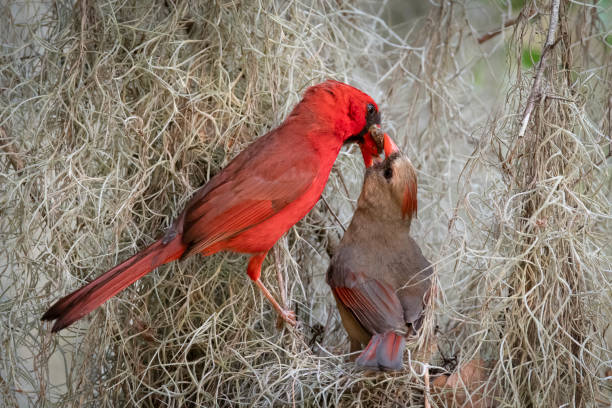
2. When courting, a male cardinal feeds his girlfriend beak-to-beak.
3. Cardinals do not migrate. They tough out bitter Ohio winters by fluffing out the down feathers at the base of the larger feathers and drastically reducing their body temperature.
4. The Migratory Bird Treaty Act of 1918 makes it a crime to keep a cardinal as a pet or in a cage, to sell it or kill it.
5. Cardinals’ diet is primarily seeds (especially sunflower seeds), as owners of bird feeders can attest. But these birds can also dine on grain, fruit, snails, and small insects.
6. Something new to me: When females are nesting, they have brood patch, an area of featherless skin on the underside. Blood vessels close to the surface there allow for easy transfer of heat for incubation.
7. Both male and female cardinals sing, which is unusual. They are territorial birds, so a male will use his voice to defend its territory. Males and females may sing together before nesting. How sweet is that? They have more than 24 different songs in their repertoire!
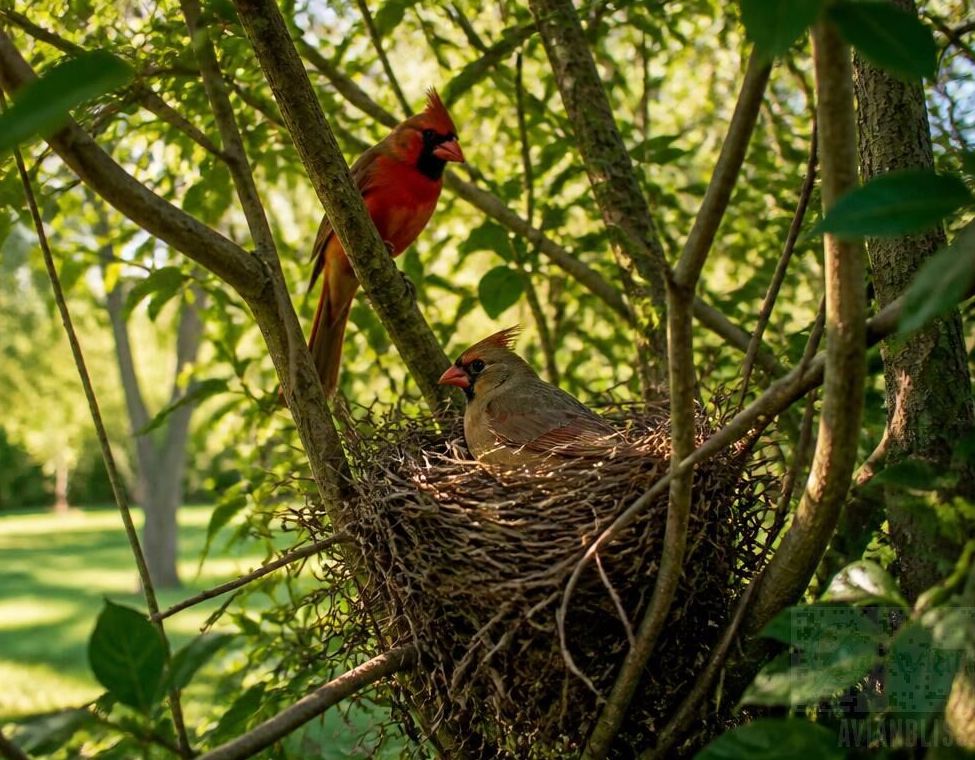
8. The female birds build the nest with twigs, bark and grass that the male brings. The eggs are incubated for 12 or 13 days. After they hatch, the nestlings are fed up to eight times an hour! Barely two weeks after hatching, the birds fly.
9. Cardinals are widespread—all the way down to Mexico and Guatemala and over to Hawaii.
10. Cardinal mates stay together for several breeding seasons.
What is your favorite bird?
Did you or do you have a bird as a pet?
Has a cardinal ever been a sign to you?
If the 10-minute video below is too long for you, move the red dot on the bottom down the line.









One Response
I see myself in your blog, a Cardinal will continue to play a part in my life, and keep my late husband close to me.I have so many in my home; a granddaughter drew me a beautiful one on cloth that she framed for me.