
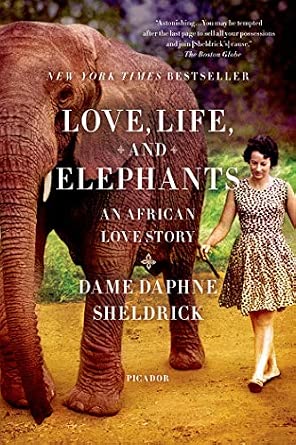
Some kind soul who heard I was going to Kenya anonymously sent me Dame Daphne Sheldrick‘s fascinating memoir, Love, Life, and Elephants: An African Love Story. She learned to raise newborn elephants and saved the lives of numerous wild animals and released them.
In the book alongside her memories of being a conservationist, Daphne reveals her relationship with David Sheldrick. He taught her how to rescue animals and became her husband. Sheldrick was the warden of Tsavo National Park in Kenya and inspired the David Sheldrick Wildlife Trust and orphans’ nursery.
Woven through the book are captivating stories of certain animals Daphne cared for, especially the elephant Eleanor, a friend for about forty years.
Prelude to Daphne’s Book
The memoir opens with a shocking account of being attacked by a wild elephant Daphne assumed was Eleanor. The stranger lifted Daphne with its trunk and threw her onto boulders. Fortunately it didn’t kill her because the real Eleanor intervened. The accident resulted in months of operations, bone grafts, and learning to walk again. But as Daphne lay on the boulder with a shattered leg and bleeding gash, she decided that if she lived, she would write about her life with Africa’s animals. That was the origin of this book.
Background
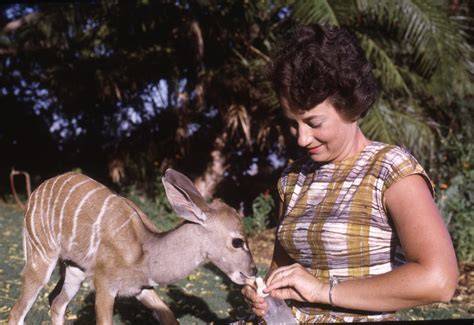
Daphne tells the story of her grandparents’ move to Kenya, her parents’ love story, and her love of animals from an early age. At the age of four, she assumed responsibility for an orphaned baby antelope named Bush—a foreshadowing of the rest of her life. These early pages are full of vivid descriptions of the land, the customs, the people, the animals, and the tragedies poachers and gangs caused.
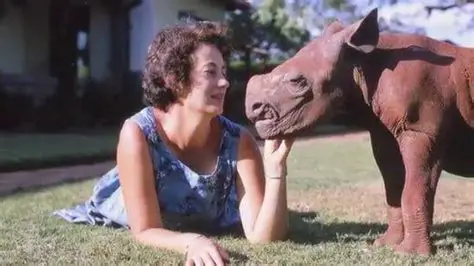
When Daphne was fifteen, she fell in love with Bill Woodley, who worked as a warden with her brother. They married soon after she turned nineteen. At age twenty, she gave birth to Jill. When she was twenty-one, Bill’s handsome boss, David Sheldrake, set up a home for her family in Tsavo, and she fell in love with the land. The wardens’ work was to catch and discourage poachers. In the mid-1950 it was estimated that 1200 elephants and hundreds of rhinos were poached each year for their tusks and horns. Poaching surged again in 1973.
Major Change
For six years Daphne worked in David’s office and accompanied him on expeditions. David was separated from his wife. From him Daphne learned much about nature, like the nonverbal ways animals communicate. Gradually the two fell in love. Ironically Bill, her husband who was responsible for rounding up poachers, frequently was off killing elephants. Eventually he had a girlfriend, which made it easy for Daphne to tell him she and David were going to be married. She had another daughter, Angela, with David.
A Host of Animals
One after another animals of numerous species come into Daphne’s life. They are orphans like Rufus, the newborn rhino; wounded babies like Higglety, a mongoose; and animals brought to her, like the civet cat, a nocturnal animal who would hide during the day, but jump on their bed at night. Gregory Peck, a buffalo weaver who had fallen from a nest, became a constant companion. He was the first of bird orphans. a talented writer, Daphne tells each animal’s story vividly so the reader can identify with her sorrow when an animal dies or returns to the wilderness.
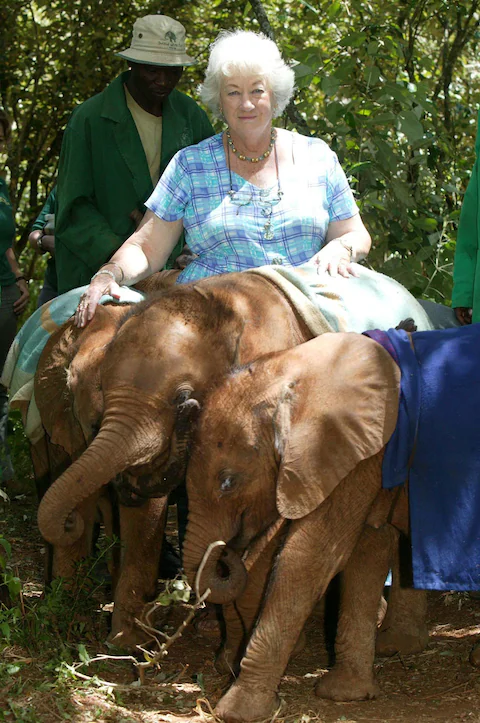
One of Daphne’s greatest achievements was creating a milk formula that would keep baby elephants alive. A sad occurrence was when young elephants fell into a mud hole and were stranded. When rescued they found a home with Daphne.
Progress
David became in charge of twenty National Reserves, but he wasn’t feeling well. While he and Daphne were visiting some of the outposts, he had a heart attack and died. The Wildlife authorities asked Daphne to still work for them and built her a house near the Nairobi National Park. So she wrote articles and continued to care for animal orphans. The David Sheldrick Wildlife Trust was founded and grew. Daphne was made a Dame Commander of the Most Excellent Order of the British Empire.
Daphne died in 2018, but her legacy and work live on. Occasionally a television program features how elephants are cared for and reintroduced into the wild.
Daphne’s memoir is available on Amazon.
What pets have you owned and loved?
When was the last time you visited a zoo? What was your favorite animal there?
In case you haven’t heard Henry Mancini’s delightful “Baby Elephant Walk” for some time, here it is:


4 Responses
I have always enjoyed watching the monkeys, it’s been quite a few years since I visited the zoo.
I love the zoo. Maybe Jessica can plan a trip for us!
What an interesting story. Makes me want to run out and get the book!!
Thanks for sharing such a wonderful story.
I hope you do read this book, Sue. It’s one of the best I’ve ever read.