
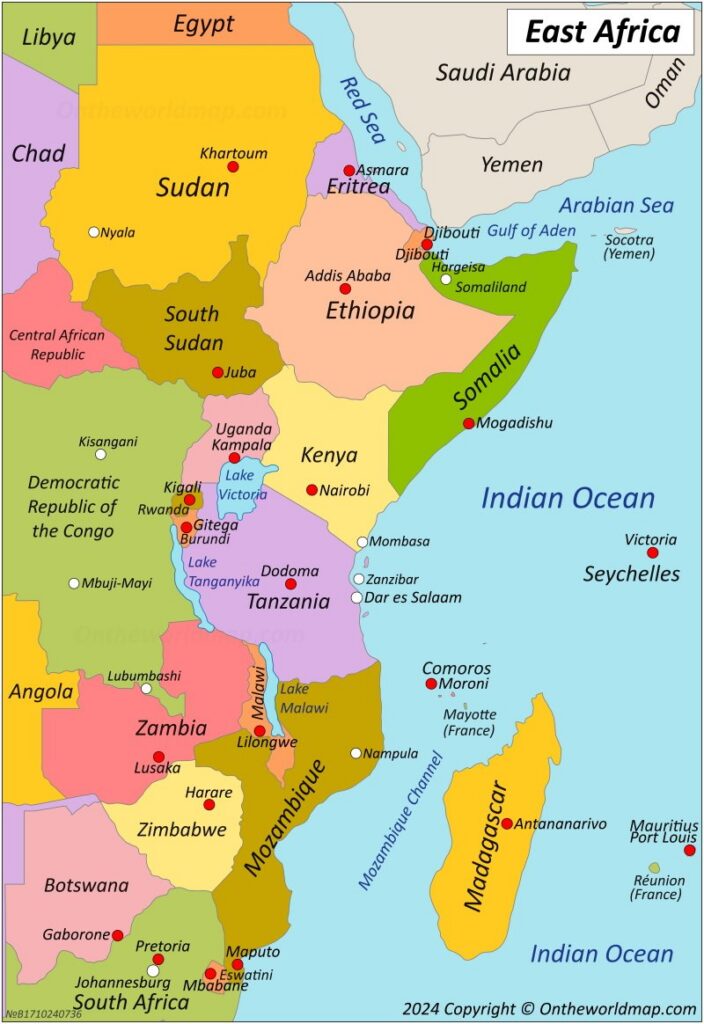
Since I arrived home from three weeks in Eastern Africa, many have asked me about my visit to our Notre Dame Sisters there. In the next several blog posts, I will present highlights and details of my time. For now, here is some basic information:
How long did it take to get there? 2 ½ hours to New York, then 15 hours to Kenya.
What did you do there? I spoke to our ND Associates and then our novices, gave an eight-day retreat to junior and senior professed, and then gave two talks to the junior professed (who make temporary vows). On the last day, I went on a morning safari with two of our Sisters.
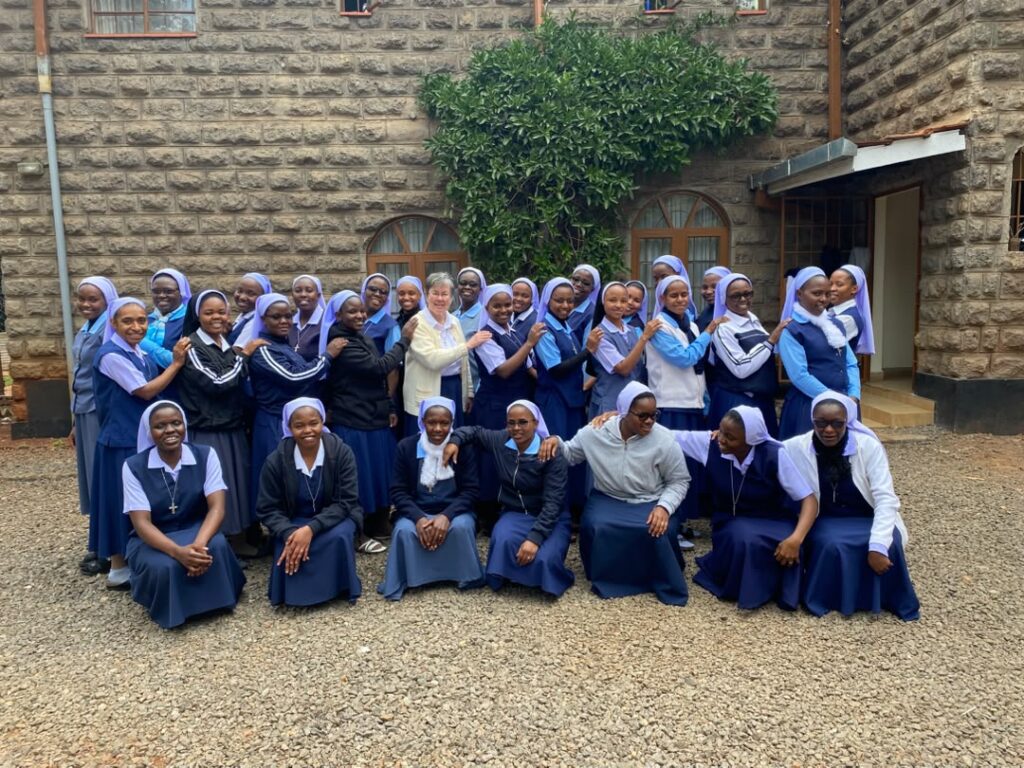
How many Sisters are in Africa? 101. There are 31 candidates, some in Tanzania and some in Uganda; 31 postulants in Uganda; 30 novices in Kenya; and 52 junior professed plus 8 tertians.
How did Notre Dames come to be in Africa? The congregation originated in Coesfeld, Germany. German SNDs came to the United States; Sisters from the USA went as missionaries to India; and then Indian Sisters went to Africa as missionaries. So you can say that we US Sisters are the grandmothers of the African Sisters.
In what countries in Africa will you find SNDs? Uganda, Kenya, Tanzania, and Mozambique.
Were you very hot? Taking a sunhat and suntan lotion was in vain. August is winter in Africa, so most days had a thick cloud cover, making it look as if it would rain any minute, but it never does. It was usually 74°, but it got chilly in the evenings.
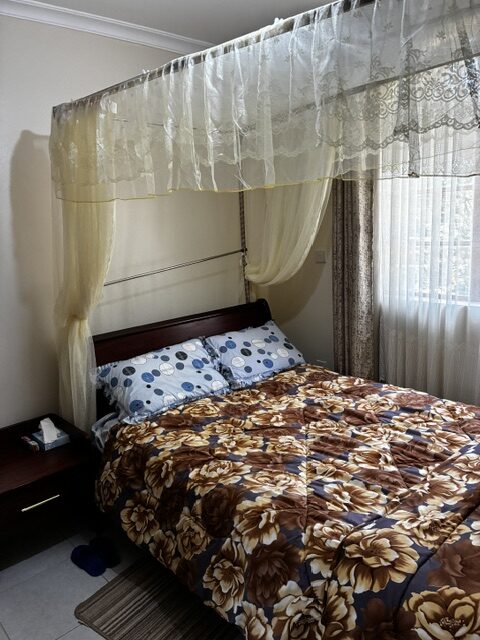
Did you get Ebola, malaria, traveler’s diarrhea, or mosquito bites? No! Many people, especially the Sisters I live with, were storming heaven for me. There were no mosquitoes, but the beds had mosquito netting just in case.
How did you prepare for the trip? I had to get nine vaccinations and apply for visas. Sisters who had been to Africa gave me valuable advice.
What did the Sisters speak? Everyone spoke English, but with an accent. In Kenya, which had been a British colony, English is used in schools. The Sisters also knew Swahili, and many hymns were in that language. Some also knew their tribal language. The only words I learned were “asante,” which means “thank you,” and “habari yako” (“hello, how are you?”).
How did you know what to do? I had a “guardian angel” at each of the three convents where I stayed. She helped me with meals, made sure I was on time for events, and even did my laundry.
What surprised you? The Sisters provide all their own food by farming. They raise animals and grow crops. The novices operate one farm and even slaughter the animals! Therefore the food is fresh, and chemicals are not used.
Stay tuned to learn about the food, animals, schools, ministries, the liturgies, other celebrations, etc.
At the end of my talk on the joy of being a consecrated woman, I taught the junior professed the song, “I’ve Got the Joy, Joy, Joy.” Later, they sang it at my farewell celebration. Unfortunately, I can’t post the video of them singing, but here is the YouTube version. (You can skip the ad.)
https://youtu.be/xoOyjO1sbXo?si=QGonEbS4HXmJkyo4https://youtu.be/xoOyjO1sbXo?si=QGonEbS4HXmJkyo4





5 Responses
Sister Kathleen thank you for sharing about your trip to us.
God works through us and you are one of his special angels.
May Our Lord and Savior be with you in all that you do.
Have A Blessed Day!!!!
Thank you, Jimmy, for your comment and blessings. I’m glad you (and Linda) read my blog.
This is incredible! You are a wonderful person in every way!
Welcome Home! Thank you, Sr Kathleen, for sharing your amazing visit to the sisters in Africa. Excited to learn all from your wonderful experience. God Bless you and SND
Glad you’re back; love the song and thanks for sharing. Looking forward to hear more.