
ILast week I wrote about shepherds. Now let’s focus on lambs.
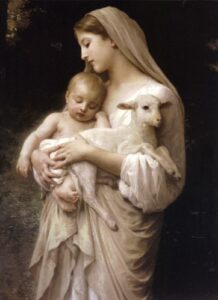
A nursery rhyme begins, “Mary had a little lamb, little lamb, little lamb. . . . It’s fleece was white as snow.” Coincidentally, that describes the Blessed Virgin and Baby Jesus!
Most Nativity sets include at least one lamb. We think it is sweet that a lamb is present. Lambs are gentle, docile, charming creatures. To call someone a lamb is a compliment, an endearing term.
However, the presence of lambs at Jesus’s birth has hidden meanings. It has ominous overtones, for it foreshadows the newborn’s destiny. This baby was born to die.
Exodus Lambs
When the Israelites in Egypt marked their doorways with a lamb’s blood, the Angel of Death, the tenth plague, passed over them. They were saved by a lamb, which they then ate.
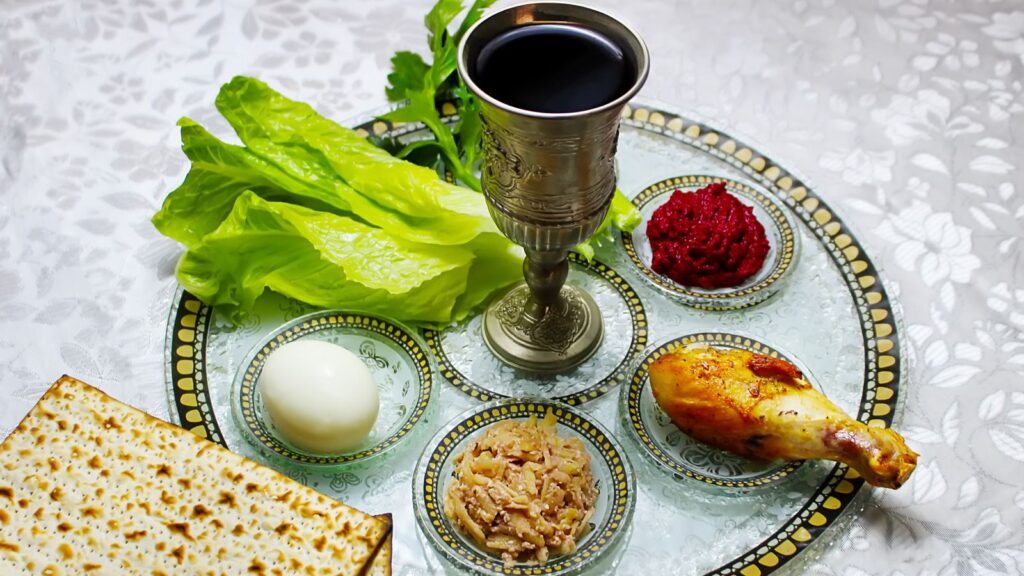
Later, in the Jewish Temple, in memory of this event, year-old, unblemished lambs were sacrificed each year on the eve of Passover. It’s proposed that the shepherds who first heard the Good News were in charge of raising and protecting these special lambs.
Passover meals include lamb.
The Christian Lamb
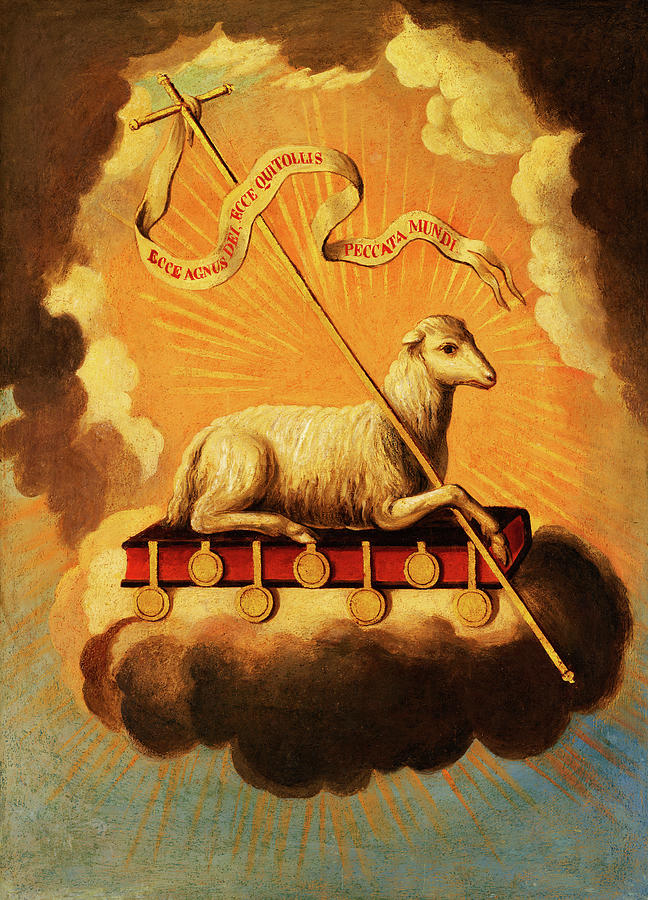
Some Hindu gods resemble large, powerful animals: an elephant, an eagle, and a lion. Christianity, however, likens the Son of God to a gentle lamb. From the start, John the Baptist introduced Jesus to the world by saying, “Here is the Lamb of God.”
A lamb is innocent and defenseless. Likewise, Jesus was sinless and humbly submitted to his execution. As a prophet said, “Like a sheep that before its shearers is silent, so he did not open his mouth” (Isaiah 53:7).
In Egypt lambs’ blood marked doorways. Jesus’s blood soaked the wood of the cross.
Moreover, Jesus, is comparable to the Passover lamb in that he was unblemished, the perfect man. The sacrificed lamb was to have no broken bones. Soldiers didn’t break Jesus’s legs to hasten his death, for he was already dead.
The Jews sacrificed lambs to atone for sins. Jesus made up for sins by shedding his blood and dying. At Mass we pray, “Lamb of God, who takes away the sins of the world,” not once but three times. And then we consume the Lamb.
At the Seder meal, Jews feast on lamb in memory of the Exodus. Similarly, at the banquet of Mass is a memorial meal. We remember the saving acts of Jesus.
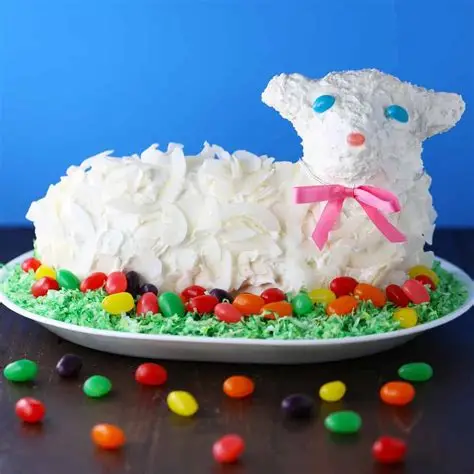
At Easter a sweet lamb cake might grace your table. You can make one using a mold or by following directions given here: https://www.allrecipes.com/article/easter-lamb-cake-without-a-mold/
The Lamb in Heaven
In the Book of Revelation, heaven is described as the marriage feast of the Lamb, who provides its light. This Lamb of God is worthy to open a scroll with seven seals. The countless citizens of heaven worship him in song:
“Worthy is the Lamb that was slaughtered to receive power and wealth and wisdom and might and honor and glory and blessing!” (Revelation 5:11)
“Salvation belongs to our God who is seated on the throne, and to the Lamb!” (Revelation 7:10)
Sheer Joy
I once saw little lambs and goats jumping straight up into the air. (Did you know they did that?) They are so happy to be alive. We needn’t fear the end of the world. Neither need we fear our own death. It merely means we will be united forever with Jesus, who saved us from eternal death. And that will make us exceedingly happy. We might even jump for joy.
Happy New Year! May you live 2026 full of life and joy!
Have you ever participated in a Passover meal? If so, what impressed you?
What struck you as you read this post? Did you have a new insight?
Here is the hymn “Lamb of God” sung by one of my favorite singing groups:



4 Responses
Beautiful lesson! Thank you, Sr Kathleen.
Joyful New Year to you & all the wonderful Sisters of Notre Dame!
You’re welcome, Kay. It’s a blessing to live with you! Happy New Year!
Thank you for all your wonderful blogs. I wish youbmany blessings and joy in 2026!
Laura A (Michelle’s sister)
Abundant blessings to you too in the new year, Laura. I’m glad you read my blogs!