Sister Mary Aloysia, Founder of SNDs
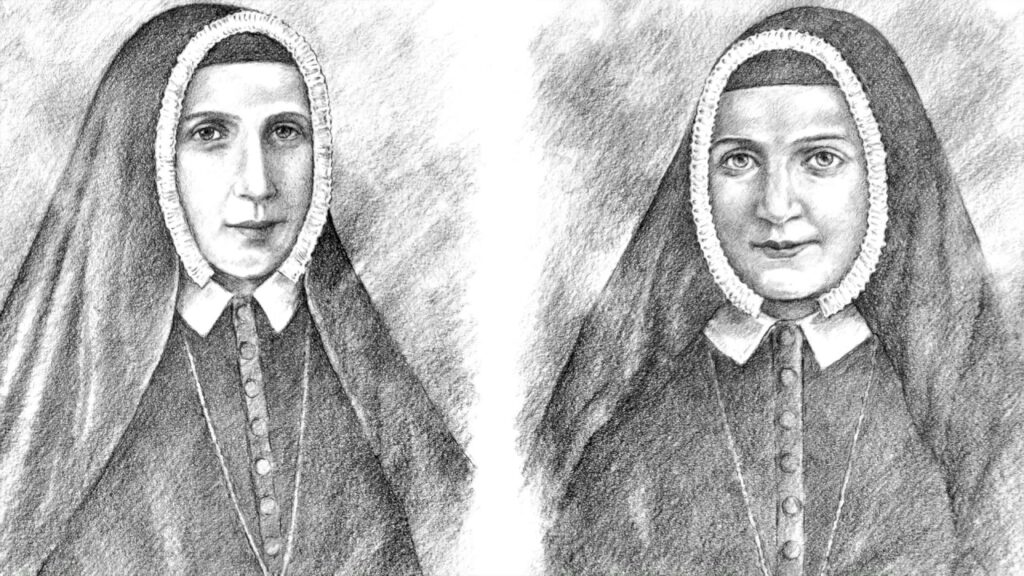
A reader asked for a post about Sister Mary Aloysia, the founder of the Sisters of Notre Dame of Coesfeld, my community. So here is a brief biography.
Sister was born Hilligonde on January 9, 1828, to Catharina and Otto Wolbring. They lived in the Netherlands. A brother died before his first birthday. Then when Hilligonde was four years old, her father died. Her mother remarried but died a year later. A new mother was brought to the house. The stepparents were more interested in Hilligonde’s large inheritance than her upbringing. With them she was pampered and became vain and stubborn.
A priest wrote Hilligonde’s great uncle, Gerhard John Wolbring, about the situation. Gert walked a hundred miles from Germany where Hilligonde’s father was born to fetch her. He took her to his nephew who had six children living at home. At first Hilligonde rebelled. She said, “I don’t have to milk cows. I’m rich.” When other children received favors, she would become angry and scream, “I don’t care. I’ll be married before you because I’m rich.” In time, Hilligonde’s kind aunt, who was used to taking in poor children, improved her. She would take Hilligonde with her to give clothes and food to the poor.
So Hilligonde wouldn’t have to walk far to school, Gert saw that she lived with her teacher and his wife. Later she also attended evening classes. After graduating, she spent two years at home learning homemaking skills.
One day Gert took her to an estate, hoping to find a husband there for her. On the way home, Hilligonde remarked, “The cage is lovely, but the bird will not be lured.” She had dreamed of being a missionary, but In those days, women couldn’t be missionaries. So she decided to be a teacher.
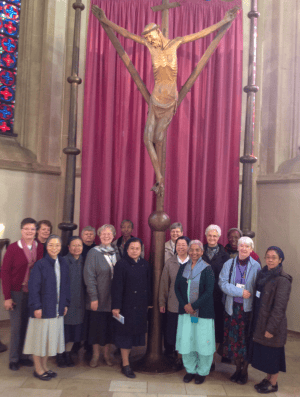
After attending the Teacher Training College in Muenster, Hilligonde’s first job was as an assistant to an almost completely blind woman who taught primary grades at St. Lambert’s School in Coesfeld. This is the parish where the church housed the famous Coesfeld cross, allegedly a gift of Charlemagne to the converted Saxons. It contains a relic of the true cross.
Elisabeth Kühling, who taught older girls, became Hilligonde’s good friend. In those days many people in Germany were poor. Hilligonde brought extra food to share with the children. Then she was inspired to use her money to purchase a home for poor children.
When Elizabeth heard the idea, she asked, “Why don’t you let me help you?” So a house on Süring Street became home for seven children. Then a larger house was needed, so the group moved to a home called Annathal.
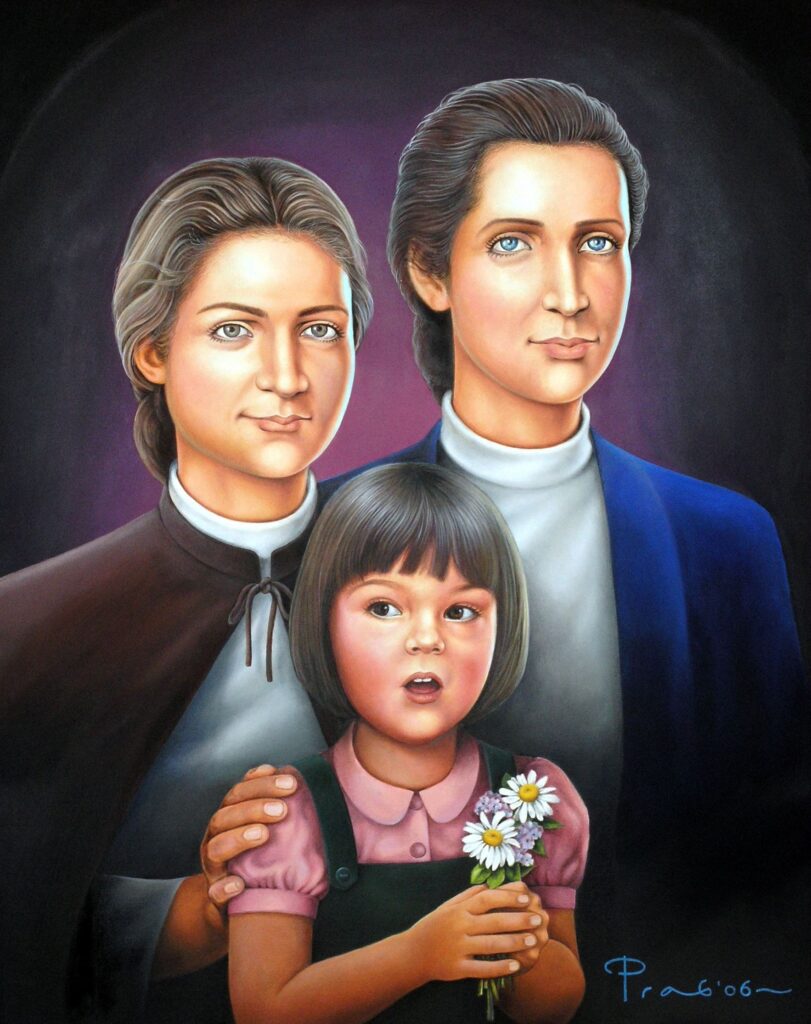
In 1849 the parish priest, Father Theodor Elting, proposed that the two women become religious sisters. So three sisters from a congregation with St. Julie Billiart’s spirituality came from Amersfoort in the Netherlands to train them in the religious life. The next year on October 1, Hilligonde became Sister Maria Aloysia, and Elizabeth became Sister Maria Ignatia. Two years later, they made vows.
In 1853, Sister Aloysia was asked to go to the town of Aldekerk. She taught, but Sister Ignatia trained the novices. Sister Ignatia died in 1869 of abdominal cancer.
When Bismarck forbade religious sisters to teach in Germany, Sister Aloysia travelled with eight other sisters to the United States. They arrived on the Fourth of July and saw fireworks. They went to Cleveland, Ohio, and Covington, Kentucky, where they had to adapt to a new language and different food. In Cleveland, Sister Aloysia taught children of German immigrants, cooked for the Sisters, and was a sacristan at St. Peter’s Church.
When there were 200 Sisters of Notre Dame in the United States, Sister Aloysia was asked to go to Delphos to teach and to care for four elderly persons in the convent. She did this until the major superior of the community asked her to care for orphans at Mount St. Mary’s in Cleveland. This is the work she had always dreamed of doing. She was there until she died on May 6, 1889.
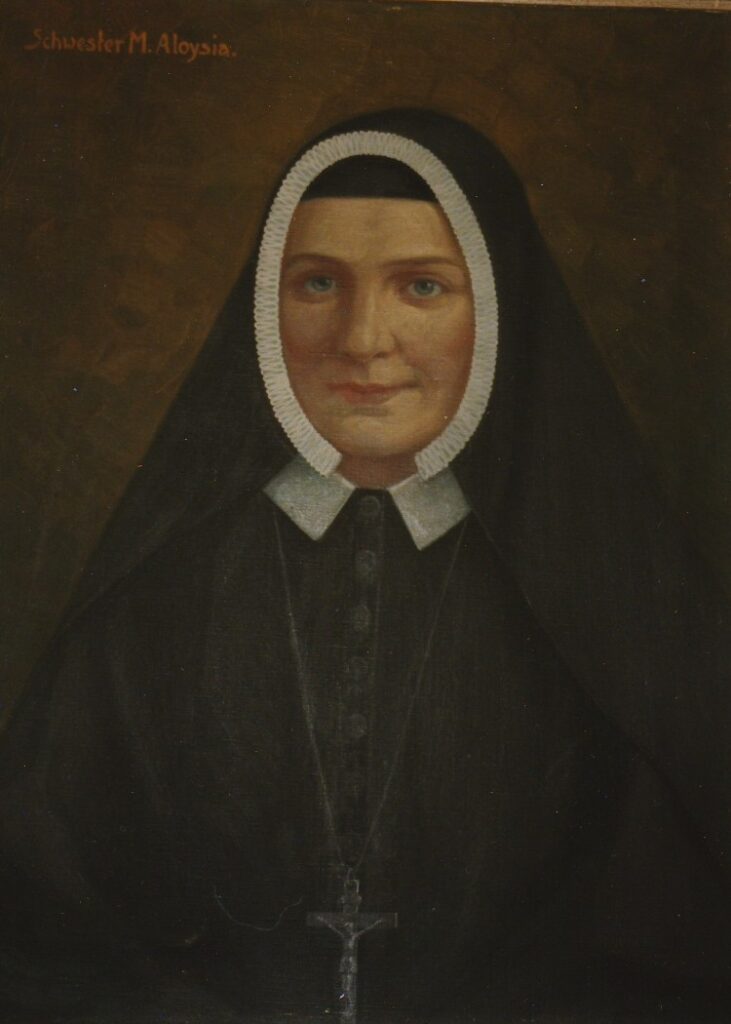
Sister Mary Aloysia is buried in St. Joseph’s Cemetery in a common grave with 41 other Sisters. In 2014 a memorial stone was placed on the site of the orphanage, which is on the grounds of the Benedictine Abbey. Sister Mary Aloysia, a quiet, unassuming Sister, would be happy to know the community she began now numbers about 2,000 Sisters and spreads the Good News all over the world.
Note: This week I will be on retreat and away from my computer, so I probably will not have a post the following week. Pray for me please.
• How have the Sisters of Notre Dame figured in your life?

Key to Peace: Deal with Stress

The second greatest commandment according to Jesus is to love others the way you love yourself. This presumes that we love ourselves. Stress takes a toll on our bodies and minds. Coping with it is a way to care for ourselves and promote our health.
This week I present you with a guest blog by Jill Palmer that offers several ways to eliminate the dangerous effects of stress. Interestingly, I’m currently editing a book about Reiki that teaches similar methods. Jill’s original title is “Beat Stress Before It Beats You with These Practical Steps to Regain Peace.” I’m happy to share her essay with you:
Life often feels like a relentless stream of tasks and responsibilities, with stress lurking around every corner. This guide, courtesy of Catholic Faith Corner, is designed to help you navigate these challenges by employing effective strategies that target the root causes of stress, ensure proper rest, and promote mental clarity and physical health. Each step provides practical advice to empower you in managing stress more effectively.
Unveiling Stress Triggers
Identifying what triggers your stress is the first critical step towards managing it. Take time to reflect on recent instances when you felt overwhelmed. Was it a deadline at work, a personal relationship, or financial worries? Recognizing these triggers helps you anticipate and strategize against them before they escalate. This awareness is your first defense in the battle against stress.
Rethinking Work-Life Balance
If you find your current role is the main source of your stress, exploring new career opportunities could significantly enhance your mental wellness. Distance learning options facilitate the acquisition of new skills or qualifications, accommodating your existing work and home responsibilities seamlessly. If you have experience in the healthcare field, advancing through a web-based master’s program in family nurse practitioner enables you to adopt a more active position in patient health management. When you’re ready to get started, this page deserves a look, as it offers a wealth of information on available programs.
Harmonizing Sleep Rhythms

A consistent sleep schedule isn’t just about clocking hours; it’s about quality rest. Transform your bedroom into a sanctuary free from distractions like electronics. Aim to sleep and wake at the same times daily, even on weekends, to regulate your body’s internal clock. This rhythm supports better sleep quality, equipping you with energy and resilience against stress. Proper sleep is foundational to effective stress management.
Energizing Through Exercise

Physical activity is a powerful antidote to stress. It not only enhances your physical health but also boosts your mood by releasing endorphins, known as the body’s feel-good neurotransmitters. Aim for at least 30 minutes of moderate activity like brisk walking or cycling most days. Regular exercise can dramatically improve your emotional equilibrium. Make movement a non-negotiable part of your day.
Setting Boundaries
Learn to recognize your limits and be comfortable saying no to tasks that exceed them. Declining extra responsibilities isn’t a sign of weakness; it’s a strategic decision to ensure your well-being. Setting clear boundaries helps prevent burnout and keeps stress at manageable levels. Remember, every ‘no’ to others can be a ‘yes’ to your health.
Simplifying Tasks
Overwhelm often comes from looking at the big picture. Break your tasks into smaller, more manageable steps. Set realistic goals for each day or week. This approach not only clarifies what is achievable but also provides a clear roadmap to follow, reducing feelings of being overwhelmed and enhancing your focus. Small steps lead to big changes over time.
Mastering Time Management
Effective organization is key to managing daily pressures. Use planners or digital apps to outline your tasks and commitments. By managing your time wisely and figuring out what to focus on, you can reduce stress significantly. Organization isn’t just about order; it’s about freeing your mind from avoidable stress.
Embracing Mindfulness
Mindfulness and meditation can transform your approach to stress. These practices encourage you to stay present and fully engaged in the now, rather than worrying about the past or future. Regular mindfulness exercises can significantly lessen anxiety and improve your overall mental health. Integrate these practices into your daily routine for deeper peace.
As you integrate these strategies into your daily routine, you’ll find that managing stress becomes more intuitive and effective. You’ll discover the strength in setting boundaries, the clarity that comes with organized priorities, and the peace of fostering mindfulness. This journey is about transforming challenges into stepping stones for personal growth and resilience.
Thank you, Jill!
I would add one step: Pray. Offer your troubles to God for the salvation of the world. Ask for the gift of peace. Be quiet and sink into the center of your heart. There Jesus is waiting to calm your life as successfully as he calmed a storm on the Sea of Galilee. Trust in his love for you that will see that everything will work out all right.
• The step that I most need right now is daily exercise. What about you?
Here is a peaceful song about peace:
For your funny bone:

God and Women
My first encounter with gender inequality occurred in the sixth grade. A fellow student and I were running for class president. The class chose Lawrence and explained that it was because a president should be a man.
That was long ago. Conditions haven’t changed too much, although we women now have the right to vote and to wear pants! Forbes reports in 2024 that women earn 16% less than men. Wonder what God thinks? Here is an essay about the topic:
God would certainly support women’s rights. Our God, who is neither male nor female, created women in his own image and likeness. Therefore, they are God’s children who share in God’s divinity. According to Genesis, women are men’s partners and have equal dignity. God, however, apparently favors women!

When God decided to come to earth as a human being, there were many options. God could have appeared as a grown man, a baby washed up on the shore, or the wealthy son of a king. Instead, the Son of God was conceived by a young village girl by the power of the Holy Spirit.
Supposedly as abolitionist Sojourner Truth gave a speech, a man claimed that women did not have as many rights as men because Christ wasn’t a woman. Truth rejoined, “Where did your Christ come from? From God and a woman! Man had nothing to do with him.” The Son of God’s flesh, blood, and DNA came from Mary alone.
Also, during the Angel Gabriel’s visit, the Blessed Virgin Mary, was privileged to be the first to hear the good news that the Messiah was on his way.
Jesus’s Regard for Women
Jesus ignored the mores that prevailed in first-century Israel regarding women. At that time women, along with children, were deemed the property of men. Women were illiterate and not obliged to pray or observe feasts as men did. In the Temple they were confined to the Court of Women. For a man to address a woman in public was unthinkable. Women could not testify in court or ordinarily inherit property. A man could easily divorce his wife for a crime as minor as a badly cooked meal. But the woman was not accorded the same recourse. An unmarried, pregnant woman would be stoned to death, but the man who impregnated her was granted impunity.

The way Jesus treated women was unusual, in fact radical, for a Jewish man.
• He spoke to them in public (even a Samaritan woman of ill-repute),
• He taught them as disciples and included them in his inner circle.
• He freed one from demons and healed them, including the woman with an issue of blood who dared to touch his robe.
• He brought a twelve-year-old girl back to life.
• He told parables about women like the one who lost a coin, a God-figure.
• He counted Mary and Martha of Bethany among his best friends.
• He praised a widow who donated her last two coins in the Temple.
• He saved the life of an adulterous women about to be stoned.
• He defended the repentant woman who washed his feet with her tears.
• Jesus even let a desperate Canaanite woman change his mind, and he cured her Gentile daughter after all.

After Jesus rose from the dead with new, glorious life, in John’s Gospel it was a woman, Mary Magdalene, who first learned of it. Jesus appeared to her and commissioned her to relay the good news of his resurrection to his brothers, earning her the title Apostle to the Apostles. Other Gospels report that two or more women were the first to encounter the risen Lord.
Jesus showed women respect and love, and the women disciples reciprocated with love. They supported Jesus and the apostles financially and no doubt prepared their meals. Most notably women, including his mother, Mary, accompanied Jesus as he carried his cross to the hill of Calvary, while all but one of the male apostles fled for their lives. A woman, the Mother of God, is greater than all the apostles. She is their queen!
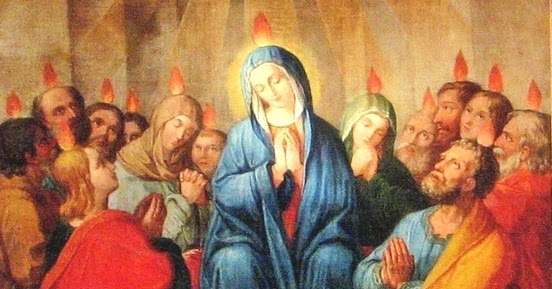
Interestingly, as Pope Francis reminded us in 2024, Jesus’s “Church is herself a woman: a daughter, a bride, and a mother. And who better than women can reveal her face?”
• Have you ever felt or observed the injustice of gender inequality?
Here is a short interview that I found interesting …
US SNDs’ July 4 Anniversary

The first Sisters of Notre Dame came to the United States 150 years ago on July 4. They were greeted with New York fireworks. The government in Germany had been closing their ministries, so their future in that country was bleak. The eight Sisters were exiles who were willing to be missionaries in the United States. They learned English and endured two weeks of seasickness as they crossed the Atlantic. A day after landing in New York, they took a train to Cleveland. There they moved into St. Peter Convent. Our foundress, Sister Mary Aloysia, was one of them. At age 46, she was the oldest pioneer.
To celebrate this momentous occasion, this year on July 4 we US Sisters had a grand all-day party. It began with a traditional breakfast: egg custard and gritzie (barley and pork). Both dishes are my favorites.
We gathered in the main dining room for an opening prayer service. Then we held a Zoom meeting uniting SNDs in the USA, Germany, and Rome, where our motherhouse is located. During this meeting, Sisters were gathered in our four US regions (Chardon, Toledo, California, Covington), and each group presented a talk and a song. The Sisters in Germany responded. Previously we had sent them individual letters thanking them for coming to the USA. We all enjoyed waving to one another.
A Mass in Chardon followed, beginning with a choir alternating with the congregation singing “Heritage Hymn” accompanied by a little orchestra. This song composed by our Sisters gave an overview of who we are and what we are about.
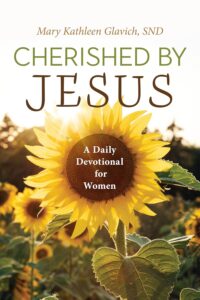
For dinner we feasted on chicken, ribs, macaroni salad, carrots, cookies and fruit. Door prizes (dozens of them) were awarded throughout the day. My contribution was a coupon for my upcoming book, Cherished by Jesus: A Daily Devotional for Women, hopefully published this November. Sr. Margaret Ann won it.

On each table were papers for a game testing our knowledge of SND history. Key Sisters and buildings from the Chardon province’s past were listed. We were challenged to match the description of each one. Then even more interesting: Large photos of these Sisters and buildings were posted on the walls of our Health Care Center, its five halls. We were to match the photos with the descriptions on the paper.
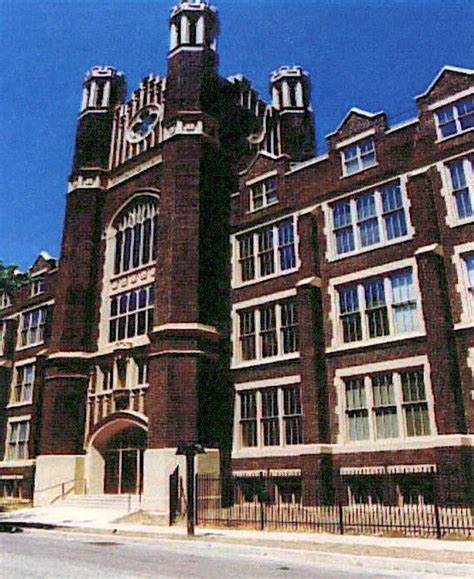
There was also a word search and the opportunity to play bocci ball or cornhole in the afternoon for those brave enough to venture outside in the heat.
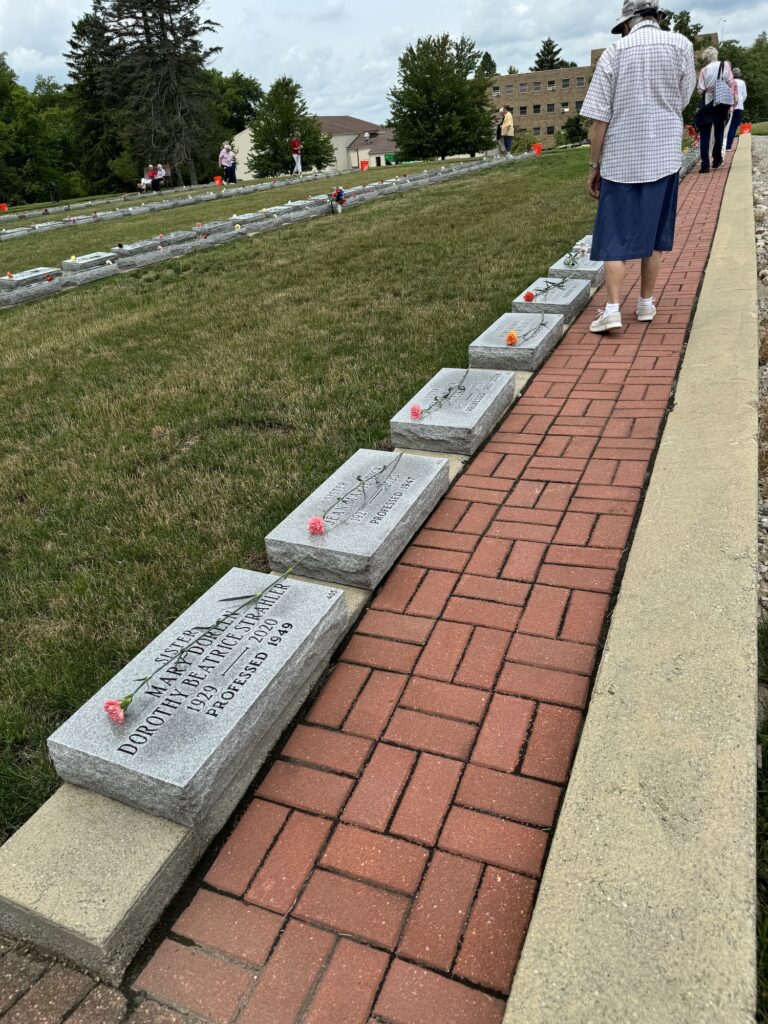
Although there was heavy rain in the early morning, the skies cleared for a special activity. For days a chart was displayed with the names of the almost 500 Sisters buried in our cemetery. We could sign up to place a carnation on their headstone. So this afternoon we paraded out to the cemetery in the hot, humid air, picked up a flower from the vase at the end of the row, and set it on the chosen Sister’s grave.
For a 3:00 snack we made our own strawberry shortcake on cake baked by our superb bakers and helped ourselves to soft serve ice cream from our new machine. Supper was a German meal of bratwurst and German potatoes. This was followed by singing songs from our formation days, like “Never Give Up” and “This Is My Father’s World.” We also sang a clever, many-versed song written by one of our Sisters long ago: “Where in the World but Here in Notre Dame.” Its last line is “Where in the world but here in Notre Dame can you come so close to God?”
We ended the day by praying Compline together.
The plan called for gathering around our fire pit for s’mores in the evening, but we all agreed we couldn’t eat anything more, so that activity was postponed.
Dave, one of our maintenance men, did research to find a long-lasting tree as a reminder of this day. It is now planted in our courtyard and marked with a red ribbon.

Now we look forward to celebrating the 175th anniversary of our founding next year!

• Have you attended an institution staffed by the Sisters of Notre Dame?
Symbols at Mass

Again I’m relearning facts about the Eucharist from doing research for my book on the sacraments. This is making me pay more attention to our daily Masses. Hope this blog post does the same for you.
Candles are lit because Jesus is the Light of the world.
We sing because singing well is praying twice according to St. Augustine. Besides, voices combining to create one sound is a symbol of unity.
The Mass begins with the priest kissing the altar. He does this because the altar is a symbol of Christ, who is the priest and the victim of the sacrifice.
Before reading the Gospel, the priest makes the Sign of the Cross on a page. We stand to hear the proclamation. At the end, the priest kisses the Book of the Gospel. These are all ways to honor the Word of God. Jesus speaks to us in Scripture. You might listen to hear the verse he means for you personally that day.
During the Creed we bow at the words “by the power of the Holy Spirit he was born of the Virgin Mary, and became man.” This describes the fantastic incarnation, the moment when God, the almighty pure Spirit, took on flesh and blood for love of us. We adore God for this and so we bow.
The bread and wine are brought to the altar. They are not the only gifts we present to God. Formerly, people brought other things like animals, food for the poor. Today at this point money is brought up. Also, mentally we offer God ourselves: our work, joys, and sufferings.
The priest adds a little water to the wine. This symbolizes the union of humanity and divinity in Jesus.
Before the consecration, the priest washes his hands. This was practical long ago when he handled the things people brought up in the offertory, which may have been dirty. Today this washing is symbolic. It stands for his being purified of sin.
The Consecration
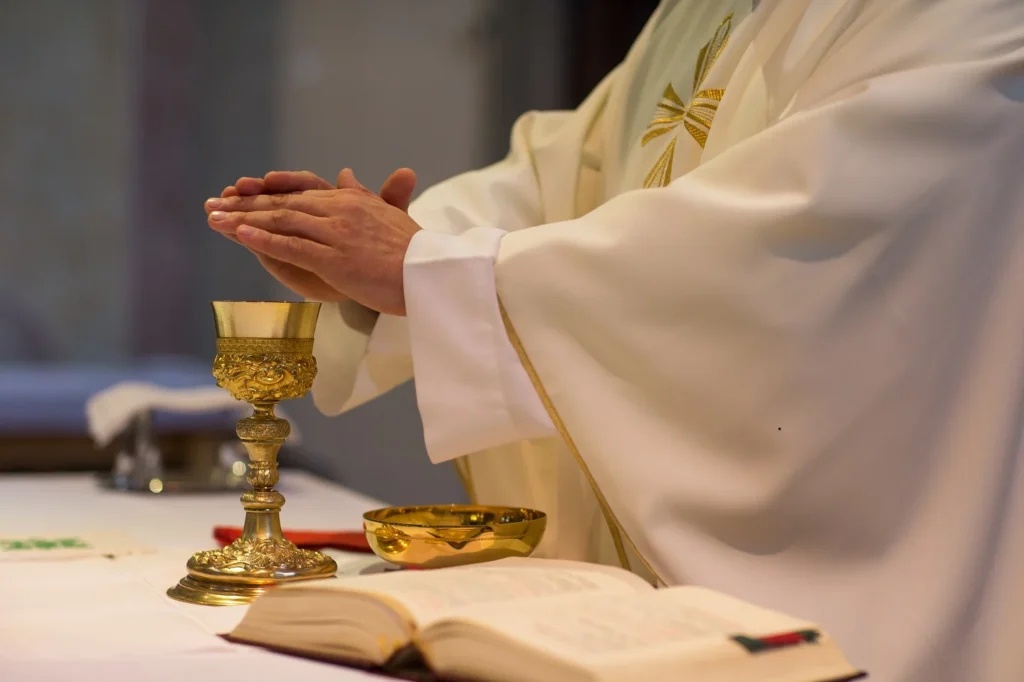
The priest lays his hands over the bread and wine and then makes a sign of the cross over them. He does this as he calls down the Holy Spirit, the One who brings about transubstantiation: the change in the substances of the bread and wine. Then Jesus becomes present in the consecrated bread and wine. Really, truly. It’s said that 70% of Catholics do not believe this! However, Jesus declared,
“Those who eat my flesh and drink my blood have eternal life, and I will raise them up on the last day; for my flesh is true food and my blood is true drink. Those who eat my flesh and drink my blood abide in me and I in them” (John 6: 54-56).
Hearing those words, some disciples walked away. Jews did not consume blood. To them this sounded horrific. Yet, Jesus did not call them back, saying, “I’m only using a figure of speech” or “I’m just kidding.”
At the end of the Eucharistic prayer there is the Doxology:
Through him, and with him, and in him,
O God, almighty Father,
in the unity of the Holy Spirit,
all glory and honor is yours,
for ever and ever.
The “Amen” that follows is the most important one of the Mass. We are saying yes to the great glory due to our Triune God. St. Jerome reported that in Rome when Amen was proclaimed, all the pagan temples trembled. The Amen should be like a thunderclap.

The priest breaks the sacred host, the Fraction Rite, because this is what Jesus did at the Last Supper. In fact, at first the Mass was called the Breaking of Bread.” The two disciples on the way to Emmaus recognized Jesus when he broke bread.

Then the priest breaks off a piece of the sacred host and drops it into the sacred wine. This co-mingling stands for the resurrection when the blood of Christ will return to his body.
Communion
When we are presented with the body and blood of Christ, we respond, “Amen.” This is an act of faith. We mean we believe this miracle.
The fact that we are all partaking of the same meal indicates that we are all one in Christ.
When we are dismissed, we are sent to take Christ into the world. The word Mass is derived from the Latin word missa, which means “sent.”
• What was the most memorable Mass you ever participated in?
• What do you pray after receiving Communion?
• What is your favorite part of the Mass? Second favorite?