Cheers for a New Year
Every morning one of the first things I do is post a cartoon on Facebook. Surprisingly, I receive more positive feedback from this “ministry” than from books I’ve written! Where is the source of my cartoons? On the first day when my sister Nancy and I were in Hawaii in 2004, we met a Japanese couple from California, Alan and Linda. Incredibly, ever since then (for the past 22 years!) Alan has sent me seven cartoons each day. I save the best ones on my computer.
Why Laugh?
Laughter is known as “the sound of the soul dancing” and “carbonated holiness.” It expresses inner joy, one of the fruits of the Holy Spirit and, according to the Jesuit Pierre Teilhard de Chardin, joy is the most infallible sign of the presence of God. Mark Twain observed, “Humor is the great thing, the saving thing. The minute it crops up, all our irritation and resentments slip away, and a sunny spirit takes their place.” Writer and musician Jimmy Buffett goes even further and claims that if we couldn’t laugh, we would all go insane!
In addition, laughter has physical benefits. For good reasons it is the best (and cheapest) medicine. Laughing promotes health by massaging the inner organs, strengthening the immune system, improving blood flow, and relaxing muscles. Furthermore, it releases endorphins, the feel-good hormones that reduce stress and pain. Ironically, like a disease, laughter is contagious.
Books with Funny Anecdotes

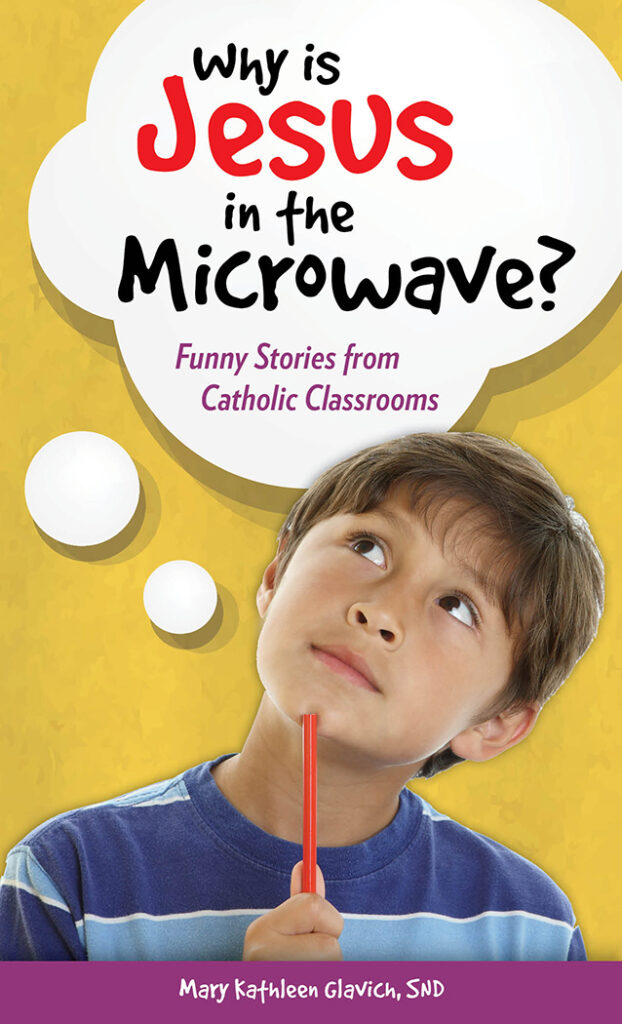
In 2002, Paulist Press published my book Catholic School Kids Say the Funniest Things ($10.00). It was a collection of humorous stories I had gathered from the Sisters of Notre Dame. After that book was out of print, Our Sunday Visitor republished it with 100 additional anecdotes. This revision was entitled Why Is Jesus in the Microwave? ($15.00) The title stems from the following story:
A Hot House
At a certain parish the tabernacle was a wide rectangle set into the wall. One day the primary children were learning about the Mass. At the end of the lesson, Sister asked, “Does anyone have any questions?”
With furrowed brow, a child inquired, “Why does Father put Jesus into the microwave?”
Another child wanted to know why Father locked up Jesus.
(This book too is out-of-print. But I have copies of both, if you’d like to purchase either.)
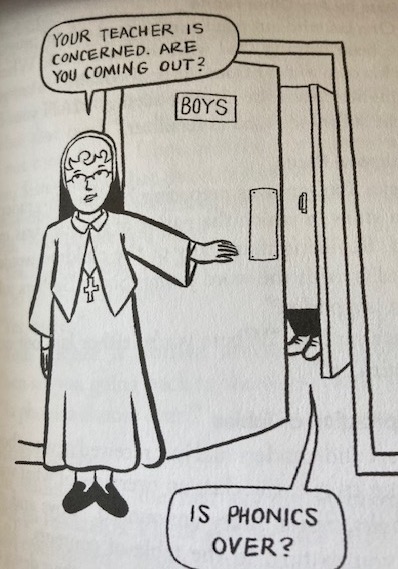
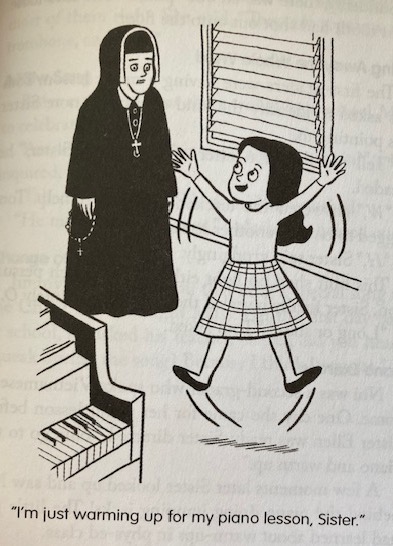
As a plus, darling illustrations grace both books. Here are samples:
Religion Related Laughs
Mixed Vegetables
Father was reviewing the story of Our Lord’s passion with the children. He asked, “What was the name of the garden Jesus and his apostles went to after the last supper?” A boy raised his hand and waved it wildly. He was not one who usually knew the answers.
“Do you really know?” asked a surprised Father.
“Yes,” said the boy confidently. “The Garden of Pickles.”
“Close,” granted the priest. (Should have been Garden of Olives.)
The Ultimate Evil
Father presumed that the first graders knew a lot of theology. “Does anyone know who the leader of the bad angels was?” he asked. Sister was surprised to see one little boy’s hand shoot up.
“Yes?” Father asked.
“The boogeyman,” the boy declared emphatically.
Omnipresence
“Do you know where God is?” Sister asked her first graders.
One boy confidently answered, “In our bathroom.”
Curious, Sister inquired, “How do you know?”
“Because every morning my dad pounds on the door and asks, ‘My God, are you still in there?’
A Few More
Mary, a U.S. Citizen!
The sixth graders were practicing for a May Crowning. Luckily the lad reading the Gospel passage about the annunciation had the chance to be corrected. He proclaimed that God sent the angel Gabriel to a Virginian betrothed to a man named Joseph.
Catholics in the Temple
One of Sister Anelle’s students read the Bible with a modern mind. He wondered why Jesus chased people out of the Temple for playing Bingo.
Old Testament Fairy Tales
Sister Barbara’s sixth grade CCD class was reviewing some Old Testament stories. In recounting the story of Joshua’s victory at the battle of Jericho, one lad got his tales mixed up. He said, “The Israelites surrounded the town of Jericho. Then they huffed and they puffed, and they blew the walls down.”
Saint Paul’s Tenth Missionary Journey?
Sister Barbara was telling the kindergarteners stories about Saint Paul. She explained how he traveled a lot, visiting Christian churches. “Did he come to Newbury?”asked one little boy whose church was St. Helen’s in Newbury, Ohio.
A Logical Answer
A visiting priest from Uganda was presiding at a school Mass. During the homily he asked, “Does anyone know where I come from?”
One child raised his hand and answered, “China.”
The priest’s eyebrows shot up. “China? Why do you say that?”
“Well, everything comes from China,” the boy explained matter-of-factly.
Good Discipline
Sister Mary Adelle was perturbed. During Father’s homily at the school Mass, one of her second graders in the front row was talking and fooling around. Not wanting to cause a disturbance by walking to the front, Sister just leaned forward and in a loud whisper said, “Neil!” Immediately her whole class knelt. One by one the other classes followed suit until the whole student body was kneeling.
The Best Laid Plans . . .
Sister had labored hard to help her students prepare the Friday school Mass. It was almost time for communion, and the liturgy had flowed on without a flaw. Then to Sister’s dismay, a student went up to the microphone and announced, “Our communion hymn is ‘Look Behind.’ ” It was really “Look Beyond.”
Cheers Coming for the Future
For the next few weeks, especially when I’m in Guatemala, I’ll be posting more of these gems. You might ask teachers to recall humorous things that happened in their schools. Tell someone a joke to cheer them up today especially if it’s a dreary day.
Can you recall a funny thing that happened when you were a student or a teacher?
What is one of your favorite jokes?
Has someone you met only once continue to support you like Alan does me? If so, how?
Contagious Laughter
To further bring a smile to your face, here is a video of a baby laughing. Enjoy! There are several of these videos on YouTube.
A Snowy Winter

Snow is winter’s inevitable companion for us who live in Northeastern states. My home is in Geauga County, known as Ohio’s snowbelt. Our province center, its highest point, is wittily called its buckle.
As I write this, snow blankets the ground, flurries are almost nonstop. Snowplows again woke me up around 3:30 a.m. Thanks to Lake Erie’s effect, we will see a few more days of this white stuff falling from the sky. The snow is beautiful as it decorates our pine grove, and sunshine makes it glisten like a field of diamonds. (I always think it was kind of God to make snow white instead of gray, brown, or black!)
Of course, snow has its negative points. We’re used to cars skidding or crashing, frozen car doors, numb fingers and noses, brushing snow off cars, shoveling snow, and putting boots on and taking them off. The other day my car failed to maneuver a turn, and after sliding across two lanes, I ended up on the brink of a gully with the Chagrin River at the bottom. Whew!
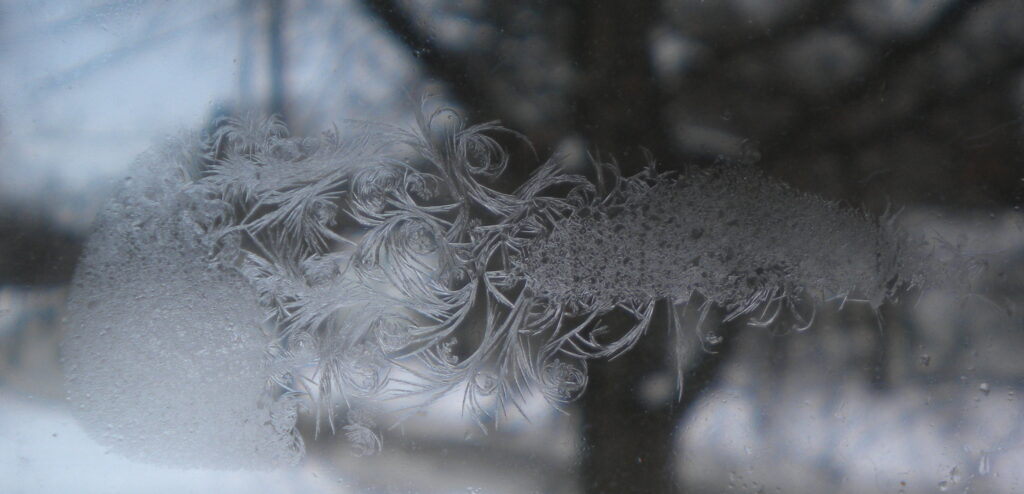
Yet, there’s nothing so cozy as sitting in a warm house and, watching through a window painted with lacy ice, large, soft snowflakes drift to earth.
Things to Do Outside

Snow has a starring role in my childhood memories: making snow angels in it, playing King of the Mountain on the mounds in the A&P parking lot, sledding on Ginny Hill, making snowmen, engaging in snowball fights and face washings, going ice skating, and tasting ice cream Mom made from snow like her mom made it in rural Illinois.
I’ve gone cross-country skiing but have yet to do regular skiing. However, I can see lights from the Alpine Valley ski resort on Mayfield Road.
On the Internet is a video of Franciscans frolicking in “Sister Snow.”
Snow Deprived

I feel sorry for people who live where they don’t experience and enjoy all four seasons.
Sisters who are here from Africa to study are delighted to be introduced to snow. Recently Sister Pascalia from Tanzania, well bundled up, ventured out into our courtyard.
A good snowfall is one human experience that Jesus was deprived of because he lived in a desert climate. The most he probably ever knew of snow was viewing snow-capped Mount Hermon in the distance.
This is the lovely pattern of ice that was on my window one year:
Naomi Meets This Phenomenon
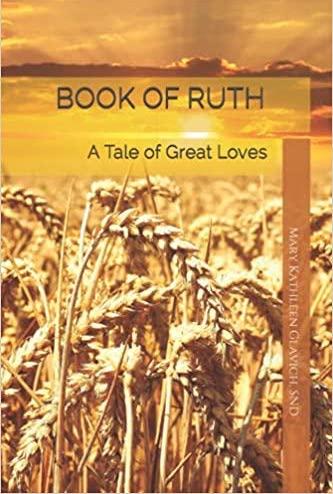
Here is an excerpt from my book Book of Ruth: A Tale of Great Loves, in which Naomi experiences snow for the first time.
Happening to glance through the window behind Naomi, Ruth noticed snowflakes drifting down for the first time that year.
“Naomi, it’s snowing!” she shouted and leaped up. She ran to the courtyard door with Naomi close behind her.
“I’ve never seen snow before,” the Israelite woman said. “It doesn’t snow in Bethlehem, and I’ve never traveled far enough north where the snow on the top of Mount Hermon is visible.”
“You’re living high up on a plateau now. Sometimes it even snows in the spring.”
“Let’s go outside,” Ruth said and opened the door.
Naomi followed Ruth, eager to experience her first snowfall. For a few moments she stood still, fascinated by the snow drifting from the sky slowly and softly, decorating the ground, her house, and now her with white crystals. Then, like a child, she twirled around, her arms outspread and her tunic flaring out to form a cone about her.
“These snowflakes are so big and beautiful. They look like the feathers of a white dove,” she said.
Naomi stretched out her hand, and when a few snowflakes landed on it, exclaimed, “They’re cold though!”
“You can catch them on your tongue,” Ruth said and demonstrated. “They won’t hurt you. They’re just water.”

Snowflakes
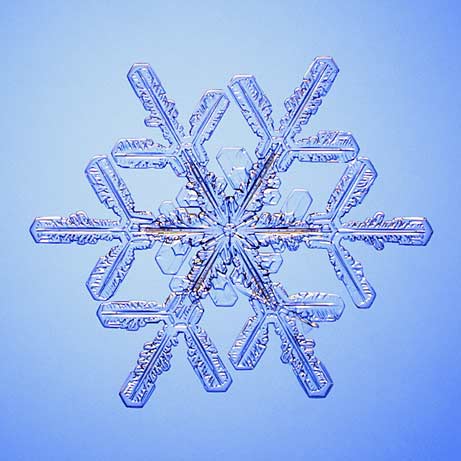
Snow’s loveliness reflects its all-beautiful Creator. Individual flakes are his delicate works of art. An unproven but common belief is that no two snowflakes are alike. In their uniqueness, snowflakes are like us, handcrafted individually by God. Someone, though, has identified eighty different patterns.
No doubt as a child you learned to cut snowflakes out of white paper.
A parable about a snowflake illustrates the power of one. A branch is laden with snow. One more snowflake lands on it, and that single flake causes the branch to break. That was probably “the last straw.”

Snow in the Bible
The three men thrown into a fiery furnace for their faith sang, “Hoarfrost and snow, bless the Lord; praise and exalt him above all forever” (Daniel 3:70).
The whiteness of snow makes it an apt symbol for holiness. Yes, that is why a very good girl in a fairy tale is named Snow White. In Psalm 51:9 we ask God, “Wash me, and I will be whiter than snow.” And God exhorts us through the prophet to set things right so that “Though your sins be like scarlet, they may become white as snow” (Isaiah 1:18).
The clothing of the angel at Jesus’s tomb was white as snow. (Matthew 28:3) God’s glory is perceived as light, which is represented by the color white. Hmm.
Trivia
Did you know there is a word for fear of snow? It’s chionophobia.
A legend about St. Mary Major basilica in Rome gave rise to Mary’s title Our Lady of the Snows.
It’s a common belief that Eskimos have many words for snow. We do too. Can you think of some?
What is your favorite snow memory?
Music about Snow
Haydn wrote the oratorio The Seasons. Here is the part called “Winter,” in which the music is cold and still. You might listen to it while staring at a snowfall and sipping hot cocoa.
If you prefer snow songs that are not classical, here are two “classics”: Bing Crosby’s “Winter Wonderland” and Dean Martin’s “Let It Snow.”
Why Jesus Is Called Lamb of God
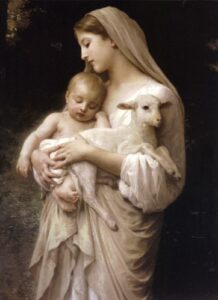
ILast week I wrote about shepherds. Now let’s focus on lambs.
A nursery rhyme begins, “Mary had a little lamb, little lamb, little lamb. . . . It’s fleece was white as snow.” Coincidentally, that describes the Blessed Virgin and Baby Jesus!
Most Nativity sets include at least one lamb. We think it is sweet that a lamb is present. Lambs are gentle, docile, charming creatures. To call someone a lamb is a compliment, an endearing term.
However, the presence of lambs at Jesus’s birth has hidden meanings. It has ominous overtones, for it foreshadows the newborn’s destiny. This baby was born to die.
Exodus Lambs
When the Israelites in Egypt marked their doorways with a lamb’s blood, the Angel of Death, the tenth plague, passed over them. They were saved by a lamb, which they then ate.
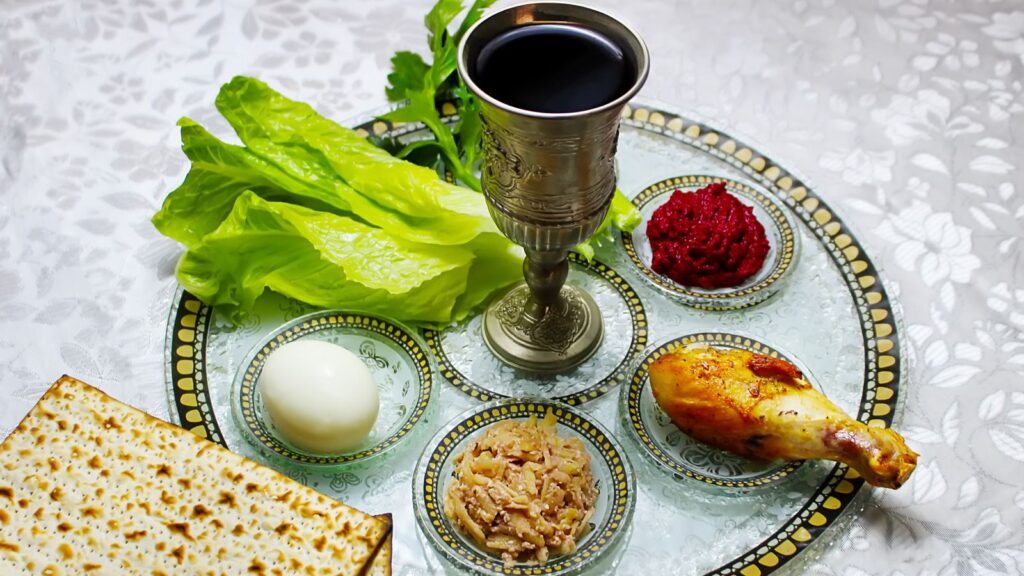
Later, in the Jewish Temple, in memory of this event, year-old, unblemished lambs were sacrificed each year on the eve of Passover. It’s proposed that the shepherds who first heard the Good News were in charge of raising and protecting these special lambs.
Passover meals include lamb.
The Christian Lamb
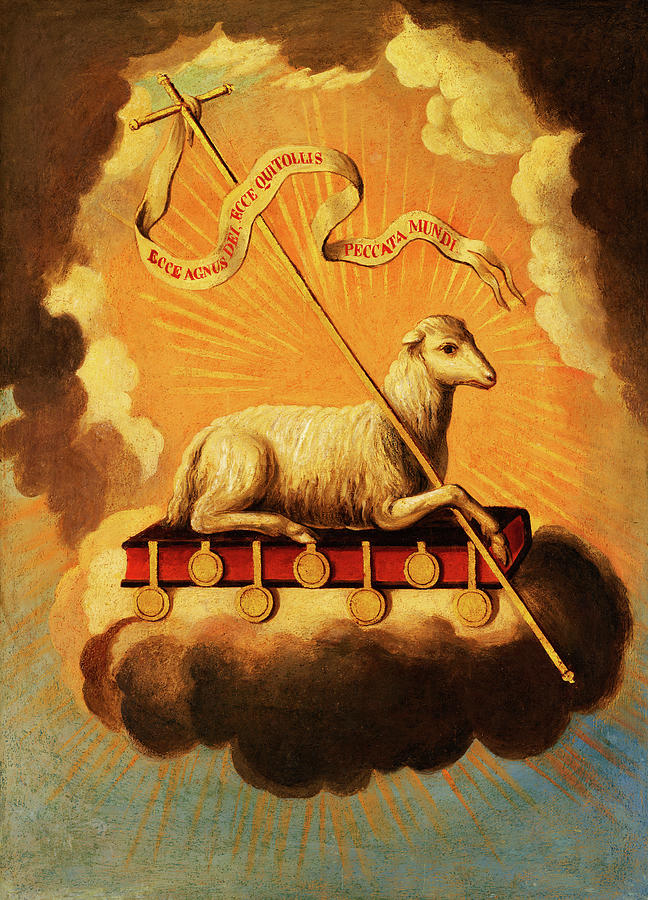
Some Hindu gods resemble large, powerful animals: an elephant, an eagle, and a lion. Christianity, however, likens the Son of God to a gentle lamb. From the start, John the Baptist introduced Jesus to the world by saying, “Here is the Lamb of God.”
A lamb is innocent and defenseless. Likewise, Jesus was sinless and humbly submitted to his execution. As a prophet said, “Like a sheep that before its shearers is silent, so he did not open his mouth” (Isaiah 53:7).
In Egypt lambs’ blood marked doorways. Jesus’s blood soaked the wood of the cross.
Moreover, Jesus, is comparable to the Passover lamb in that he was unblemished, the perfect man. The sacrificed lamb was to have no broken bones. Soldiers didn’t break Jesus’s legs to hasten his death, for he was already dead.
The Jews sacrificed lambs to atone for sins. Jesus made up for sins by shedding his blood and dying. At Mass we pray, “Lamb of God, who takes away the sins of the world,” not once but three times. And then we consume the Lamb.
At the Seder meal, Jews feast on lamb in memory of the Exodus. Similarly, at the banquet of Mass is a memorial meal. We remember the saving acts of Jesus.
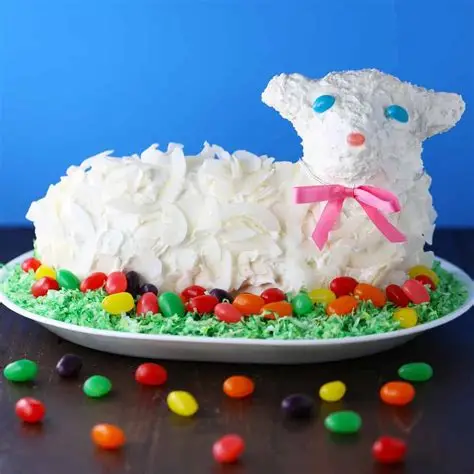
At Easter a sweet lamb cake might grace your table. You can make one using a mold or by following directions given here: https://www.allrecipes.com/article/easter-lamb-cake-without-a-mold/
The Lamb in Heaven
In the Book of Revelation, heaven is described as the marriage feast of the Lamb, who provides its light. This Lamb of God is worthy to open a scroll with seven seals. The countless citizens of heaven worship him in song:
“Worthy is the Lamb that was slaughtered to receive power and wealth and wisdom and might and honor and glory and blessing!” (Revelation 5:11)
“Salvation belongs to our God who is seated on the throne, and to the Lamb!” (Revelation 7:10)
Sheer Joy
I once saw little lambs and goats jumping straight up into the air. (Did you know they did that?) They are so happy to be alive. We needn’t fear the end of the world. Neither need we fear our own death. It merely means we will be united forever with Jesus, who saved us from eternal death. And that will make us exceedingly happy. We might even jump for joy.
Happy New Year! May you live 2026 full of life and joy!
Have you ever participated in a Passover meal? If so, what impressed you?
What struck you as you read this post? Did you have a new insight?
Here is the hymn “Lamb of God” sung by one of my favorite singing groups:
Shepherds at Christmas
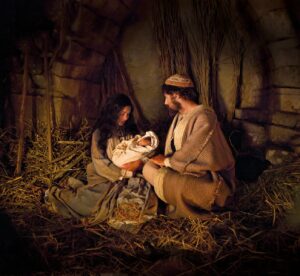
A very Merry Christmas to you!
As we celebrate Christ’s two-thousand-and-twenty-fifth birthday this year, let’s give glory to God and pray for peace on earth.
Shepherds
You probably have a least one shepherd in your Nativity set. Shepherds had a starring role in the first coming of Jesus.
In those days shepherds were lower class. Their job kept them isolated, some were thieves. Because they lived outside, they were probably unkempt and dirty. And working with animals, they were considered ritually unclean and so couldn’t enter the Temple. No doubt they smelled. Remember how Pope Francis told priests they should be shepherds with the smell of the sheep?
Yet, who were the first privileged to hear the Good News that the Messiah was born? Not the Pharisees smelling of holy incense, not Herod or Caesar Augustus doused with expensive cologne, but lowly, stinky shepherds. Jesus also favored poor, ostracized people in his ministry:
He touched a leper, a social pariah, and healed him,
– brought a widow’s dead son back to life,
– saved an adulterous woman from being stoned to death,
– rescued a crooked tax collector named Zacchaeus,
– and assured a criminal dying on a cross next to him that he would be in Paradise.
We might imitate God and reach out to outcasts. How? Deliver meals to the homeless. Help support an immigrant family. Invite the relative or neighbor no one likes to your party.
Shepherds as Evangelizers
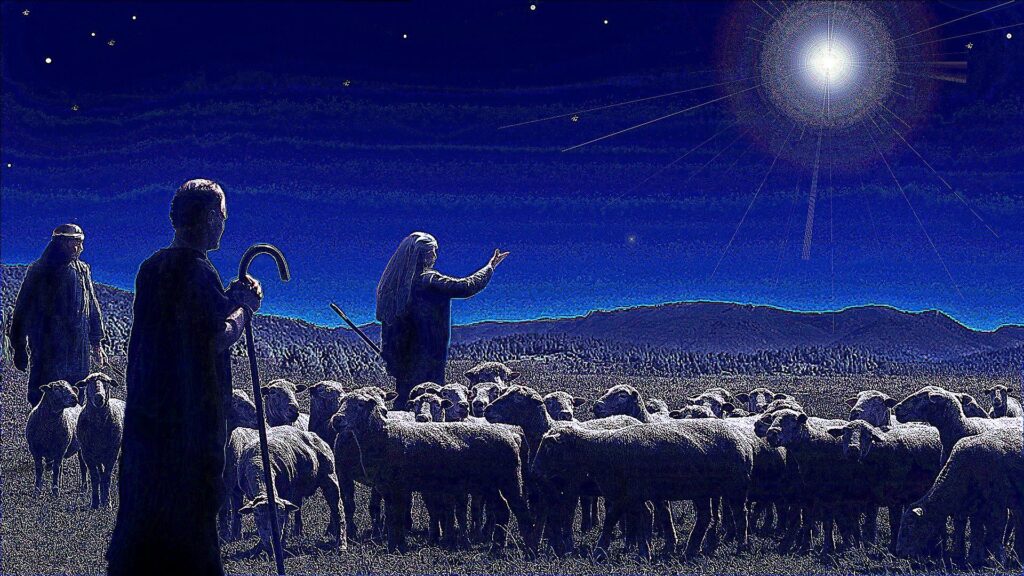
Angels are so majestic and radiant that if I saw one, I’d probably faint. The shepherds were terrified when an angel appeared to them and told them how to find the Savior. Then a slew of other angels appeared, praising God. The shepherds raced to the Holy Family and so were also the first outsiders to behold the Messiah. Afterwards they told everyone about him. In other words, they were the first evangelizers, bearers of the Good News. The Gospel says all who heard of it were amazed.
The incarnation IS amazing. But we get used to it. God became man. Ho-hum. But wait. Almighty God, the Supreme Being and creator of the universe, took on flesh and blood, walked our earth, and breathed our air, came as a baby. WOW. This Christmas let’s recapture awe at this greatest miracle: God’s extreme act of love.
Somehow you heard the Good News—probably not from an angel. You are sent to be an evangelizer. That’s every Christian’s job description. Who can you pass on the Good News to? A child? A neighbor? A relative? Students in a religion class or people in an OCIA program?
Jesus, the Good Shepherd
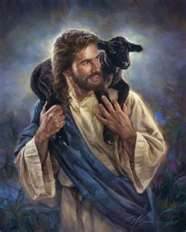
The prophet Isaiah described God as a shepherd. (Isaiah 40:11) In his book in the Bible we read:
He tends his flock like a shepherd:
He gathers the lambs in his arms
and carries them close to his heart;
he gently leads those that have young.
Jesus’s ancestors like Jacob and Joseph were shepherds. Moses wasn’t an ancestor, but he too was a shepherd and experienced God in a burning bush while on the job. King David was a shepherd as a lad. While tending his father’s sheep in Bethlehem, he killed lions and bears that snatched a lamb from the flock. No wonder David wasn’t afraid of Goliath. Jesus inherited those shepherd genes. He called himself the Good Shepherd. And he was. He rescued us from Satan’s grasp. He gave his life for us dumb sheep!
A Parable about a Shepherd
Jesus told a parable about a shepherd who left 99 sheep to go after one who wandered off. Do you think it was foolish to leave those 99? Another shepherd probably kept them safe. But the one missing sheep could fall off a cliff or be entangled in thorn bushes. Outside of the fold is was easy prey for predators. Besides, it could become a cast down sheep. A cast down sheep is one that has rolled on its back and can’t get up. Gases build up inside it and under the hot sun, it could die in a few hours. When a shepherd finds a cast down sheep, he gently sets it upright, rubs its legs, and if necessary, carries it home.

Did you ever feel like a cast down sheep? Sin has separated you from the Shepherd and the fold, and so you lie on your back paralyzed. Maybe your temper got the better of you at home or at work. Or you found it easy to skip Sunday Masses. Or you failed to break off a dangerous relationship. When you review your life, sins stand out like black blots. You wish you could bleach them away. You don’t have strength to save yourself. Don’t worry. The Good Shepherd is looking for you. You can make things right by going to confession.
Shepherd Duties
A shepherd feeds his sheep. And Jesus feeds us miraculously with the Eucharist, with his very self. Prophetically Baby Jesus was placed in a manger, a feed box. What’s more, he was born in Bethlehem, a name that means “House of Bread.”
A shepherd guides his sheep. Jesus teaches us through church leaders called pastors. The word “pastor” means shepherd. A shepherd also heals and comforts his sheep. Jesus acts to comfort us.
A True Story
One Christmas day night my sister called to say our dad was in the hospital and had already been anointed. I panicked. No one in our family had ever been seriously ill before. Another Sister drove me to the hospital where I saw my dad unconscious, machines keeping him alive. I can still hear their sounds. Back at home I couldn’t sleep. What would happen to Dad? What would Mom do if he died? I was petrified.
Suddenly the words, “The Lord is my Shepherd” floated into my mind, reminding me that God was with me. I repeated those words over and over. Comforted, I finally fell asleep. The next morning I returned to the hospital. Two men were in my dad’s room. One was the doctor who introduced me to the other man. He was a male nurse who had worked overtime during the night to care for my father. The man’s name was Bob Shepherd! No kidding.
Events like these aren’t coincidence. They are really God-incidences, otherwise known as Godwinks. You might be alert to these Godwinks in your life, evidence that God is really shepherding you. He lives up to his name Emmanuel, which means “God with us.”
This experience taught me to pray mantras, prayers that are repeated. When you’re too busy, too tired or in too much pain to even pray a Hail Mary, you can always pray a mantra. The most beloved one is the Jesus prayer: Lord Jesus Christ, Son of God, have mercy on me, a sinner. You might adopt praying this practice. It makes you aware that God is with you, saving you and loving you.
When have you had a strong sense that God was shepherding you?
A Rousing Christmas Carol
One of our favorite carols to sing is the African-spiritual “Rise Up, Shepherds, and Follow.” Here is one rendition of it:
In the midst of opening presents, feasting, singing carols, enjoying the company of family and friends (and perhaps writing Christmas cards!) you might find time to view my Christmas gift to you: a video that explains a stained glass window depicting the Jesse Tree, the forerunner to our modern Christmas trees:
Christmas Carol Background
Ubiquitous Carols
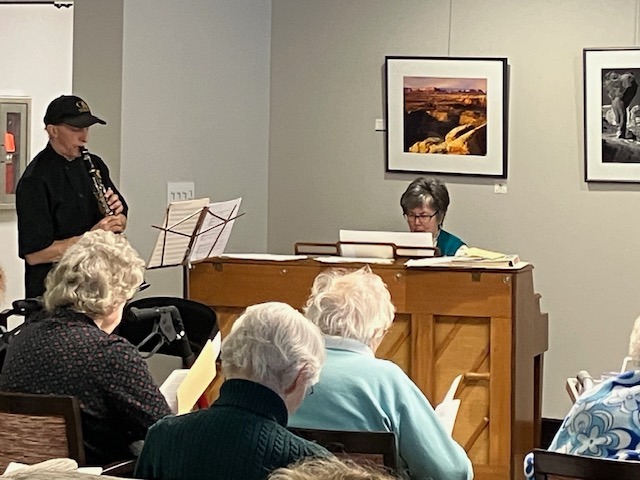
This past Saturday we held our sixth annual Christmas carol sing-along in Notre Dame Village. About sixty residents, both Sisters and lay, had fun. One man, whose son said he never sang, did sing the carols. As usual, the SND baker Richard Harcar played the clarinet, I played the piano, and Sister Lisette played the accordion. Newcomer Sister Olivia also played the piano.

More Carols
That night our convent choir met to practice carols for Christmas Masses. A favorite is the haunting “Mary’s Lullaby.” (I couldn’t find a clear version of it on youTube, so below you’ll find “Breath of Heaven” (Mary’s song) sung by Amy Grant instead, an equally lovely carol.
As a result of all these carols, I decided to research how they became entrenched in our Christmas traditions.
The History
Some pagan songs celebrated the winter solstice. In 129 A.D. the first Christmas carol arose: “Angels’ Hymn,” which celebrated Christ’s birth. For years pagan tunes were given Christian lyrics. St. Francis popularized the Nativity and boosted carols sung in the language of the people rather than in Latin.
It’s been proposed that a carol might have been a dancing song. Or perhaps a type of choral song. Carols were sung at celebrations and church services. The melodies were often folk tunes as early as the 16th century. First passed on orally, carols were written down and published in the 18th century. Carols became popular in the 19th century and more attached to Christmas. When Christmas cards appeared in the 1840s, they often had carols written inside. (Some still do.)
The first collection of carols was published in 1521. Later the Victorians saved them in anthologies.
Classical composers contributed some Christmas carols, notably Part 1 of Handel’s “Messiah.”
Catechisms
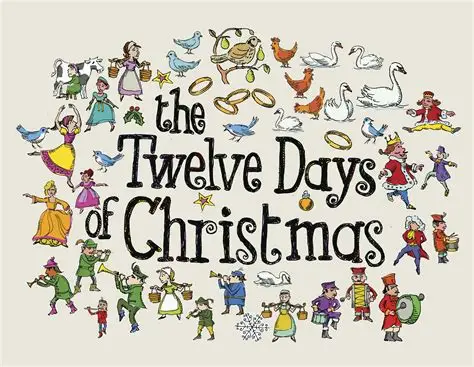
Carols were used to teach religion. There is a theory that “The Twelve Days of Christmas” taught these religious truths:
A partridge– Jesus; 2 turtle doves–Old and New Testaments; 3 French hens–faith, hope, and charity; 4 calling birds–the Gospels; 5 gold rings–the Pentateuch; 6 geese– days of Creation; 7 swans–gifts of the Holy Spirit; 8 maids–Beatitudes; 9 ladies: fruits of the Holy Spirit; 10 lords–Commandments; 11 pipers–faithful Apostles; 12 drummers–truths in the Apostles’ Creed.
(Because I had a hard time playing this one with all the repeats, Sr. Elizabeth Wood stood beside me and helped keep me on track!)
Caroling
Christmas caroling also originated with the Victorians. Groups sang carols outside homes to receive food or money for themselves of charities. This was done on December 21 and Christmas Eve. Charles Dickens had someone sing a carol at Scrooge’s door in A Christmas Carol.
Origin of Certain Carols
“Silent Night” Joseph Mohr, priest, wrote the lyrics in 1818, and his friend Franz Xaver Gruber supplied the melody. The hymn was first sung on Christmas Eve accompanied by a guitar. (This spawned the legend that the church organ was damaged by a flood or mice.)It was sung by both German and British soldiers during the Christmas Day Truce of 1914.
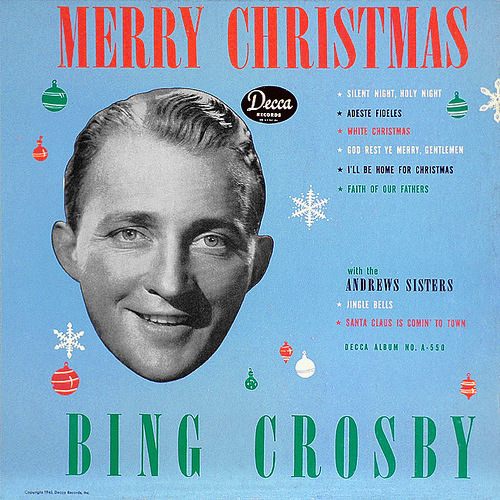
“White Christmas” This carol was first broadcast 18 days after Pearl Harbor on Christmas Day in 1941.
“I Wonder as I Wander” A girl in North Carolina sang an Appalachian folk song. John Jacob Niles paid her to sing it again and filled in the gaps.
“O Little Town of Bethlehem” Phillips Brooks, an American priest, wrote the text after attending Midnight Mass in Bethlehem in 1865. His church organist set it to music. Brooks intended it for his Sunday school.
“God Rest Ye Merry, Gentlemen” This dates back to at least the 16th century.
“Hark! The Herald Angels Sing” Charles Wesley first wrote a version in 1739. A century later Mendelssohn wrote the melody we know.
“Joy to the World” is based in Psalm 98.
“We Three Kings” This is the first popular carol from the United States. John Henry Hopkins, Jr., a clergyman, wrote both lyrics and melody in 1857 for a New York Christmas pageant.
“In the Bleak Midwinter” Gustav Holst and Harold Darke each wrote music for Christine Rossetti’s poem of 1872.
“Rise Up, Shepherd, and Follow” This rousing carol is an African American spiritual.
Have you ever gone Christmas caroling? Did carolers come to your home?
What is your favorite Christmas carol?