Mary’s Visitation
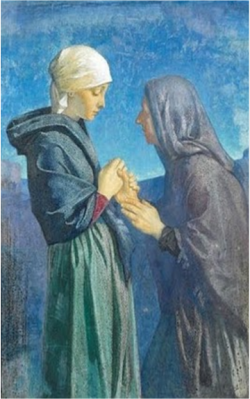
May ended with a bang: On May 31 we celebrated the Visitation and Memorial Day. At our Mass in the Notre Dame chapel, Father Jay wove together three events. He pointed out that Mary surrendered her life to God and this showed in her loving service to Elizabeth, our veterans gave their lives to serve us and keep us free, and at the Eucharist we celebrate how Jesus gave his life to free us from sin and death. Following is a reflection on the Visitation that I wrote a few years ago for our Notre Dame Associates:
Imagine suddenly becoming pregnant with the Messiah, the Savior of the World. What would you do afterwards? Any ordinary woman would probably seal herself in the house, taking care that nothing would endanger her or the miracle baby growing within her. But Mary, the Blessed Virgin, was no ordinary woman. She dared to venture out on an errand of mercy.
When the Angel Gabriel delivered God’s message to Mary that she was the woman chosen to be the Mother of God, he had a postscript. Her cousin Elizabeth, who was childless and too old to conceive now, was also miraculously pregnant. Why did God reveal this to Mary? Because God knew he could depend on her to respond to someone in need. And she did. Mary’s compassionate heart impelled her to be with Elizabeth during her last three months of pregnancy. In fact, the Gospel specifies that Mary went to help Elizabeth “in haste.”
Mary knew the Shema, the Jewish prayer recited twice a day: “Hear, O Israel: The LORD is our God, the LORD alone. You shall love the LORD your God with all your heart, and with all your soul, and with all your might.” Jesus identified this as the greatest commandment. It describes how deeply Mary loved God—with her whole being. For love of God, she surrendered herself to him and let him use her to become a human being. By doing this, she risked her life for God because according to Jewish law, an unwed mother was to be stoned to death. Mary also risked her life by following the second greatest commandment: Love your neighbor as yourself.
Mary also showed her love for God by loving others—with an active love. Mary decided to travel to Elizabeth, who, tradition holds, lived in village of Ain Karem near Jerusalem. Making the three-day journey was a challenge. First, Mary, who was about fourteen years old, had to persuade her mom and dad and, of course, Joseph to let her go. Ain Karem was about ninety miles south of Nazareth in the hill country. Mary probably walked much of the way. Today in Ain Karem the church that commemorates the Visitation stands on a hill. Pilgrims find it a difficult climb up the rocky, dusty road with the hot Mideast sun beating down on them. Consider, too, that Mary made this journey when she was pregnant and perhaps experiencing morning sickness. To add to the danger and discomfort, there was the constant threat of bandits swooping down on the caravan. Moreover, the overnight accommodations were a far cry from today’s hotels.
But Mary was a gutsy young lady. With holy boldness she undertook the trip. Why? Because Mary was motivated by love. She thought of others more than herself. Her son would be the same way. Selfless.
The Arrival
Somehow Mary located the house of Zechariah and Elizabeth. She walked through door and greeted Elizabeth. Since there were no cell phones or e-mail, this most likely was a surprise visit. Elizabeth was startled to hear Mary’s voice. And the boy she was carrying in her womb leapt at the sound. He was the future John the Baptist, the prophet who would baptize Mary’s son, preach to prepare the people for him, and be beheaded for calling a king to repent. Elizabeth, inspired by the Holy Spirit, greeted Mary, “Most blessed are you among women, and blessed is the fruit of your womb.” And she asked, “How is it that the mother of my Lord should come to me?” With this, Elizabeth became the first to acknowledge Mary as the Mother of God. Then Elizabeth praised her young relative by saying, “Blessed are you who believed that what was spoken to you by the Lord would be fulfilled.” Mary is blessed because of her faith. She is the most faithful disciple.
Mary’s Song of Salvation
The Magnificat that the evangelist Luke put on Mary’s lips that day is a canticle woven with verses and themes from the Old Testament. The first four verses are a burst of praise of God in which Mary extols the Lord for what he did for her. She again declares herself his handmaid. She frankly prophesies that all ages will call her blessed, but humbly acknowledges that all her graces were gifts from God.
The rest of the prayer delineates God’s mercy to believers in radical terms: God brings down the proud and mighty, feeds the hungry, and raises the poor and lowly. In conclusion, Mary recalls God’s mercy to her people, the descendants of Abraham. As Mary sings this canticle, she represents her people Israel who longed for freedom. She also sings for the Church who longs for the reign of God—a reign of justice and peace.
The Magnificat praises God for liberating people. The brave young woman who sang this victory song was herself instrumental in freeing humanity and ushering in God’s kingdom. Later Jesus described his mission in words that mirror the Magnificat: “He has anointed me to bring good news to the poor. He has sent me to proclaim release to the captives and recovery of sight to the blind, to let the oppressed go free” (Luke 4:18). Both Mary and her son stand shoulder to shoulder with those who work for freedom and justice for all.
The Stay
During the three months Mary lived with Elizabeth, she helped with the household chores: going to the market, fetching water from the well, doing laundry, and baking bread. She also served as a companion to Elizabeth, whose husband was temporarily mute! Undoubtedly, as the two women sewed baby clothes, they shared their joy as well as their concerns about bearing a child. They also planned how they would raise their sons. Probably Mary was present for John’s birth and even assisted at it. Her return home was even more arduous than her journey to Ain Karem, for now she was three months pregnant.
In the Visitation, Mary brought Christ to others. She was a Christopher, a Christ-bearer. She not only brought Jesus physically, but she brought Christlike mercy and love to her extended family. St. Catherine of Siena called Mary “the chariot of fire.” This fire is the burning love of God.
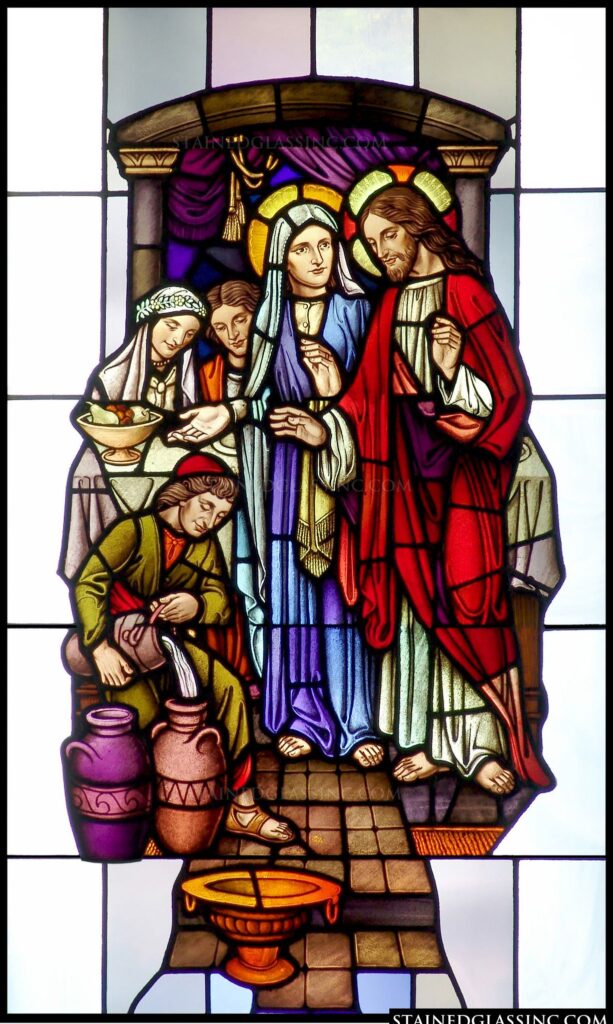
Mary performed a loving deed again at a wedding in Cana. She was the one who noticed that the wine ran out and did something about it. Her action protected the newlyweds and their parents from shame and from bitter memories of the celebration. Ever sensitive to others’ pain, Mary sees a need and fills it.
Mary’s “Visitation” to Us
Today Mary loves us, the brothers and sisters of Jesus. St. John Vianney said that if the love of all the mothers in the world were put together, compared to Mary’s love for us, it would be as ice. Mary is anxious that we stay close to her son and after we die, to live forever with the two of them. In heaven now, Mary is not eternally resting. Rather, she’s at work for us, caring for us. Mary has appeared in countries all over the globe. In the 20th century there were 386 apparitions reported. Mary’s messages have been the same: pray, do penance, and repent.
Right now Mary is interceding for us. There is a saying, “To Jesus through Mary.” There is another saying “All for Jesus through Mary.” Sisters of Notre Dame have it inscribed inside their rings. In the Morning Offering we pray, “O Jesus, through the Immaculate Heart of Mary I offer you my prayers, works, joys, and sufferings of this day.” And whenever we pray the Hail Mary, we ask her to pray for us.
A story illustrates that Mary has a heart for us sinners. In heaven one day Jesus meets Peter, who is in charge of the heavenly gates, and scolds, “Why are there so many sinners in heaven? I told you to close the gates on them.” Peter replies, “I did shut the gates to keep them out, but your mother opened the windows and let them in.” Of course, this is just fanciful. Jesus loves sinners as much as his mother does.
Reflecting on the Visitation, we see that our mother, Mary, teaches us to listen to God’s prompts to act with love and to show holy boldness in performing them. How wonderful if someday Mary’s son meets us at heaven’s gates and says, “Welcome! Come right in. You remind me so much of my mother.”
(Based in part on The Catholic Companion to Mary by Mary Kathleen Glavich, SND)
• How have you surrendered your life for another or others?
Here is an unusual version of Mary’s Magnificat:
The Bible: God Speaks
Don’t expect God to talk to you on your cell phone. He doesn’t zoom or text either. God communicates through the written word in a sacred book: the Bible. For thousands of years people have found strength, courage, and comfort in Scripture. It is a powerful book because it is God’s Word.
One way to connect with God through the Bible is to open this book at random and read the verses your eyes fall on. Some may regard this as superstition or at least foolishness. It seems rather simplistic. But didn’t Jesus recommend being childlike? This practice was not beneath saints and other holy people, and it worked for them. When St. Francis of Assisi was founding his religious community, he opened the Bible three times, and each time he learned a principle for his Rule that the Franciscans would live by. Francis called this practice “First Opening.” When Thomas Merton was discerning whether to join the Trappists, a community with a high regard for silence, he opened the Bible and read, “Be silent, and know that I am God” (Psalm 46:10).
Several times in my life, God has spoken to me this way. The most striking message came when I was an eighteen-year-old postulant with my heart set on becoming a Sister of Notre Dame. I entered the convent in the turbulent era when a number of sisters were leaving the convent. That year some of my teachers whom I admired were among them. I wondered, Maybe I also better go now before I get into this too deep.
One day I was praying alone in our college chapel, asking the Lord what I should do. The Bible on a stand in the front lay open. I walked up to it and looked down. These words (which happen to be today’s, Tuesday’s, Gospel) leaped out at me: (Mark 10:28–31)
Peter began to say to Jesus,
“We have given up everything and followed you.”
Jesus said, “Amen, I say to you,
there is no one who has given up house or brothers or sisters
or mother or father or children or lands
for my sake and for the sake of the Gospel
who will not receive a hundred times more now in this present age:
houses and brothers and sisters
and mothers and children and lands,
with persecutions, and eternal life in the age to come.”
I stayed. It is now more than fifty years later. Over that time, difficult circumstances have prompted me to ponder those words anew. I clung to them. I credit them, God’s personal communication, for my perseverance.
I have witnessed God speaking to other people through Scripture. In my talks on the Bible I invite the audience to draw out a slip of paper with a Scripture verse and take it as God’s words to them. At one convention, after this was done, a young woman came to me with tears running down her face. She said, “As I was on the plane coming here, I was debating if I should just quit my job as a DRE.” She handed me her slip of paper and said, “Read what God said to me.” It was, “Stand firm. Let nothing move you. Always give yourself fully to the work of the Lord.” (1 Corinthians 15:58)

Another time, I was giving a workshop to a school faculty. One woman kept walking out. Finally, after the Scripture verse activity, she stood and explained, “I’m sorry. I’ve stayed as long as I could, but my contractions are getting closer. I need to call my husband and go to the hospital. Before I leave I have to read you my verse: ‘Your labor will not be in vain.’ ” (1 Corinthians 15:58) Later I learned that the woman had several miscarriages and the whole parish was praying for a successful delivery this time. The next day the principal called to tell me the baby was born.
God touches our lives in many ways. Undoubtedly he can choose to talk to us in our own human words whenever he chooses.
• Has God ever spoken to you when you have practiced the “Lucky Dip” or as some refer to it, “Bible Roulette”?
The following video is a touching mosaic of God’s words to you culled from the Bible: a treat for the heart and the eyes.
The Significance of a Name
An important role of new parents is naming their child. It used to be that Catholic parents named their baby for a saint, like Patrick, or for a feast, like the Assumption. Nowadays they choose a name to honor a relative, like Aunt Caroline, or to imitate an idol, like Taylor Swift, or to be somewhat unique, like Phoenix. Sometimes parents choose a name that represents what the child means to them, such as Diamond or Precious. Some creative parents invent names or invent spellings. These special names may be a challenge for others (like teachers!) to say or write.
Our name gives us identity. It is equivalent to us. That is why making fun of someone’s name is a cruel torment, an attack on the person. You know what I mean if anyone ever ridiculed your name. On the other hand, someone in love delights in having a tattoo of their beloved’s name, carving it into a tree or, in the case of teenagers, writing it over and over.
God apparently thinks names are important. He redubbed Abram and Sarai, his wife, Abraham and Sarah. God told Zachary to name his son John, and when that father did, he regained his power to speak. God instructed both Mary and Joseph to call His Son Jesus. It seems he wanted to make sure it was done. Later, Jesus changed Simon’s name to Peter, meaning “rock,” to signify his role in the Church. And he gave James and John the nickname sons of thunder. Do you have a nickname? Do you like to be called by it?
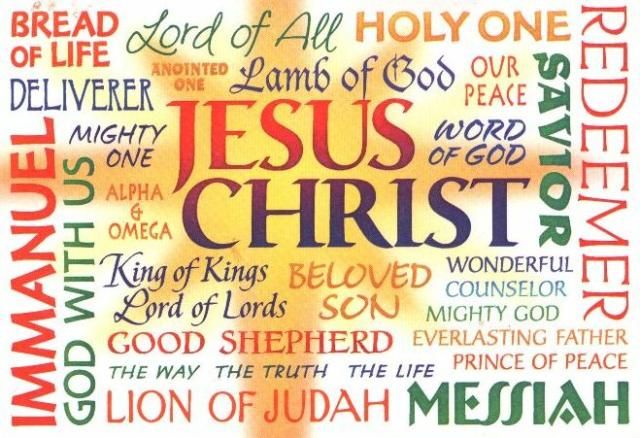
As for the name of God, it was revealed to Moses as Yahweh. One whole commandment (#2) is devoted to ensuring that we revere God’s name. Jesus tells us that anything we ask the Father in his name will be done, and miracles were worked in his name. According to Scripture, his name “is above every name, so that at the name of Jesus every knee should bend” (Philippians 2:9–10). We have metaphorical names for God and Jesus, too. We call him king, shepherd, lamb of God, savior, fortress, and so on. Muslims have 99 names for God (Allah’s Beautiful Names). What is your favorite name for God?
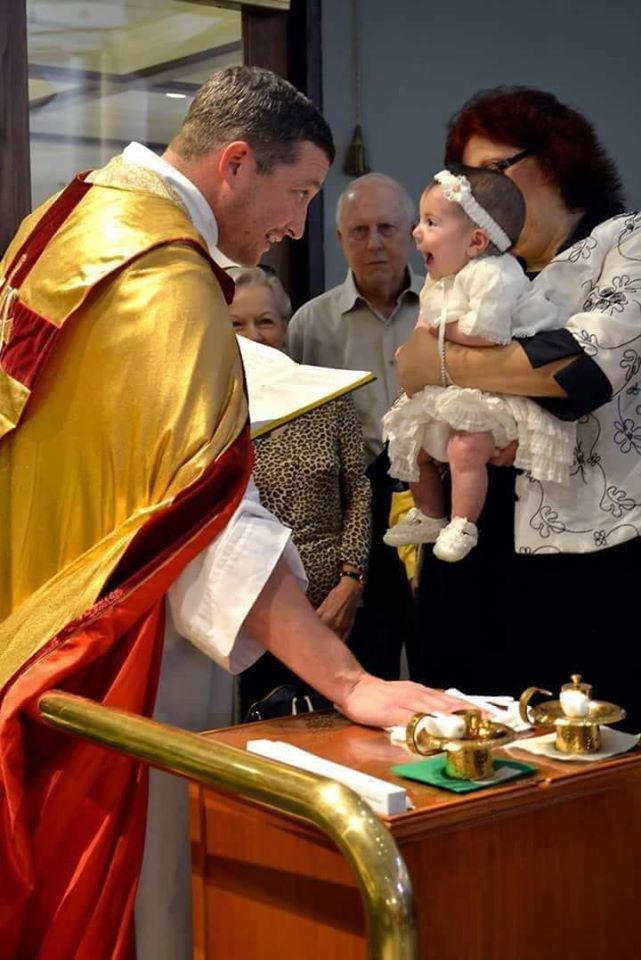
You received your name officially at baptism. The priest met your parents at the door and asked, “What name will you give your child?” Then you were baptized addressed by that name. Mary Magdalene recognized Jesus when he pronounced her name. Stop a moment and imagine Jesus calling you by name.
People sometimes change their names. Movie stars do this. The pope does this. Formerly we Sisters of Notre Dame submitted three possible name choices that we would have as a religious. As an eighteen-year-old postulant who wanted to be named for Christ the King, I complied a list of 42 names that stood for “king.” It included such farfetched names as INRI, the initials on the crucifix that meant “Jesus of Nazareth, King of the Jews.” In the end, I became Sister Kirene, for the chi-rho, the first three letters in the Greek for Christ.
There is power in a name. Remember the story of Rumpelstiltskin? No doubt your parent calling you by your full name had power to stop you in your tracks. Someone noted that one’s name is the sweetest sound of all. That is why Tony sings Maria’s name no less than 29 times in West Side Story.
• The Book of Revelation says at the end of time we will be given a stone with a new name written on it. (Revelation 2:17) What would you like God to call you?
The Power of a Compliment or Lack Thereof

I was going to write this week’s post about paying compliments. Then I discovered that one on that topic that I wrote six years ago had value (with some revision). So I compliment myself: Good work, Kathleen!
I recall once introducing my niece to someone and remarking what a great job she does at her workplace. My niece responded, “Aunt Kathy, that’s the first time you ever said you liked what I do.” Hmm. I realized that perhaps I’ve been stingy with words of praise.
We might mentally acknowledge someone’s success or good qualities and yet fail to let the person know our thoughts. We might take someone’s achievements for granted. I recall times when people have commented on something I did and what a boost it gave me. When I was a freshmen, we girls had homeroom duties. (Yes, we cleaned.) One day after I had swept the floor, my homeroom teacher remarked, “This floor is so clean now we could eat off it.” See, I still remember her words. But I also remember my fifth grade teacher’s words when I couldn’t answer her question about history: “Glavich, you don’t know beans from butter with the bag wide open!” I never liked history much after that.
It’s an act of charity to say things like “Congratulations,” “I like how you always do kind things for people,” or “I wish I could grow a garden as beautiful as yours.”
Mollie was the sunshine on our faculty. If there was more laughter in the faculty lounge that in the student cafeteria, you could be sure Mollie was there. She accepted as assignment to oversee the production of the yearbook, a job that required sacrifice and dedication. One evening I dropped in on Mollie when she was proofreading the final pages. Picking up a few of the layouts, I exclaimed, “These really look good.” To my dismay, Mollie began crying. She said, “You’re the first one in years who has told me I was doing a good job.”
True, Mollie’s emotions could be ascribed to fatigue. But we can’t so easily dismiss her words. Although she was happy, successful, and well-liked, she needed to hear someone tell her she was doing a good job.
The world is hungering after more than food. People crave a sense of self-worth. A morsel of praise can satisfy some of that spiritual hunger. When I was editor of a textbook series, as I looked over pages, I would write comments like “Lovely” and “Wow.” A woman from the publishing company told me that the graphic designer cut out every one of my comments and pinned them to his bulletin board!

Our self-concept is a reflection, magnified by our imagination, of what others think of us. If someone suggests that we’re putting on weight, we feel as wide as a hippo. If someone tells us we have a good voice, we see ourselves on a Broadway stage. (I know a Sister who was told years ago that she shouldn’t sing but just mouth the words. For the rest of her life, although she really didn’t have a bad voice, she never sang.)
If no one ever gives us positive feedback, we can imagine ourselves to be nobodies. Like the scarecrow, tin man, and lion in “The Wizard of Oz,” we can walk through life thinking we lack some essential element, until we meet a person who reveals our true self to us.
Even the most attractive, athletic, and intelligent people on occasion feel like a first class klutz. Negative self-images have a foothold in the best of us. We are afraid to walk up to a group of people; we anticipate making a drastic mistake; we fear that we won’t be good enough. we worry that a strand of hair might be out of place.
Praise spurs us on to do our best. One day when I was ten, my friend’s mother couldn’t locate something. She enlisted me to ransack the house looking for it and remarked, “You’re so good at finding things.” I thought, “I wonder how she knew I had that talent.” I hadn’t noticed it myself. I was determined to find her lost article. I don’t remember if I was successful, but I remember the warm feeling her praise evoked. And she transformed me into a good hunter.
A husband who praises his wife for a tasty meal can expect an even tastier meal next time. A mother who compliments her kindergartner for coloring neatly may be nurturing a future Picasso. Praise imparts power.
• When has someone’s praise cheered you or impelled you to perform even more successfully?
Creation Praises Its Creator
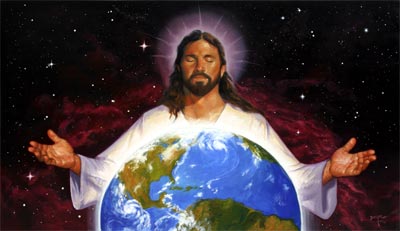
This is not the blog post I intended to write. But then a friend emailed me this incredible video, which I had to see twice. Morning prayer included the Canticle from Daniel 3:57-88, which calls on all creatures to “bless the Lord.” One line is “You dolphins and all water creatures, bless the Lord.”
Simply by being and doing what they do, every created thing or creature stands as a tribute to its infinitely ingenious and almighty Maker. I invite you to view this video. It is quite long (4:47), but well worth your time. You might watch it first without the captions and then with the captions. I promise that you will stand in awe at the creatures who dwell in the depths of the ocean. They are exquisite, frightening, and bizarre. Then you too will “bless the Lord!”
We marvel at the creatures who share our earth home, mindful that they too are a new creation redeemed by the risen Christ.
• What animal on land, sea or sky do you find most fascinating? Why?