Perfume and Anointing, Lavish Gifts

One day when I was riding a rapid transit in Arabia, I stood beside a young Muslim woman garbed in black. Her fragrance was so enticing that I asked what it was. She said it was jasmine. Perfume and cologne are a big business. We all like to smell good!
Here is a chapter from my book “Voices: God Speaking in Creation” that deals with perfume.
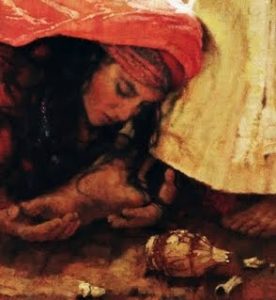
Every Gospel relates the story of a woman who anoints Jesus with perfume. In Matthew’s and Mark’s accounts, she is just an anonymous woman in Bethany who pours the perfume on Jesus’ head. In Luke, she is a sinful woman whose tears fall on his feet. She dries his feet with her hair and then ours perfume on them. In John, Jesus is dining with Lazarus while Martha serves. Mary pours the perfume on his feet and dries them with her hair. Depending on the version read, the shock value of the deed is augmented by the facts that the lady crashed the party, she shattered the alabaster jar in the process of anointing, her hair was loose as no respectable Jewish woman would have it, and the perfume was very expensive.
The dramatic impact of the extravagant gesture has not been forgotten. As Jesus predicted, “Wherever this good news is proclaimed in the whole world, what she has done will be told in remembrance of her” (Matthew 26:13).
Onlookers resented the waste of the precious ointment. If it had been presented as a gift to Jesus, they reasoned, he could have sold it and used the money for other things. Instead, the perfume was consumed to the last drop in one brilliant moment.
The anointing was a lavish act of love. People in love with other human beings are capable of seemingly insane actions. They do not care what others think. They sacrifice anything for the sake of their beloved. O. Henry’s short story “The Gift of the Magi” illustrates this truth poignantly. Della and Jim are a young couple struggling to make ends meet. Della’s prized possession is her long hair; Jim’s is his gold watch. At Christmas time Della sells her hair to obtain enough money to buy Jim a watch fob, only to learn that Jim has sold his watch to purchase a set of combs for her hair!
How much more unreasonable are those who are in love with God. They are willing to pour out themselves for his sake. Oblivious to the amazement, criticism, or denunciation of others, they live as they must in order to be united with the One who is everything to them. Their attitude is not “What do I have to do?” but “What more can I do?”
Love-gifts are never wasted. Ask a contemplative who has sacrificed a promising career for a life consecrated to God. Giving joy to the Beloved is worth any price.
Sometimes what appears wasted is ultimately very beneficial. When time and money are poured into a project that fails, when efforts to aid a troubled person yield no results, when overtures of love are spurned, then we can trust that in the divine economy a good has been achieved. And goodness, like beauty, is its own excuse for being. The shattering of the alabaster jar and the spilling of every drop of perfume was not in vain. Jesus claimed it served as an anointing for the time when his lifeblood would be poured out for love . . . another startling extravagance.
This song is a meditation on the fitting “waste” of the alabaster jar’s perfume…
The fragrance of perfume filled the house. Invisibly and swiftly it permeated the air and touched all who were present, clinging to them and making them bearers of its loveliness. One of Blessed John Henry Cardinal Newman’s prayers begins, “Dear Jesus, help me to spread thy fragrance everywhere I go.” The fragrance of Jesus. If we bring to others the sweet, fresh scent of integrity, purity, and divine love, it will change them and brighten their lives. The odor of sanctity is strong enough to overpower and drive out the stench of evil. But it is a mistake to equate it solely with the odor of incense, scented candles, and antiseptic. The smell of holiness is like the smell of bread baking, newly mown grass, and honest sweat. It is the smell of life, not death.
Good smells are pleasing to us. Women dab on perfume and men splash on cologne and aftershave lotions with a distinctive scent to make themselves more attractive. In designing the world, our provident Creator invented myriad flowers that are beautiful not only in appearance, but in their fragrance. He also saw to it that the aroma of food would enhance the delight of eating it. Praise God for the sense of smell!
The woman, whoever she may be, was right to anoint Jesus. “Christ” means the anointed one. The Hebrews anointed their kings, priests, and prophets with oil. The ritual of anointing consecrated them, set them apart, for their special tasks. Jesus was the Christ anointed by the Spirit to redeem the world. He filled all three roles: king, priest, and prophet. Just as the woman poured out her love for Jesus with perfume, he shows his love for us in anointing us with sweet-smelling chrism at baptism and again at confirmation. By our anointing we participate in his kingly, priestly, and prophetic missions. During the sacrament of Holy Orders chrism is placed on the hands of the new priests and on the heads of new bishops. This aromatic oil is also placed on the altar and walls of church that is being dedicated.
Jesus is Lord and king. On Calvary the inscription over his head, intended to be a statement of his crime, read, “Jesus the Nazarene, King of the Jews.” This was a true epitaph, but too limited. Jesus is king of the universe. When the Father spoke the Word that brought all things into being, the Son was with him. When creation was held captive and tyrannized by the dominion of Satan, Jesus wrested it back by his death and resurrection. The Book of Revelation describes him riding a white horse: “On his robe and on his thigh he has a name inscribed, ‘King of kings and Lord of lords’ ” (Revelation 19:16). His kingdom prevails over the kingdom of evil and is everlasting.
Through the sacraments of initiation, we become Christians, anointed ones. We are consecrated and become royalty: sons and daughters of God and heirs to the kingdom of heaven. We are consecrated to the spread of the kingdom of peace, justice, and love. We engage in the war against evil. Our motto: “To know him is to live; to serve him is to reign.”
Jesus is priest. The Letter to the Hebrews explains how far his priesthood surpasses the priesthood of old. The sacrifice of Jesus is superior to the holocaust of animals. It is infinitely pleasing to the Father. Jesus himself is leader of the people. He leads in service, teaching through his life of compassion and concern.
We are a priestly people. The Jewish people saw themselves as priests. During their celebration of Sukkot, they offered seventy-two sacrifices, one for each known nation of the world. We, too, intercede for others as we pray the universal prayers, the Prayers of the Faithful, at Mass. Then through the Eucharist we offer Jesus to the Father, the perfect sacrifice that has replaced all others. We also offer ourselves and hope that we, too, are sweet-smelling holocausts. We hope that by following the example of our High Priest we influence others, using our charism, our personal grace-gift, to lead all people to the Father. Our prayers, our deeds of love, our Christian bearing make us ministers to the needs of the world.
Jesus is prophet. He reveals God to us and proclaims what God desires of us. He calls us to live up to our covenant, our baptismal promises. As other Hebrew prophets were, he was ignored, mocked, despised, and eventually killed. His life and death were crystal clear proofs of his message: God is love.
Our anointing consecrates us as prophets. We witness to Jesus, see reality as he sees it, and live according to his countercultural values. Not surprisingly, we experience the same reactions he did: apathy, scorn, hatred. A bishop leads his people in a nonviolent attack on pornography and is criticized by the city’s newspaper. A woman refuses to cooperate with the illegal practices of her boss and is fired. We join a packet line protesting abortion and are mocked. Undaunted, we Christians go on, relying on the power of the Spirit of Jesus.
The woman’s anointing of Jesus was a prelude to his death. At baptism Jesus anoints us, too, for our death. He enables us to live dead to sin in this life. In the end we will share his victory over death when we are raised to new and eternal life. Then, according to the revelations of the mystic Julian of Norwich, God will thank us for our service. And God’s thanks will be so great that we will be filled with bliss. Then we will truly know the meaning of love.

• What are your favorite things to smell?
• How have you or someone you know given God a lavish gift of love?
The Power of Names

Parents usually spend a great deal of time deciding on a name for their child. The name might honor a family member like grandma or reflect a certain attribute like strength. It might simply sound good.
Did anyone ever make fun of your name? If so, that was an insult. Our name represents us. We’re asked to write it on documents like checks. I’m asked to write my signature on books, which supposedly makes them more valuable.
A high point in the story of our relationship with God is the day he revealed his personal name to Moses: I AM.
Names play a significant role in the Bible and in our life. Following is an excerpt from my new book A Love Affair with God: Twelve Traits. The chapter begins by highlighting how important names are to people in love. Then it explores how important they are to God:
According to Genesis, God brought everything into being by merely pronouncing its name: “Let there be light,” “Let there be a dome,” “Let the dry land appear,” and so forth. Possibly on the day you were conceived, the Creator proclaimed, “Let there be [your name]”!
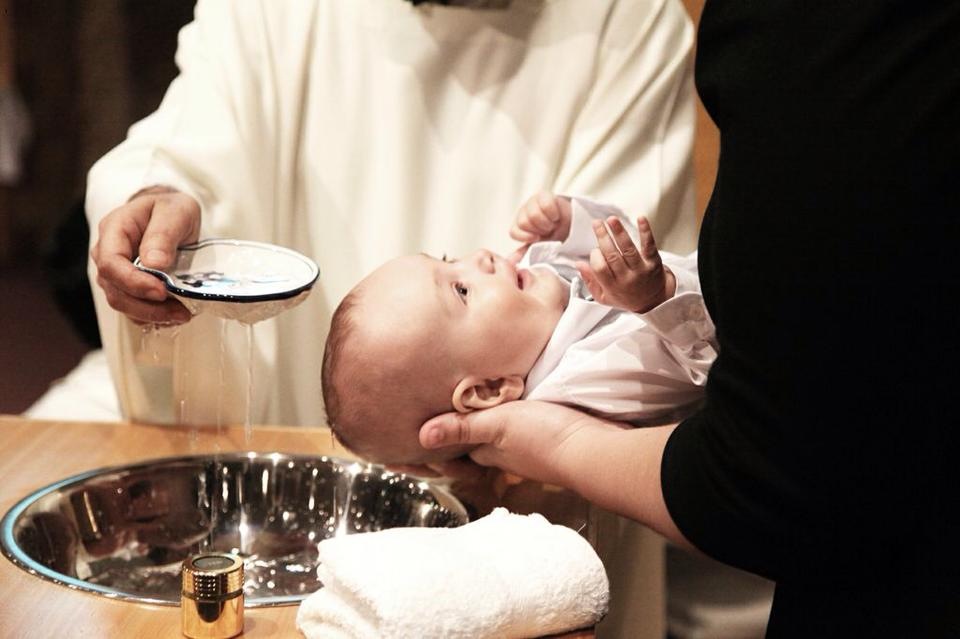
Your baptism ceremony, when you were reborn as God’s child and became a member of the Church, began with the priest or deacon asking your parents, “What name do you give your child?” Then during the pouring of water or immersion, he addressed you by that name.
God’s love for you embraces your name. In Isaiah 43:1, God endearingly says, “I have called you by name, you are mine.” By what name does God call you? Your baptismal name? Another name? A nickname?
God is fond of bestowing meaningful names. Genesis reports that God changed Abram’s name to Abraham, which means “father of a multitude of nations.” At the same time, God changed this patriarch’s wife’s name from Sarai to Sarah, which means “princess.” Their grandson Jacob, father of the twelve tribes of Israel, also was renamed. After wrestling with an angel, Jacob became Israel, which possibly means “God contends.” God told the prophet Hosea what to name his three children. Their names served as a prophecy for the unfaithful people of Israel: Jezreel (God will sow), Lo-ruhamah (not pities), and Lo-ammi (not my people).
God chose the name Jesus for his Son. This is a translation of a Hebrew name Yeshua, which is a contraction of Yeshoshua, Joshua in English. The name means “God saves.” The heavenly Father made doubly sure that Jesus would be the Savior’s name: The angel Gabriel instructed both Mary and Joseph to call her baby Jesus. Like his divine Father, this Son had a propensity for name changing. He gave the apostle Simon the new name Peter, which is Greek for “rock,” explaining that on that rock he would build his Church. Jesus also playfully dubbed his apostles James and John “Sons of Thunder” and left it to us to speculate why.
On the day of the Resurrection, Mary Magdalene surmised that a stranger she met at the tomb was the gardener. But when he spoke her name, it was like lightning struck. Instantly she realized the stranger was actually her beloved Jesus.
Jesus, the good shepherd, said, “I know my own and my own know me” (John 10:14). He “calls his own sheep by name” (John 10:3). In your “mind’s ear” hear Jesus calling your name. Imagine with what tenderness he pronounces it. Touchingly your divine Lover also declares to you, “See, I have inscribed you on the palms of my hands” (Isaiah 49:16). (God’s tattoo!)
One day Jesus remarked to his seventy disciples, “Rejoice that your names are written in heaven.” This means they would be citizens of heaven someday. The book of Revelation speaks of names written in the book of life in heaven. On judgment day some names will be blotted out. (Revelation 3:5, 20:12) Because you are a disciple of Jesus in this century, hopefully your name will also be recorded permanently in the book of life in heaven.

St. Thérèse of Lisieux recounted a charming event from her childhood in her autobiography. Walking with her father one night, she noticed a cluster of stars that formed the letter “T”—possibly the stars in Orion’s belt and sword. She assumed that the letter in the sky stood for Thérèse.
In Hannah Hurnard’s allegorical novel Hind’s Feet in High Places, Much-Afraid is a deformed orphan who lived in the Valley of Humiliation with the Family of Fearings. She becomes a shepherdess for the Chief Shepherd. He leads her with companions Sorrow and Suffering to the High Places, the Kingdom of Love. There she acquires a new name, Grace and Glory.
Perhaps Hurnard derived the theme for her book from the Book of Revelation. There God says, “To everyone who conquers…I will give a white stone, and on the white stone is written a new name” (3:17). (The white stone is presumed to mean innocence, while a black stone signifies guilty.) Supposedly your new name emblazoned on the stone will reflect your unique life on earth. Then again, perhaps it will simply read, “My beloved.”
The following link takes you to a song about God calling you by name. The song begins about 20 seconds into the video.
• What nickname do you think God would give you?
• What would you like God to call you on the last day?
Serendipities: Coincidence or God’s Finger
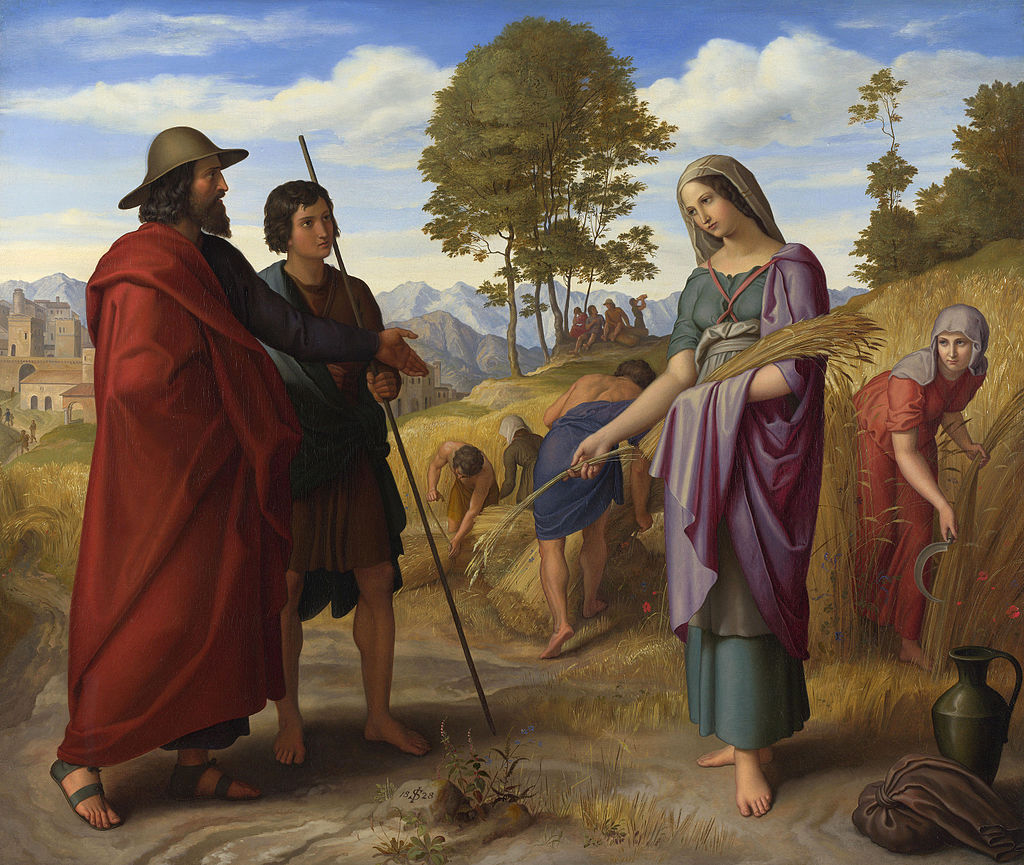
Last week a strange thing happened. My novel The Book of Ruth: A Tale of Great Loves had just come out. At our provincial center we sign up to do the Mass readings. For the Friday reading someone had erased her name, and no one signed to replace her. Although I had recently read, I volunteered to do the First Reading again. The next day before Mass I looked up the reading on my computer in order to prepare it. To my surprise the reading of the day was the story of Ruth and Naomi! Before Mass the sacristan informed the priest that I had written a book about Ruth. Before beginning the liturgy, he commented on that fact to the gathered worshipers. Again before giving the homily he mentioned it again. His homily was all about Ruth and Naomi. Sisters in the congregation assumed that I had deliberately planned to do the reading on Ruth. But that wasn’t the case. It was another instance of God winking at me.
God enjoys surprising us every once and awhile. In my book A Love Affair with God I explain,
“God continually orchestrates “lovebursts” for you, surprises that take your breath away and prove that he loves you. You need a piece of information, and a book falls open to the exact page that bears it. You lack money to cover a certain expense, and the identical amount unexpectedly comes to you. A stranger you encounter at an airport gives you good advice. A valuable item you lost shows up in the oddest place. Walking through a forest, you “chance” upon two fawns resting in the grass. You glance out the window just in time to see a shooting star. To your delight, a special plant that you assumed was dead displays green shoots. God “winks” at you more often than you know. You might record such magical moments in your journal before they fade from your memory.”
One of our Sisters who works in Rome just happened to be here in the USA last week for meetings when, tragically, her brother drowned. She credited her presence as God’s providence.

My most striking experience of God stepping in to surprise us probably occurred as I played the piano in our Village dining room. A woman, a widow, came in from outside and asked, “Were you just playing “Ah, Sweet Mystery of Life?” “Yes,” I said. “Would you please play that again? It was our wedding song.” She stood by the piano as I played the song. Then with tear-filled eyes she said, “Today is my husband’s birthday.” What a gift to her! Now that “coincidence” was a real sweet mystery of life.

Then there was the time I was touring Washington, D.C., with my family. I still wore the Notre Dame habit. On the observation floor of the Washington Monument, a woman approached me and said, “Are you Kathy Glavich from Cleveland?” She was my good friend from Hodge School whom I hadn’t seen or been in touch with for almost twenty-five years…since the sixth grade. We renewed our friendship and began meeting for lunch annually…back in Cleveland.
The Bible overflows with “coincidences.” In Ruth’s case, she just happens to glean in the field of Boaz, who just happens to be related to her father-in-law.
• When have you witnessed God acting in your life in a surprising way?
Advice from Two Spiritual Experts

Arguably the world needs joy more than ever as we grapple with the natural disasters of fire, hurricanes, earthquakes and Covid in addition to human-made tragedies such as the horror in Afghanistan and the surge of refugees in our southern border. Besides these challenges, some of us are dealing with personal tragedies. How do we manage to preserve our inner joy and sanity?
I’ve just finished reading The Book of Joy in which the Dalai Lama and Archbishop Desmond Tutu share their wisdom. Both of these renowned spiritual leaders and winners of the Nobel Peace Prize have been caught up in painful situations. The Dalai Lama has lived in exile in India for decades, while Desmond Tutu fought for justice and reconciliation in South Africa. Yet both men have maintained their peace. During conversations with each other that are recounted in the book by Douglas Abrams, they are quick to tease and to laugh. From their advice I’ve gleaned a few spiritual nuggets that you might find useful. Each one is worth meditating on and applying.

The source of happiness is not fortune, fame, power, or status. It is within us.
Happiness is born of a compassionate concern for others’ well-being.
Concern for others’ well-being will create a happier world.
Just as we create most of our suffering, we can create more joy.
Each day is a new opportunity to begin again. Every day is your birthday.
When we discover more joy, we can face suffering in a way that ennobles rather than embitters. We have hardship without becoming hard. We have heartbreak without being broken.
Don’t worry. If something can be done about a tragic situation, why be dejected? If nothing can be done, what use is dejection?
Wherever you receive love, that’s your home.
When people are suffering, God is crying. But other people try to make thing better, and God smiles.
Suffering is not permanent. It can develop compassion.
Too much self-centered thinking is the source of suffering.
Joy can be cultivated as a skill.
The more joy we have, the more joy we bring to others. We become a reservoir of joy a pool of serenity.
Preserve joy by building mental immunity. Accept negative thoughts and emotions as natural, human, and refrain from self-judgment.
Look for the positive aspects of a difficult situation.
Often stress is caused by our expectations and ambitions.
Change a stress event from a threat to an opportunity.
View everything in a wider perspective: Over the centuries the world has been getting better.
A remedy for envy: gratitude. List what you are grateful for.
Be kind to yourself.
Laugh often. Laugh at yourself.
Forgive in order to heal yourself and be free from the past.
Compassion is contagious.
Interestingly, this week I watched the movie The Razor’s Edge based on Somerset Maugham’s novel with the same title. A few of the ideas mentioned by the two spiritual experts surface as themes in the movie/book as the hero searches for meaning in life.
• How do you manage to hold onto joy and peace?
Prayer in Time of Need

https://www.youtube.com/watch?v=YoRBAOY_yf4 Click on this link and you will see me interviewed about my latest novel, Book of Ruth: A Tale of Great Loves. )
This past week two sources introduced me to a new way to pray: a book by Fr. Ronald Rolheiser (Forgotten among the Lilies) and a TV broadcast by Dr. Charles Stanley (yes, he is a Southern Baptist pastor and evangelist, but his Sunday morning talks are often sound and inspiring). In all my years of religious life, I’ve never come across this advice for prayers of petition before. This is it:
When we are distressed, for example, by the illness of a loved one, the destruction of a natural calamity or when we are anxiously hoping for something, such as a good outcome at a job interview or a physical examination, we are likely to pray about the matter. As we pray, instead of focusing on our intention, our need, it is better to shift our thoughts to God . . . his omnipotence and his love.
This is difficult. Usually we are fixated on the object of our concern. This may only make us more depressed or deepen our anguish.

However, if we focus on God (his wisdom or his love for us) or some aspect of Jesus’ life (his power to cast our demons, his loving response to the Canaanite woman), we become free. Rolheiser likens this strategy to a wounded child who climbs onto its mother’s lap and is soothed by the mother’s presence and love. He suggests that we “climb into the lap of our great Mother God” to obtain peace. Taking our mind off our problem lessens our pain.
Dr. Stanley gave a personal example. Returning from a hike, he could not find his car keys. He searched the grounds in vain. No one was around to help him. His constant prayer was, “God, you are in charge.” Eventually he noticed that the keys were still in the ignition. Unfortunately, before leaving the car he always checked that all doors were locked. He continued his prayer, focusing on God, not his plight. When he tugged at a rear door of the car, it opened!
This way of praying is founded on the concept that, as the song says, God’s got the whole world in his hands. The almighty has the power to solve our problems if it is for our good and the good of others.
To be honest, I haven’t prayed this way yet in a major way. Yesterday though someone said something that upset me. Rather than dwelling on it and asking God to change the person’s mind, I thought about divine providence. For some reason God let that happen and I should forget it!
This way of praying seems challenging when we are in the midst of turmoil. Have you ever tried it?