What Is After Death? Heaven? Hell? Oblivion?
 Currently I’m working on a chapter about the afterlife. We people engrossed in the demands of this present life don’t tend to think about this topic until we come to a landmark birthday, someone we know dies, or a movie like The Mummy is released. Then we wonder, Is this all there is? We Catholics are in good company in believing there is life beyond this one. The concept runs across civilizations and centuries, indicating that human beings possess an innate sense that death is not the end. The Egyptians preserved the bodies of their leaders in pyramids and surrounded them with items they would need in the next life. Qin, the first emperor of China, had a replica of his capital city built and about 8,000 terracotta soldiers, hundreds of chariots, and other things ready for his pleasure when he awoke from death. American Indians buried their dead with food and tools they might need in the next life. Mediums claim to put us in touch with our deceased loved ones.
The theology of the four last things—death, judgment, heaven, and hell— (called eschatology) is remarkably similar in world religions including Catholicism. Death is seen as a transition into another form of existence. It is a doorway, not a brick wall. For Hindus and Buddhists, death is an opportunity to be reincarnated and come closer to union with Brahman or nirvana, respectively regarded as the ultimate goal of life. Greeks and Romans believed that Charon ferried souls in his boat across the River Styx to the next world where they would be united with their loved ones. And for Catholics, death has been conquered by Christ through his death and resurrection that opened the gates to the next world to us.
Judgment is another common thread. The Egyptians believed in “The Weighing of Hearts” to determine people’s worthiness of a pleasant afterlife. Although Hindus and Buddhists do not believe in a formal judgment by anyone, they require enough merits (karma) to break through the cycle of reincarnations. The Romans held that the deceased’s life was evaluated by three judges, Minos, Rhadamanthus, and Aecus, who decided where the soul should be assigned. Judaism thought evolved from viewing judgment as God’s judging nations on the Day of the Lord to God’s judging individuals, either after death or in a general judgment or both. Muslims believe that on Judgment Day the deceased will be handed a book of deeds. If it is given to them in the right hand, they will be saved. If it is given behind their backs, they are doomed. People gather at a narrow bridge spanning hell. Those who are weighed down by evil deeds can’t cross it and fall into the fires. Christians believe that Jesus will judge us on love: how we have practiced the works of mercy.
The reward of the good, takes different forms in different religions. For Hindus, this is union with Brahman, the ultimate creative force. For Buddhists, this is nirvana, the indescribable extinction of self and freedom from suffering and attachment. For Egyptians, the good live in a lovely place in the underworld ruled by the god Osiris. For Romans, warriors and heroes were sent to paradise (the Elysian Fields), while honest citizens were sent to the Plain of Asphodel. Jews believe in a heavenlike realm of joy and fulfillment similar to where Adam and Eve originally lived. Muslims believe that heaven is a garden that affords every sensory pleasure and delights; it is a place of endless joy. Christians hold that heaven is indescribable, a mystery, but in it we will have perfect happiness because we will behold God, the Beatific Vision.
The just desserts of the wicked goes by many names depending on the religion: For Jews it’s Sheol, Gehinnom, or Gehenna; for Muslims, Sijjin, and for Christians, hell. Greeks and Romans believed that those who had offended the gods were sent to Tartarus (the Hall of Fury). Punishment is usually described in terms of fire and other torments. According to Christians, the worst torment is being separated forever from God, the only one who can make us happy.
A word about purgatory. In Christian religions this concept is unique to Catholics. However, it has counterparts in other world religions. The cycle of rebirths is similar to purification. The Tibetan Book of the Dead explains a bardo, a forty-nine day transitional state when a person can avoid rebirth by renouncing all desires. Some Jewish traditions hold that in Gehinnom people have twelve months to repent and escape.
Whatever lies on the other side of the grave, we will all discover sooner or later. While the positions of other religions are interesting, I favor the Catholic teachings.
What other beliefs about the afterlife are you familiar with? Do you ever meditate on heaven?
What Is the Eucharist? Where We Feast on God Together
 In view of Sunday’s Solemnity of the Most Holy Body and Blood of Christ (Corpus Christi), an excerpt from my upcoming book, “I am going . . .” Reflections on the Last Words of the Saints is fitting:
A teacher was taking her little ones to chapel to visit Jesus. As they passed classrooms, she warned, “Be quiet, so quiet that even Jesus won’t know we are coming.” As the children filed into the chapel, one girl cried out, “Surprise!”
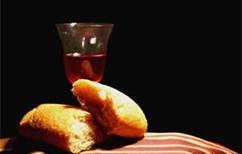
When you think about it, we Catholics believe something incredible: that bread and wine become God. It is difficult enough to take on faith that God became a human baby and that the divine body at one time was a mutilated corpse. But furthermore, we believe that at every Mass inanimate objects become God. That is the depth of God’s love for us. Love does foolish things. How often people say, “I love you so much I could eat you up.” God literally lets us “eat him up.” By becoming our food and drink, God becomes one with us, closer than anyone else could ever be. Each Mass is a wedding, a celebration of the union of divinity and humanity.
Our faith in the Eucharist is firmly entrenched in Scripture and Tradition. At his last supper, Jesus took some bread and said, “This is my body,” and then he held a cup of wine and claimed, “This is my blood.” Some faith traditions hold that these words were merely symbolic. But then how explain what happened on the day Jesus foretold the Eucharist? He declared, “Those who eat my flesh and drink my blood have eternal life, and I will raise them up on the last day; for my flesh is true food and my blood is true drink” (John 6:54–55). Jewish listeners, who drain blood from meat, were appalled by what sounded like cannibalism. Many people quit following Jesus, yet he didn’t recant or even soften his words. He really meant them.
For some two thousand years, Catholics have taken the words of Jesus at face value. Still, how easily we let our Communions become routine and stale, forgetting what an astounding miracle they are. We might even fail to take advantage of this gift. As St. Augustine wistfully noted, “Christ is the bread, awaiting hunger.”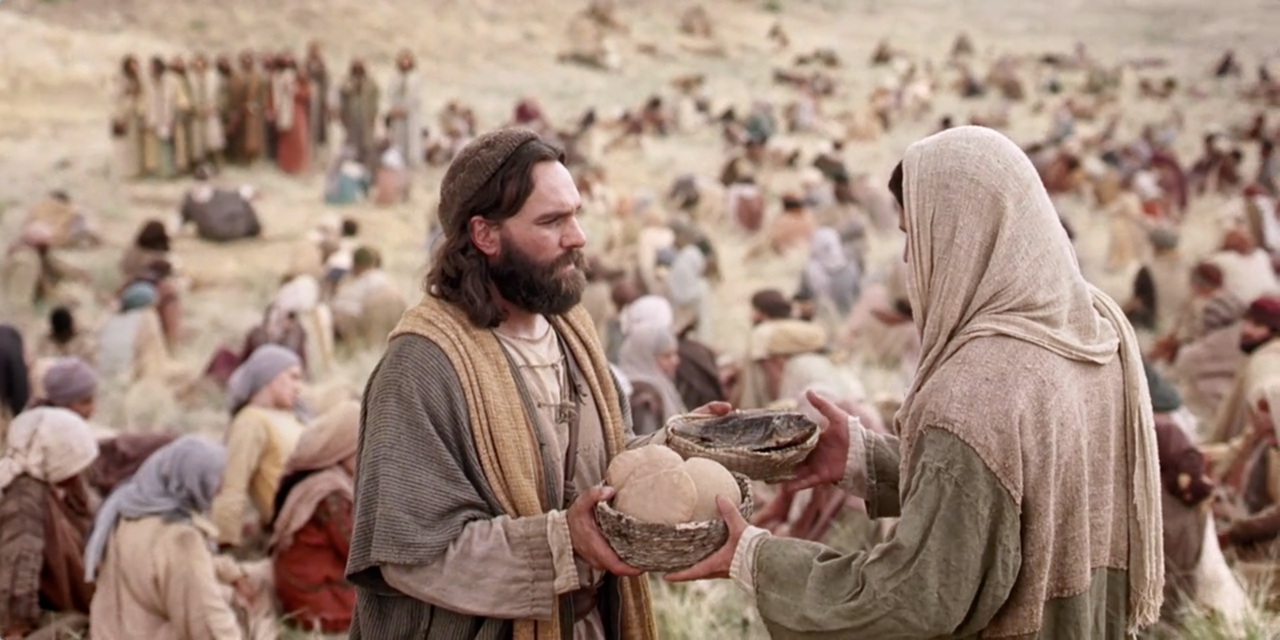
Nourished by this holy bread and wine, we are sent to be bread (life) for others. We might take to heart what St. Teresa of Kolkata told her sisters, “Let the people eat you up.”
For whom can you be “bread” this week?
(NOTE: The contest is still going on. Be the 100th person to email me at [email protected]. Write only your name and you might win a copy of my latest book, Praying on Empty.)
Be aware that each time we pray the Our Father we ask for our daily bread. One interpretation of this is that we are asking for the Eucharist.
For a unique presentation on the Eucharist . . .
How to Beat the Blahs: Banishing Bad Moods
 On some days we leap out of bed and say, “Good morning, Lord.” On other days we drag ourselves out from under the covers, muttering “Good Lord, it’s morning.” I think it’s a human condition that we encounter stretches in our life’s journey when we don’t feel like doing anything, going anywhere, or talking to anyone. These periods may last a few days or more. Being deluged with horrors and disappointments in the daily news does nothing to alleviate our heavy feeling. Here are a few remedies to dispel gray days.
- Take up something new. This past week I’ve been learning about marketing books. Now that I’ve written more than eighty, I want people to know they are available. A chance meeting with a woman on a plane and help offered by a number of friends have spurred me on to make an all-out effort to promote my books. Believe it or not, when I woke up in the middle of the night yesterday, I had to control my urge to go to the computer and work on a catalog! This new interest has renewed my enthusiasm for life. The word “enthusiasm” comes from the Greek for being enveloped by God. So what hobby can you take up? What new area of knowledge can you delve into? What course can you take: photography? watercolor? Spanish?
2. Go somewhere. Take a vacation or a staycation. Venture out of the house to another state or city. Go on a cruise. Visit the art museum, zoo, or planetarium in your own town. Chances are, you will meet other people who will enhance your life.
3. Do something for someone else. That is a good way to perk up our spirits. Donate blood, get involved with Habitat for Humanity, go shopping for an elderly neighbor, join a service group at your parish. The opportunities are endless.
4. Get in touch with nature and the God who created it: walk in a park or through woods. You might be familiar with Wordsworth’s poem “Daffodils” in which he says, “I wandered lonely as a cloud, until I came upon a host of daffodils.” Simply recalling a moving experience in creation can soothe us. This is what 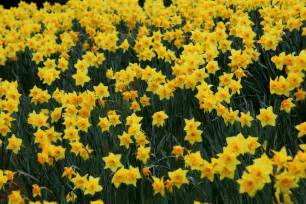 Wordsworth found whenever he later thought of those daffodils: “And then my heart with pleasure fills, And dances with the daffodils.” Remember the starry sky you saw one night when all was pitch dark? Remember the sunset you saw over the Pacific Ocean? Remember the two spotted fawns you saw lying in the grass?
5. Contact an old friend or relative. Refreshing a relationship leaves us refreshed. Phone, make a lunch date, send a card, invite the person over for a visit. Better still, throw a party and gather a number of people who are special to you.
6. Indulge in something that gave you pleasure in the past. When I taught high school, I would go to the library and listen to a recording of Strauss’s “Thus Spoke Zarathustra” used in the movie “2001: A Space Odyssey.” This music never fails to stir my soul. So, enjoy a lobster dinner, reread a favorite book, go for a motorcycle ride in the mountains, visit an amusement park. This will help put you in a good mood.
7. Exercise. This increases endorphins, which are hormones associated with a happy, positive feeling. It also produces seratonin that gives a sense of well-being. Run, walk, stretch, dance!
When we are happy, everyone around us will be happier too.
What do you do to relieve the doldrums?
Do YOU have any ideas for marketing my books?
Don’t miss the contest in the “Announcement.” It may be that reading Praying on Empty will cure the blahs for you. For those who don’t see the Announcement, it reads: “Be the 100th one to email me at [email protected] and win a copy of my new book Praying on Empty. Need only put your name in the email. Good luck!”
To Be or Not to Be . . . a Saint
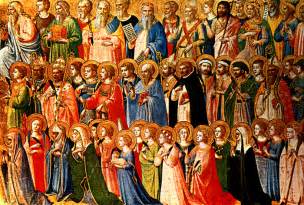 This past week I was interviewed about saints for a podcast, so I thought I’d share some thoughts about them this week. I believe it was Leon Bloy who noted, “The only failure in life is not to be a saint.” A saint is someone who made it to heaven. Consider the alternative. Sometimes people say (or think) “I’m no saint.” No, none of us earthlings are yet. We still have time to determine our eternal future. Our concept of a saint might be a grim person, a goody-goody, a priest or nun . . . but not us. But saints were as human as we are. They too had failings, as someone put it, “tilted haloes.” St. Jerome had a temper, St. Therese was sensitive, St. Augustine once stole pears—not to mention his other sins. But the saints lived in a way that mattered: they loved God and people the way Jesus did. A youngster was asked what a saint was. Thinking of stained-glass windows, he replied: “A saint is someone the light shines through.” Yes, saints let the light and love of Christ shine through them. For that, they achieved our most important goal: life with God forever. (more…)
The Labyrinth as Prayer
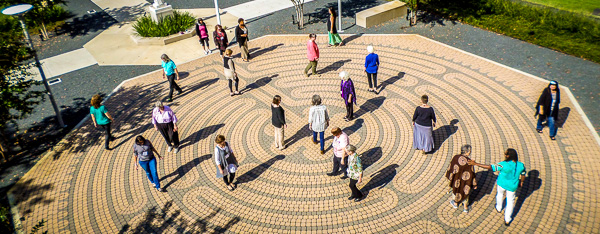
Sometimes we are in a rut regarding our prayer. One remedy is to try out a new way of praying. A change might be just the thing to jumpstart a faltering spiritual life and renew our friendship with God. If you have never prayed with a labyrinth, you might explore this centuries-old prayer method, which has become popular again. A labyrinth is different from a maze, which has several possible paths on which you can meet dead ends and get lost. A labyrinth has only one simple path that weaves around within a circle and leads to the center, which represents God. Its four quarters are set around a cross. Praying a labyrinth involves the body as well as the mind. (more…)