Year of Mercy, part 3: Jesus, Mercy Incarnate
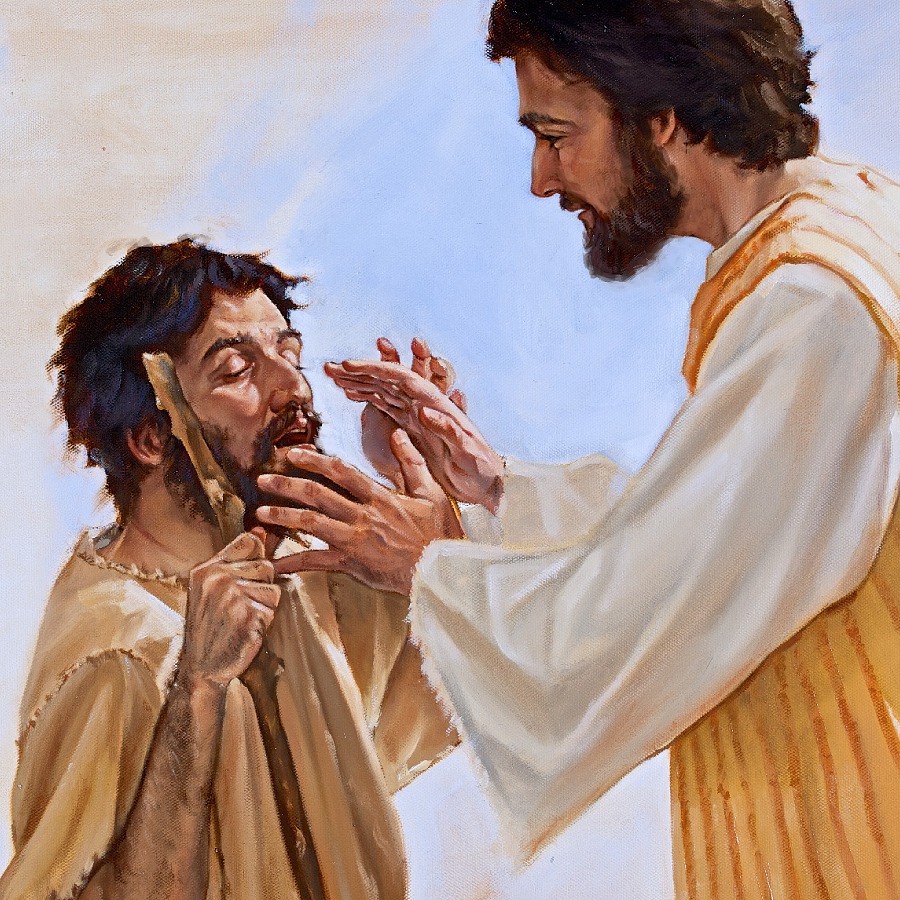 Jesus is the Face of God: He is God made visible. He is the incarnation of mercy. Moreover, mercy is the principle theme of his preaching and is manifested in how he treated people. We could say his middle name was Mercy. Jesus met people’s physical needs. In a synagogue he read his job description: “He has sent me to bring good news to the poor, to proclaim release to captives and recovery of sight to the blind, to let the oppressed go free” (Luke 4:18). When John’s disciples asked who he was, Jesus replied, “Go and tell John what you hear and see: the blind regain their sight, the lame walk, lepers are cleansed, the deaf hear, the dead are raised, and the poor have the good news proclaimed to them” (Matt 11:4-5).
Year of Mercy, part 2: Jesus Teaches about God’s Mercy
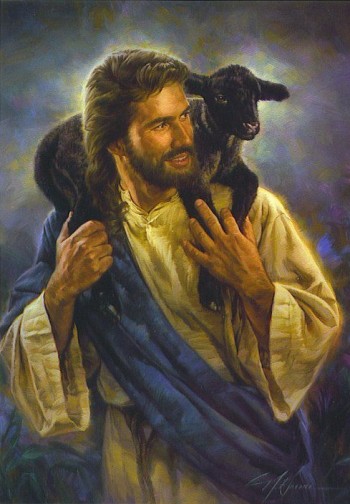 Even if we didn’t have the Old Testament, we would still know that God is merciful from the teachings of Jesus. The very motto of the year of mercy is from his lips: “Be merciful as your heavenly Father is merciful.” Jesus revealed the incredible Father’s mercy through not just one, but several parables, in particular, the prodigal son, the lost coin, and the lost sheep. These are found in Luke, which is dubbed the Gospel of Mercy. In each parable, rejoicing is the response to finding what was lost. Jesus says that the angels rejoice when just one sinner changes his or her ways and God forgives them.
Let’s look at the picture of God the Father that Jesus gives us in the parable of the prodigal son, more aptly called the parable of the prodigal father. The love of the Jewish father in the parable is extraordinary . . . prodigious. First, his younger son insults him by asking for his inheritance before the father dies. And the father graciously hands it over to him. The prodigal son squanders all of the money in sinful activities. He ends up with the humiliating job of feeding pigs, an animal that Jews considered unclean an d a symbol of the Romans. The boy didn’t just lose his inheritance, but the dignity of being a son in his father’s house. Desperate and starving, he heads home, planning to offer to be a servant in his father’s house.
But the father sees him coming while he was still far off. The heartsick father must have been looking for him every day, waiting and hoping. At the sight of his son, the father is filled with compassion and runs to him. Running is not something a dignified Israelite would do. When the father reaches his son, he embraces and kisses him. The son begins his rehearsed speech, but the father cuts him off. He sends for the best robe and a ring and sandals for his wayward son. Then he orders a fatted calf slaughtered and throws a feast to celebrate. The older son, a righteous fellow, is miffed at the grand reception his dastardly brother receives. When he complains to the father, the doting father replies that his son was dead and is now alive. Why shouldn’t they celebrate? And isn’t this parable the story of humanity saved? Isn’t it our story?
(A teacher asked her young children, “Who felt bad about the son’s return?” and a child answered, “The fatted calf.”)

Jesus repeats the theme of this parable. A shepherd leaves his ninety-nine sheep and searches for a stray one until he finds it. He carries it home on his shoulders and calls everyone together to rejoice with him. A woman loses one of her ten silver coins. She lights a lamp, sweeps the house, and searches until she finds the coin. She calls her friends and neighbors together to celebrate. (It’s interesting that a woman stands for God in this parable.) Then too there is the parable about the master who forgives his servant an enormous debt.
God is not only forgiving, but has mercy on us when we are in need. Jesus assures us that the same God who provides food for sparrows and beautiful raiment for flowers will also provide for us. God will answer our prayers. He is so merciful that, as Jesus points out, his sun shines and his rain falls on the just and unjust alike.
Of course, Jesus revealed God’s mercy most convincingly in his very self, the topic of next week’s blog.
In what ways has God shown you mercy?
Year of Mercy, part 1: God’s Mercy
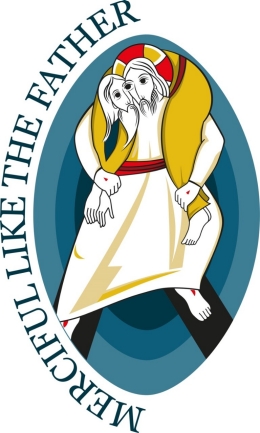 In this Extraordinary Jubilee, Year of Mercy, I’ve given talks on mercy, which meant researching this topic. I gleaned some thoughts on mercy that you might find worth pondering. Pope Francis declared the year in hopes that new flood of mercy will flow over the world. He said, “Mercy is the true power that can save humanity and the world from sin and evil.” The document announcing the year states “We need constantly to contemplate the mystery of mercy. It is a wellspring of joy, serenity, and peace.”
Like a precious jewel, mercy has several facets: God’s mercy in helping those in trouble, God’s mercy in forgiving sinners, our mercy in reaching out to the needy, and our mercy in forgiving others.
According to some theologians mercy is the greatest, most stupendous of God’s attributes…not God’s omnipotence, omniscience, omnipresent, immutability, and so forth. It follows that as sons and daughters of God we resemble him. We should exhibit the “divine gene” of mercy. The theme of this year is Christ’s commandment: “Be merciful just as your Father is merciful.” St. John Chrysostom said, “Mercy imitates God and disappoints Satan.”
Mercy is more powerful, more profound than justice. Blessed (or happy) are the merciful for they shall be shown mercy is considered the “umbrella beatitude.” The other beatitudes flow from it. We all long to be happy. God made us to share in his happiness. Mercy leads to happiness.
Creation Speaks of God
 These days we are focusing on creation and on our responsibility to be caretakers of our beautiful home planet. Recently I reread my book “Voices: Messages in Gospel Symbols” and realized that its introduction would be a fitting post to share. So here it is . . .
“I said to the almond tree, ‘Sister, speak to me of God.’ And the almond tree blossomed.” ~ Nikos Kazantzakis
Creators are mirrored in their creations. A song reflects the composer; a painting, the artist; a book the author. In the same way, the universe, the masterpiece of the supreme creator, reveals God. Its variety, its intricacy, and its magnitude attest to God’s wisdom and power. Every created thing is an epiphany, echoing some aspect of the divine Being.
To behold a snow-topped mountain, its massive rocky slopes jutting boldly into the sky, is to know God’s majesty. To sit at the foot of a waterfall and watch its refreshing rush of water cascade into a clear, deep pool is to see God purity. To stroll through woods of lovely ferns, mosses, and lofty trees is to be enveloped with the peace and serenity of God. The fragile daisy with its velvety white petals and bright yellow center tells of the Creator’s gentleness while the shimmering, iridescent rainbow arched across purple-gray clouds bespeaks his beauty. A newborn baby is evidence of God’s tenderness. Fire is a reminder of the energy of God’s love. A monkey shows God’s sense of humor, and a giraffe, his unpredictability.
The psalmist is attuned to the speechless voices of the universe. He sings of the stars in Psalm 19:1–4:
The heav ens declare the glory of God,
the vault of heaven proclaims his handiwork;
day discourses of it to day,
night to night hands on the knowledge.
No utterance at all, no speech,
no sound that anyone an hear;
Yet their voice goes out through all the earth
and their message to the ends of the world.
St. Gregory of Nazianzus states in a hymn:
All things proclaim you—
things that can speak, things that can not.
 All things breathe you a prayer,
a silent hymn of your own composing.
In the same tradition, St. Francis of Assisi the lover of nature, exclaims in his “Canticle of the Sun”:
Praise be to Thee, my Lord, with all Thy creatures.
Especially to my brother sun,
Who brings us the day and through him Thou dost brightness give;
And beautiful is he and radiant with splendor great,
Of Thee, Most High, he speaks.
More recently, the writings of the French theologian and philosopher Teilhard de Chardin, S.J., the notion of the creation manifesting the Creator is a mighty refrain, especially in “The Divine Milieu”: “…the great mystery of Christianity is not exactly the appearance, but the transparence, of God in the universe.”
Things are important to us. Partly spiritual, partly material beings, we live and work out our destiny in the realm of matter. How we use it and abuse it determines our eternity. We are free to expend and ravage the material universe for our own power and pleasure, or we can share it. We can let it go to ruin or we can show concern for it. We can regard the world as the lucky result of a coincidental combination of chemicals eons ago, or we can cherish it as the love-gift of a personal God who cares about us. The latter point of view opens for us the possibility of finding in material objects a source of prayer.
When the Word became flesh and lived with us among color, hardness, roughness, scent, and warmth, the Son of God reveled in the things of earth, the handiwork of the Father. Jesus saw that they were good, so good that he redeemed them along with us at the price of his life. Furthermore, he assigned them prominent roles in the act of redemption. During his pubic life, Jesus used concrete objects to teach. His audiovisuals were the birds of the air, the bread the women baked, the Temple in Jerusalem, and the roadside fig tree. Today, from the dimension where he dwells, Jesus reaches out in the sacraments and touches us with things: water, bread, wine, and oil. Matter has been christened by his presence.
**** Don’t miss the video below. It’s bound to touch your heart!
What in nature do you particularly cherish?
Where on Earth do you find it easy to hear God speaking to you?
When Idols Have Clay Feet
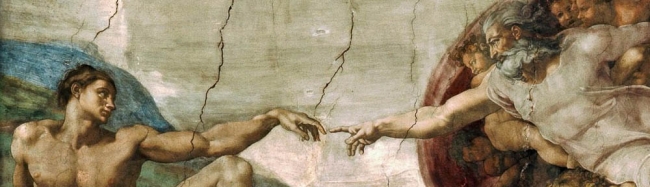 We humans love heroes—people who excel in sports like the Olympians, music like rock stars, politics like senators and presidential candidates, acting like movie stars, and in other endeavors. We not only look up to them, but they serve as models for us. They inspire us to be better. How disappointing and depressing it is to discover that our idols have flaws and sometimes even serious faults. The news is glutted with stories of famous people who acted infamously today and in the past. So how do we deal with these sad turns of events? For one thing, we shouldn’t be surprised. There is a saying that idols have clay feet. This adage is derived from an Old Testament story of the king of Babylon’s dream in which a statue of gold, silver, bronze, and iron had feet of clay. The prophet Daniel said that the dream symbolized that the powerful nation would be destroyed. We are all children of Adam, who, according to Genesis, was created out of clay. We are all prone to stumble and fall on our clay feet. No one is perfect.
Everyone has done things to regret: mistakes, wrong choices, foolish acts. We wish we could go back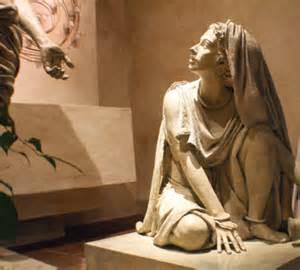 and redo certain days in our lives. Luckily, we are not so popular that our faults are paraded across the media for all the world to observe. Since we are made of the same clay, we can regard public sinners with sympathy, if not empathy.
Jesus, the sinless One, befriended sinners. In the first place, he came to earth where he rubbed shoulders with all of us sinners. He was accused of eating with them, a factor in his death sentence. The Gospels offer us touching stories of Jesus mingling with “bad people.” He invited himself to house of Zacchaeus, a greedy tax collector, for dinner. He ate at the house of Simon, the Pharisee. He let the adulterous woman go free. He healed sinners’ bodies. He set up as a model the sinful woman who crashed a dinner party and cried at his feet. The twelve men he chose to accompany him were not all paragons of virtue.
Jesus described his mission as being sent for sinners. He lived and died for them. As his followers who strive to live as he did, shouldn’t we have a heart for the weak among us? That is why Christians engage in prison ministry. After all, one of the works of mercy is to visit the imprisoned. In particular, Jesus encouraged us to forgive those who sin against us—no less than seventy-seven times, in other words, each and every time. And we are to pray for sinners, hoping that they are praying for us too!
I just came across these words of Pope Francis: “Even if the life of a person has been a disaster, even if it is destroyed by vices, drugs, or anything else—God is in this person’s life. You can, you must try to seek God in every human life. Although the life of a person is a land full of thorns and weeds, there is always a space in which the good seed can grow. You have to trust God”
What is your favorite story about Jesus showing mercy to a sinner?